Monday, October 27, 2014


"Green" Britain gets the jitters amid fears of going dark brown

All those windmills and solar farms are doing nothing to avert looming blackouts

Hotels will be paid to turn down refrigerators and factories paid to make staff work overnight to cut energy consumption and prevent blackouts this winter, under emergency plans to be revealed this week.

Ed Davey, the Energy Secretary, has told The Sunday Telegraph that energy regulators have asked for extra contingency measures to cut consumption in event of a cold winter or more power station failures.

Energy analysts have warned that Britain is now at risk of power shortages after two ageing nuclear plants were shut down for safety reasons, and a fire closed Didcot B, a gas-fired plant in Oxfordshire.

Mr Davey will on Tuesday unveil a package of contingency measures designed to reduce pressure on the National Grid over the winter months.

Several disused power stations will be brought back into service to increase supply, he said.

There will also be measures to reduce demand after officials from Ofgem, the energy regulator, and National Grid suggested that further action could be required.

“We have demand-side contingencies. We have had them for a long time, but they wanted – quite rightly – to see if we could increase that,” Mr Davey said.

The demand-side measures, he disclosed, would include National Grid paying large companies to generate their own power in the event of shortages.

“And some companies would change their behaviour, voluntarily, and be recompensed for it. Turning down their refrigerators by a degree, or changing a shift pattern for a week so staff come in earlier. The idea is to move factory production away from peak energy demand periods,” Mr Davey added.

The package of contingency measures will be more than sufficient to cope with the coldest possible winter, further nuclear shutdowns and power station fires, Mr Davey said. “There will not be blackouts,” he insisted.

To allay concerns over the security of British energy supplies, Mr Davey highlighted a report by the US Chamber of Commerce, which says that Britain has the fourth most secure energy supplies in the world.

However, the same report also warns that Britain’s shrinking spare energy capacity “could lead to blackouts”.

During the interview, Mr Davey also disclosed that he has been encouraged by colleagues to run as a replacement for Nick Clegg as leader of the Liberal Democrats, and said that he is “thinking” about standing.

SOURCE


The recent hiatus in the rise of global temperatures

Carl Mears, boss of Remote Sensing Systems purports below to explain why his own data show a temperature "hiatus" in the last 18 years. He canvasses a number of explanations, with which skeptics are well familiar, but the fact that there are many candidate theories to explain why temperatures are not rising shows that no-one in fact knows what it going on.  So sticking with a failed prediction amid complete uncertainty is just an act of faith.  "Ad hoc" explanations (being wise after the event) are rightly scorned in real science.  You have to get your predictions right if people are to accept that you know what you are talking about.  And Warmist predictions are nowhere near right

Recently, a number of articles in the mainstream press have pointed out that there appears to have been little or no change in globally averaged temperature over the last two decades.  Because of this, we are getting a lot of questions along the lines of “I saw this plot on a denialist web site.  Is this really your data?”  While some of these reports have “cherry-picked” their end points to make their evidence seem even stronger, there is not much doubt that the rate of warming since the late 1990’s is less than that predicted by most of the IPCC AR5 simulations of historical climate.  This can be seen in the RSS data, as well as most other temperature datasets.  For example, the figure below is a plot of the temperature anomaly (departure from normal) of the lower troposphere over the past 35 years from the RSS “Temperature Lower Troposphere” (TLT) dataset.  For this plot we have averaged over almost the entire globe, from 80S to 80N, and used the entire TLT dataset, starting from 1979.  (The denialists really like to fit trends starting in 1997, so that the huge 1997-98 ENSO event is at the start of their time series, resulting in a linear fit with the smallest possible slope.)


TLT time series image

In this figure, the thick black line is from a climate data record derived from microwave sounding satellite (MSU and AMSU ) measurements.  Each of the thin light blue lines represents the temperature anomaly time series for the same atmospheric layer from one of 33 IPCC climate model simulations that I have analyzed.  I have adjusted each individual time series so that its average is 0.0 for the 1979-1988 period.  This has no effect on the trend of each line, but it does make it easier to see long term changes in the plot.

The dips in the simulated model temperatures in 1983 and late 1991 are due to the eruptions of El Chichón and Mt. Pinatubo.  These eruptions spewed enough volcanic ash into the stratosphere to block part of the incoming sunlight and cool Earth’s surface and troposphere.  The cooling can easily be seen in the measured satellite data in 1992-1993.  The cooling event in 1983 happened by chance at more or less the same time as an El Niño event in 1983-84, making it harder to see.  (Note that the same events warmed the stratosphere.  See our TLS dataset.)  The year-to-year variability of the measured data is dominated by El Niño/La Niña events, with an overall warming trend (0.123K/decade) on longer timescales.

The plot shows that the measured temperature rise is within the envelope of model predictions up until the late 2000’s.  After that time, observed temperatures are sometimes less than any model prediction, and are clearly different than the mainstream model behavior.  This slow-down in the warming, often called the “warming hiatus”, has become a major research topic over the last several years, and a source of much controversy across the blogosphere.  In this post, I offer my view on the cause of the hiatus.  Some of the following discussion is distilled from a moderated debate I took part in under the auspices of the Climate Dialogue website

Does this slow-down in the warming mean that the idea of anthropogenic global warming is no longer valid?  The short answer is ‘no’.  The denialists like to assume that the cause for the model/observation discrepancy is some kind of problem with the fundamental model physics, and they pooh-pooh any other sort of explanation.  This leads them to conclude, very likely erroneously, that the long-term sensitivity of the climate is much less than is currently thought.

The truth is that there are lots of causes besides errors in the fundamental model physics that could lead to the model/observation discrepancy.  I summarize a number of these possible causes below.  Without convincing evidence of model physics flaws (and I haven’t seen any), I would say that the possible causes described below need to be investigated and ruled out before we can pin the blame on fundamental modelling errors.

Also, a philosophical comment -- often, we are predisposed to the position that a given effect is due to a single cause.  Part of the reason for this is probably human nature.  We like to distill complex things into simple stories or parables.  The other part is that for most of the science courses we take in school, simple experiments are presented that demonstrate the fundamental ideas in the topic under study.  Single causes are often the case in laboratory experiments -- these experiments are usually designed to isolate a single causative effect.  In “real-world” science, such as the study of Earth’s climate, things are very unlikely to be as clear cut.  Instead, each observed “effect” will be due to the combination of numerous causes.  My point is that I do not expect the disagreement between models and observations over the past 15 years to be due to a single cause.  It is much more likely to be due to some combination of the possible causes listed below.

The possible causes for the model/observation discrepancies can be grouped into several categories:

Measurement Errors

Errors in Model “Forcing”

Internal Variability (Random Fluctuations) in the Climate System

Errors in Fundamental Model Physics

The first 3 causes have no effect on the long-term sensitivity of the climate to increased CO and only some of the fundamental model physics errors (4th cause) would change the long-term sensitivity.  Some of the causes described below might delay the warming, but we would end up at the same point in the future, or we might see changes in the geographical patterns of the warming signal, but the overall change would be the same.  In this post, I’ll address the first three possibilities in more detail.  I am not an expert in modeling, so I will leave the discussion of possible model errors to others with more expertise.

More HERE


New paper shows global sea level rise has greatly decelerated since ~2002, opposite of predictions

A new discussion paper published in Ocean Science evaluates multi-mission satellite sea level records and shows that the rate of sea level rise has greatly decelerated since ~2002, as has been documented in prior research finding sea level rise decelerated 31% since 2002, and decelerated 44% since 2004 to less than 7 inches per century. This is obviously the opposite of climate model predictions in response to a steady rise in CO2 greenhouse gas levels, but is compatible with the ongoing "pause" of global warming.

Other notable findings from the paper include:

1) The positive global sea level rise trend is almost entirely due to an apparent huge "bulge" located in the Western equatorial Pacific region [Fig 12 immediately below, and the "bulge" 3-D illustrated by StevenGoddard.wordpress.com in the 3rd figure below].

2) Conversely, all areas shown in blue have experienced a drop in altimetric sea levels [different from relative sea levels which are more dependent upon land height changes] from 1993-2010, including most of the East and West coasts of North and South America.

3) As the 2nd figure below indicates, this "bulge" is almost entirely steric sea level rise from thermal expansion, as opposed to eustatic sea level rise from melting of ice. The fact that the "bulge" is so localized in the equatorial Western Pacific points to trade winds or ocean oscillations such as the Pacific Decadal Oscillation as responsible, rather than any effect from greenhouse gases, which would cause a generalized, not highly localized, effect on ocean thermal expansion or eustatic sea level rise from melting ice.

4) The 4th figure below shows an alternative method of determining sea level rise using ARGO + GRACE finds sea levels rising at 2.31 mm/yr, about 35% less than determined by the satellite altimetry methods.

5) The 5th figure below [Figure 10 of the paper] shows sea level rise has greatly decelerated since ~2002, as has been documented in prior research. This is the opposite of climate model predictions in response to a steady rise in CO2 levels, but is compatible with the ongoing "pause" of global warming.

6) Figure 7 below shows how easy it is to tamper with previously published satellite data from the European ENVISO satellite, which previously showed sea levels rising at 1.59 mm/yr [very similar to what global tide gauges show], but a convenient new processing algorithm magically increases or up-justs the rate of ENVISO sea level rise by 86% to match the US satellite data of 2.96 mm/yr. It's deja vu all over again.

More HERE  (See the original for links, graphics etc.)

Improved sea level record over the satellite altimetry era (1993–2010) from the Climate Change Initiative Project

M. Ablain et al.

Abstract.

Sea level is one of the 50 Essential Climate Variables (ECVs) listed by the Global Climate Observing System (GCOS) in climate change monitoring. In the last two decades, sea level has been routinely measured from space using satellite altimetry techniques. In order to address a number of important scientific questions such as: "Is sea level rise accelerating?", "Can we close the sea level budget?", "What are the causes of the regional and interannual variability?", "Can we already detect the anthropogenic forcing signature and separate it from the internal/natural climate variability?", and "What are the coastal impacts of sea level rise?", the accuracy of altimetry-based sea level records at global and regional scales needs to be significantly improved. For example, the global mean and regional sea level trend uncertainty should become better than 0.3 and 0.5 mm year−1, respectively (currently of 0.6 and 1–2 mm year−1). Similarly, interannual global mean sea level variations (currently uncertain to 2–3 mm) need to be monitored with better accuracy. In this paper, we present various respective data improvements achieved within the European Space Agency (ESA) Climate Change Initiative (ESA CCI) project on "Sea Level" during its first phase (2010–2013), using multi-mission satellite altimetry data over the 1993–2010 time span. In a first step, using a new processing system with dedicated algorithms and adapted data processing strategies, an improved set of sea level products has been produced. The main improvements include: reduction of orbit errors and wet/dry atmospheric correction errors, reduction of instrumental drifts and bias, inter-calibration biases, intercalibration between missions and combination of the different sea level data sets, and an improvement of the reference mean sea surface. We also present preliminary independent validations of the SL_cci products, based on tide gauges comparison and sea level budget closure approach, as well as comparisons with ocean re-analyses and climate model outputs.

Ocean Sci. Discuss., 11, 2029-2071, 2014. doi:10.5194/osd-11-2029-2014  


Frac sand study: Lots of scare, little science

How would you feel if you walked into a doctor's office and the doctor told you about the potential dangers of heart surgery but didn't tell you the risks can be minimized with proper precautions or about any of the benefits of the surgery? That would be a frightening experience, because we need as much information as possible to make the best decisions, and withholding vital information from those who need it most is unethical.

Unfortunately, special interest groups have published a study attempting to scare the people of Wisconsin and other parts of the Upper Midwest about mining sand used for hydraulic fracturing, commonly referred to as "frac sand," by presenting only one side of the story.

Instead of basing the study on the best available scientific evidence and discussing both the costs and benefits of frac sand mining, anecdotal evidence (which is unscientific and unreliable and can lead to cherry-picking data) is used to focus on costs while completely ignoring benefits.

This study attempts to portray frac sand mining as an industry running amok, operating without oversight or regulation. It also tries to paint the industry as a threat to a clean water supply and as a possible cancer risk, but it doesn't provide even a grain of real science to support these claims.

Contrary to assertions that the frac sand industry lacks proper oversight, the Wisconsin Department of Natural Resources' website states all non-metallic mining operations (including frac sand) must obtain DNR water permits to operate in the state. Additional permits are needed for water withdrawal, modifying wetlands, stormwater discharge, air pollution for construction and operation of the facilities, mine safety and many more industry practices. DNR rules also require frac sand companies to restore the land upon completing the mining process, re-establishing wildlife habitats or farm fields.

The study also raises concerns about the amount of water used to wash frac sand, leading some to fear these operations could potentially deplete water resources. However, frac sand washing and processing was only the sixth-largest use in the 10 counties that reported frac sand watering operations, and most frac sand facilities use a closed-loop process, indicating nearly 90% of water can be recycled for onsite reuse. Because most of the water is recycled, EOG, a sand plant in Chippewa Falls, which uses approximately 2 million gallons a day, requires only 18,000 gallons of "make-up water" each day.

A vital part of recycling water for frac sand processing is removing the small clay particles from the water by using the flocculant polyacrylamide, a safe chemical used by most municipal wastewater treatment facilities, to get clay particles to "clump together" and settle out of the water. Perhaps in an attempt to stir up fears about water contamination and cancer outbreaks, the study states polyacrylamide can also contain acrylamide, a known neurotoxin, but it fails to provide proper context. Polyacrylamide can contain acrylamide, but only in trace amounts.

The study additionally fails to acknowledge acrylamide breaks down quickly into CO2 and ammonia. Within 14 days, 74% to 94% of acrylamide breaks down in oxygen-rich soils and 64% to 89% in oxygen-poor soils. Because horizontal groundwater flow velocities are typically on the order of centimeters per day, acrylamide does not last long in ground water. This further reduces the probability of negative health effects.

The study also purports to have evidence of acid mine drainage, which frac sand mining does not create.

Make no mistake, everything we do has an environmental impact, and frac sand mining is no exception. But to exaggerate the costs and ignore the benefits is dishonest. Wisconsin can take reasonable precautions to develop frac sand resources in an environmentally responsible way and continue to enjoy the benefits of creating thousands of high-paying jobs throughout the state.

Unscientific studies, half-truths and missing data stand in the way of an informed discussion about frac sand in the same way a doctor does when he or she tells you the costs and none of the benefits of a procedure. Wisconsinites should seek a second opinion.

SOURCE


EXPOSED: How a shadowy Greenie network funded by foreign millions is making  household energy bills soar

The Mail on Sunday today exposes how a ‘Green Blob’ financed by a shadowy group of hugely wealthy foreign donors is driving Britain towards economically ruinous eco targets.

The phrase the ‘Green Blob’ was coined by former Environment Secretary Owen Paterson after he was sacked from the Cabinet in July.

He was referring to a network of pro-green lobbyists working at every level of the British Establishment, who have helped shape the eco policies sending household energy bills soaring.

But investigations by this newspaper reveal the Blob is not just an abstract concept.  We have found that innocuous-sounding bodies such as the Dutch National Postcode Lottery, the American William and Flora Hewlett Foundation and the Swiss Oak Foundation are channelling tens of millions of pounds each year to climate change lobbyists in Britain, including Greenpeace and Friends of the Earth.

They have publicly congratulated themselves on their ability to create green Government policy in the UK – most notably after Ed Miliband steered through aggressive CO2 reduction targets in his 2008 Climate Change Act, and announced there would be no more coal power stations.

Yet the consequences of their continuing success are certain: further eye-watering rises in energy costs for millions of Britons and an increasing risk of blackouts.

According to leading energy analyst Peter Atherton of Liberum Capital, current UK energy policies shaped by the Blob will cost between £360 billion and £400 billion to implement by 2030. He said this will see bills rise by at least a third in real terms – on top of the increases already seen over the past ten years.

This bill dwarfs the EU’s £1.7 billion demand from Britain last week.

Lobbying by the Blob helped lead to a new European Union emissions deal announced on Friday, when EU leaders including the Prime Minister agreed to triple the current pace of emissions cuts.

Following earlier deals, EU-wide emissions of CO2 are supposed to fall 20 per cent over the 30-year period 1990 to 2020.

Under the new agreement, this reduction must be doubled in just a decade, reaching ‘at least’ 40 per cent by 2030 – a goal that could only be accomplished through further massive investment in wind and nuclear energy.

At the heart of the Blob is a single institution – the European Climate Foundation (ECF) – which has offices in London, Brussels, The Hague, Berlin and Warsaw.

Every year it receives about £20 million from ‘philanthropic’ foundations in America, Holland and Switzerland, and channels most of it to green campaign and lobby groups.

It refuses to disclose how much it gives to each recipient, and does not publish its accounts. But it admits that the purpose of these grants is to influence British and EU climate and energy policy across a broad front.

Many more millions are fed directly to British and European lobby groups from the same overseas foundations which also fund ECF.

In its last annual report, ECF said working towards a 2030 deal was ‘a big focus area for ECF as a whole’.

ECF managing director Tom Brookes told The Mail on Sunday he provides ‘a fact-base’ to help policy-makers make the ‘many complex decisions that are necessary to move towards a high-innovation, prosperous and low-carbon future’. He added: ‘The UK is a leader in many of these fields.’

Much more HERE


The Australian government reveals position on renewable energy target

The Abbott government is supporting a scaling back of the renewable energy target which they say will better reflect changes in demand for electricity.

Industry Minister Ian Macfarlane on Wednesday revealed the government's long-awaited position on the target, which would reduce the amount of energy produced by renewable energy projects by 2020 from 41,000 gigawatt hours to about 26,000.

The position rejects the recommendations in the review of the target headed by businessman and climate change sceptic Dick Warburton.

The review, which cost the government more than $500,000, in August recommended Australia's RET be either closed to new projects or scaled back dramatically on the basis of yearly reviews.

But the government, which has been looking to restore a bipartisan agreement with Labor, faces a battle to negotiate its position through the parliament.

Labor has signalled it will reject the scale back proposed, which Mr Macfarlane said would constitute a so-called "real 20 per cent" of Australia's electricity production.

"It won't be a 27 per cent renewable energy target, it will be 20 per cent renewable energy target," Mr Macfarlane said.

Mr Macfarlane said the position put to Labor on Wednesday included exemptions for emissions intensives industries, including aluminium, copper, zinc and cement.

The small-scale solar panel scheme will remain untouched and biannual reviews of the target will cease.

The target legislated in 2009 set Australia's target at 41,000 gigawatt hours, which based on electricity demand at the time would have represented 20 per cent of the electricity produced in Australia in 2020.

But in recent years, electricity demand has collapsed, meaning the 41,000 gigawatt hour target is now closer to 27 per cent.

Labor is expected to reject the proposed RET reduction as too dramatic when it meets the government for talks on Wednesday afternoon.

Earlier on Wednesday, Labor Leader Bill Shorten said the opposition had made it clear it was open to discussing the target but it had established "no-go zones".

"The government say they want a real 20 per cent, I call it a fraud 20 per cent, a fake 20 per cent. The truth of the matter is that renewable energy is part of our energy mix. It's had a great benefit for a whole lot of consumers," Mr Shorten said.

"We've seen thousands of jobs created...and we've seen billions of dollars of investment. The real damage that this government's doing in renewable energy cannot be overstated."

In the ideological tussle within the Coalition about climate policy, the position announced on Wednesday, while a compromise, represents a win for those in the cabinet, such as Environment Minister Greg Hunt, who favour greener policies.

But the renewable energy industry said the target as proposed would devastate the industry and jeopardise millions of dollars in investment.

Lane Crockett, general manager of PacificHydro, said: "What reason can there be [for this cut] other than to protect the coal industry?"

Andrew Bray, national coordinator of the Australian Wind Alliance, said the government had "learnt nothing" from the Warburton review, noting its own commissioned research pointed to electricity prices being lower over the longer term with the RET as it is.

"What the government has indicated today is that it wants to increase the massive profits of big power companies by charging everyday Australians more for their electricity," Mr Bray said.

SOURCE

***************************************

For more postings from me, see  DISSECTING LEFTISM, TONGUE-TIED, EDUCATION WATCH INTERNATIONAL, POLITICAL CORRECTNESS WATCH, FOOD & HEALTH SKEPTIC and AUSTRALIAN POLITICS. Home Pages are   here or   here or   here.  Email me (John Ray) here.  

Preserving the graphics:  Most graphics on this site are hotlinked from elsewhere.  But hotlinked graphics sometimes have only a short life -- as little as a week in some cases.  After that they no longer come up.  From January 2011 on, therefore, I have posted a monthly copy of everything on this blog to a separate site where I can host text and graphics together -- which should make the graphics available even if they are no longer coming up on this site.  See  here or here

*****************************************


Sunday, October 26, 2014


Rahmstorf gives up

He doesn't seem to realize that he has but he has abandoned the last hope of the Warmists:  Ocean heat. He is one of Germany's most prominent academic Warmists


Ocean heat content is unsuited as a climate policy target. Here are three main reasons why.

1. Ocean heat content is extremely unresponsive to policy.

While the increase in global temperature could indeed be stopped within decades by reducing emissions, ocean heat content will continue to increase for at least a thousand years after we have reached zero emissions. Ocean heat content is one of the most inert components of the climate system, second only to the huge ice sheets on Greenland and Antarctica (hopefully at least – if the latter are not more unstable than we think).

2. Ocean heat content has no direct relation to any impacts.

Ocean heat content has increased by about 2.5 X 10²³ Joules since 1970 (IPCC AR5). What would be the impact of that? The answer is: it depends. If this heat were evenly distributed over the entire global ocean, water temperatures would have warmed on average by less than 0.05 °C (global ocean mass 1.4 × 10²¹ kg, heat capacity 4 J/gK). This tiny warming would have essentially zero impact. The only reason why ocean heat uptake does have an impact is the fact that it is highly concentrated at the surface, where the warming is therefore noticeable (see Fig. 1). Thus in terms of impacts the problem is surface warming – which is described much better by actually measuring surface temperatures rather than total ocean heat content. Surface warming has no simple relation to total heat uptake because that link is affected by ocean circulation and mixing changes. (By the way, neither has sea-level rise due to thermal expansion, because the thermal expansion coefficient is several times larger for warm surface waters than for the cold deep waters – again it is warming in the surface layers that counts, while the total ocean heat content tells us little about the amount of sea-level rise.)

3. Ocean heat content is difficult to measure.

The reason is that you have to measure tiny temperature changes over a huge volume, rather than much larger changes just over a surface. Ocean heat content estimates have gone through a number of revisions, instrument calibration issues etc. If we were systematically off by just 0.05 °C throughout the oceans due to some instrument drift, the error would larger than the entire ocean heat uptake since 1970. If the surface measurements were off by 0.05 °C, this would be a negligible correction compared to the 0.7 °C surface warming observed since 1950....

So why do Victor and Kennel propose to use deep ocean heat content as policy target?

In a recent interview, David Victor has explained why he wants to “ditch the 2 °C warming goal”, as the title of his Nature commentary with Charles Kennel reads: "There are some other indicators that look much more promising. One of them is ocean heat content."

The reason that Victor and Kennel gave for preferring ocean heat content over a global mean surface temperature target is this: "Because energy stored in the deep oceans will be released over decades or centuries, ocean heat content is a good proxy for the long-term risk to future generations and planetary-scale ecology."

I criticized this because the deep ocean will not release any heat in the next thousand years but rather continue to absorb heat. In his response at Dot Earth, Victor replied that I had “plucked this sentence out of context”. However, in their article there simply is no context that would explain how “energy stored in the deep oceans will be released over decades or centuries” or how this would make it “a good proxy for the long-term risk”. This statement is plainly wrong, and Victor would have been more credible to simply admit that. Victor there further argues that “the data suggest [OHC] is a more responsive measure” than surface temperature, but what he means by that, given the huge thermal inertia of the oceans, beats me.

More HERE


Weather Channel Founder Challenges UCLA to Offer Balanced Climate Change Debate on Thursday

John Coleman, founder of The Weather Channel, is urging UCLA’s Hammer Museum to provide balance to a presentation titled “Tackling Climate Change Nationally and Globally” on Thursday, October 23. The presentation, according to the museum’s website, will “examine the issue” that “despite the overwhelming scientific consensus that global warming is a danger to the planet, little progress has been made to reduce CO2 emissions.” The only presenters are controversial global warming alarmists Michael Mann and Brenda Ekwurzel.

In an open letter to UCLA and the Hammer Museum, Coleman notes many esteemed scientists and climate experts dispute the hypothesis that human activity is causing catastrophic global warming and that carbon dioxide emissions need to be curbed drastically to reduce the “danger to the planet.”

Coleman’s open letter below was sent to the Los Angeles Times as well as the television stations KCBS, KTLA, and NBC4 in Los Angeles.

Dear UCLA Hammer Forum officials,

There is no significant man-made global warming at this time, there has been none in the past and there is no reason to fear any in the future. Efforts to prove the theory that carbon dioxide is a significant “greenhouse” gas and pollutant causing significant warming or weather effects have failed. There has been no warming over 18 years. William Happer, Ph.D., Princeton University, Richard Lindzen, Ph.D., Massachusetts Institute of Technology, Willie Soon, Ph.D., Harvard Smithsonian Observatory, John Christy, Ph.D., University of Alabama and 9,000 other Ph.D. scientists all agree with my opening two sentences. Yet at your October 23 Hammer Forum on Climate Change you have scheduled as your only speakers two people who continue to present the failed science as though it is the final and complete story on global warming/climate change. This is [a] major mistake.

I urge you to re-examine your plan. It is important to have those who attend know that there is no climate crisis. The ocean is not rising significantly. The polar ice is increasing, not melting away. Polar Bears are increasing in number. Heat waves have actually diminished, not increased. There is not an uptick in the number or strength of storms (in fact storms are diminishing). I have studied this topic seriously for years. It has become a political and environment agenda item, but the science is not valid.

I am the founder of The Weather Channel and a winner of the American Meteorological Society honor as Broadcast Meteorologist of the Year. I am not a wacko flat-Earther. Nor am I a “paid shill” (as has been claimed) of the Koch Brothers. I am a serious professional. I am strongly urging you to reconsider your plan.

I will be pleased to discuss this matter with you and answer questions. I will be happy to provide links to all of the points I have made in this email. As a quick scientific reference you may wish to look at the website of the Nongovernmental [International] Panel on Climate Change.

SOURCE


Britain's nutty energy policy

Consumers will be forced to pay higher energy bills to fund policies that simultaneously tax coal plants to the brink of closure and then pay them to stay open, the head of Britain’s biggest energy supplier has warned.

Sam Laidlaw, chief executive of British Gas owner Centrica, warned there was an “inherent paradox” in Government policies, which risked ending up being neither green nor affordable.

As part of plans to switch to greener energy, ministers last year introduced a rising carbon tax, the so-called “carbon price floor”, which charges power plants for burning fossil fuels.

The tax was intended initially to phase out the use of coal – the dirtiest fuel – in favour of more environmentally-friendly gas plants, and eventually restrict all fossil fuel plants in favour of green technologies such as wind farms and nuclear power.

The levy has the effect of pushing up wholesale power prices, costing every household about £5 last year, increasing to an estimated £32 a year by 2020.

Yet at the same time another policy, the “capacity market”, is being introduced to ensure there are enough reliable fossil fuel power plants to keep the lights on and act as back-up for intermittent renewables.

The policy was initially regarded as a way of encouraging a new “dash for gas” by aiding construction of new gas plants.

But in practice it is primarily expected to result in subsidies being paid to existing coal, gas and nuclear plants – including coal plants that were otherwise at risk of closure from the carbon tax.

In a speech on Thursday, Mr Laidlaw said it was “clear that old, dirty coal stations will be paid extra to stay online for longer” as a result of the policy.

He warned: “The cost of this will be levied on customers’ bills, alongside the cost of the carbon price floor, which is designed to encourage switching away from coal. There’s an inherent paradox here.”

The capacity market policy is likely to cost each household £14 a year on their energy bill from 2018, official estimates suggest.

Sam Laidlaw, chief executive of Centrica

Peter Atherton, energy analyst at investment bank Liberum Capital, said: “We have one set of market interventions trying to kill coal, but then we worry about the lights going out so we have another intervention trying to keep coal going. [It’s] difficult to make this stuff up.”

He estimated that coal plants could receive subsidies to the tune of £610m a year through the capacity market. Subsidies will be awarded through an auction process in early December.

Defenders of the policy say it is right to keep old coal plants running if they are cheaper than building new gas plants.

Centrica does not own any coal plants, but is hoping to secure subsidies for a new gas plant.

But Lawrence Carter, energy campaigner at Greenpeace, said: “The most influential energy boss in the country is now confirming what Greenpeace and others have been warning all along. A big chunk of these new energy hand-outs will be pocketed by coal plant operators and used to extend the lifespan of some of Europe's most polluting power stations.

“Even some of the biggest players in the energy industry think this new policy doesn't make sense. Ed Davey needs to listen to these concerns and make sure dirty coal plants don't get a penny of public money.”

Ed Matthew, director of the Energy Bill Revolution campaign group, said the use of the carbon tax was "totally illogical" as it simply went to the Treasury, and should at least be used for good purpose such as improving home energy efficiency.

A spokesman for the Department of Energy and Climate Change said: "There is no paradox. The carbon price floor and the capacity market work together to ensure we move to low carbon generation in a way that keeps the lights on at peak demand at lowest cost to the consumer."

SOURCE


Drill, baby, drill

Every autumn, gas prices fall providing consumers weary from peak summer prices a windfall.  In 2014, Michael Green a spokesman for AAA estimated that Americans are spending about $230 million a day less on gasoline than on July 4th, and the price continues to plummet.

In fact, according to GasBuddy.com retail gasoline prices on average have reached levels not seen since 2010 as a combination of the seasonal demand drop off, a slowing global economy, and declining world oil prices continue to create downward pressure.

The non-partisan, apolitical AAA, best known for maps and travel guides, goes so far in their October report to make a bold proclamation writing,

“Gas prices generally have been less expensive than in recent years due to the dramatic boom in North American petroleum production. U.S. refineries have taken advantage of increased crude oil supplies to make more gasoline. In addition, increased domestic production has helped insulate U.S. consumers from conflicts and instability overseas.”

If you are an anti-drilling environmental activist, you might want to put your fingers in your ears and start making nonsense sounds if someone read this report out loud to you.

The AAA attributes the development of shale oil fields in North Dakota, Texas and around the country for not only stabilizing and decreasing gasoline prices, but also for protecting our nation from energy price shocks resulting from Middle East oil country’s blackmailing the world by manipulating oil availability.

In fact, the United States Energy Information Agency (EIA)  concurs reporting, “Record-setting liquid fuels production growth in the United States has more than offset the rise in unplanned global supply disruptions over the past few years.”

Now, on top of the rapidly growing U.S. and Canadian production, those same OPEC countries that historically have ruled the market with an iron fist have opened their oil spigots as they need to maintain cash flow and market share.

Oil is still a weapon in the Middle East, but due to a private sector led energy renaissance in the United States and Canada, it is not aimed at us.  Instead, cash strapped Iran is under extraordinary economic duress, while at the same time attempting to expand their empire.  The Saudis, who are Sunni Muslim, have an interest in stifling Shia Iran’s rise. And lower prices has just that effect.

Adding to the drop in worldwide oil prices is the decrease in demand for oil amongst industrialized countries, which the U.S. Energy Department reported was down 200,000 barrels a day this year compared to last.

The New York Times reports that, “the government expects American consumption, which increased by nearly 500,000 barrels a day in 2013, to decline by 40,000 barrels a day this year.”

With Europe continuing in recession bordering on depression, Japan’s stagnant economy on the verge of another recession, and China’s economy rapidly slowing, the drop in demand for oil worldwide is a symptom of a potential major economic crisis.

However, this same drop in oil prices resulting from what some view as a glut of crude on the market has a palliative impact on economies around the world.  Lower energy costs put more dollars in consumers’ and business owners’ pockets, providing every bit as much of a stimulative effect as lowered interest rates or tax cuts.

A primary example of the market providing the exact remedy that the world’s economies need.

And back in America, consumers are, according to AAA, saving, “between $5 to $15” per fill-up.  Providing extra cash to spend or save as each individual chooses, with even more savings expected to come as the fall turns to winter.

The only people who could complain about an American and indeed, worldwide, economy being bolstered by an oil boom would be the perpetually sour environmentalists who have a long history of openly pining for high priced “fossil fuels” to make their preferred alternative energy schemes more attractive in the marketplace.

Unfortunately, with these curmudgeons in charge of the Environmental Protection Agency (EPA), some of the savings at the pump will be eaten up by anti-coal, regulation generated increased electricity costs.

Yet, somehow in spite of the environmentalist war on real energy sources like coal, oil and natural gas, North America is on the verge of energy independence, insulated from the whims of far-away dictators and free to begin thriving due to this energy certainty.

SOURCE


Warmists want to censor Texas textbooks

There is a controversy over proposed new school textbooks in Texas—not over what is actually in the books but instead over scientific facts environmental lobbyists want the publishers to keep out of them. The activists want to censor the textbooks.

Texas is a huge market for textbook publishers, so publishers listen seriously to questions raised by the Texas Board of Education (TBOE). When TBOE adopts a textbook, much of the nation follows.

The TBOE is in the midst of adopting new social studies textbooks for the first time in 12 years. The books approved will probably be used in schools for more than a decade.

Thus the controversy. With the ability to influence the thoughts of millions of schoolchildren regarding environmental issues, especially climate change, these alarmists want to censor the textbooks. They want to pressure the TBOE to remove passages which are accurate but, in being so, question the alarmists’ beliefs.

The global warming dogma is fairly simple (although the array of arguments used to support it are complex even though simpleminded): Humans are causing climate change; the results will be catastrophic; and governments must force people to use less energy and live poorer and simpler lives in order to prevent disaster. These activists want textbooks to teach students what to think about climate change, not how to think.

The TBOE and textbook publishers are not following the activists’ lesson plan. Instead, they recognize each of the dogma’s key points is still open to question and subject to lively debate within the scientific, economic, and public policy communities.

The National Center for Science Education (NCSE) has been at the forefront in criticizing Texas’ textbook selection process. The NCSE is not a group of scientists or science teachers, but instead an activist group devoted in part to promoting global warming alarmism. That’s why it issued a report condemning the proposed textbooks for recognizing basic questions of climate science are still up for debate. Dr. Minda Berbeco, director of the NCSE, has stated, “The scientific debate over whether climate change is happening and who is responsible has been over for years.” That comes as a big surprise to the plethora of climate scientists who have published and continue to publish peer-reviewed academic journal articles skeptical of one or more of the three tenets of the climate dogma.

The NCSE falls back on the tired old claim that 97 percent of climate scientists agree humans are causing dangerous global warming. First, it’s important to note consensus is a political term, not a scientific one. The ability of a theory to be disproved is essential to the scientific method. Second, although the 97 percent claim is based on faulty (and in fact phony) studies, there is indeed consensus on two points: Carbon dioxide is a greenhouse gas, and humans have had some effect on the earth’s climate.

The important questions remain unanswered, however. Are humans or other natural conditions responsible for the majority of the past century’s warming? Would a global warming be bad or good for humanity, on balance? And if humans are responsible and the results are generally harmful, what are the best responses? There is widespread disagreement on each of these points, and anyone who says otherwise is lying.

The proposed textbooks don’t deny human-caused global warming is happening; they just accurately report scientists are still debating the matter. They present the evidence and invite the students to make up their own minds. That’s what real scientists do.

Openness to evidence and ongoing questioning are the cornerstones of scientific discovery, but this is what critics of the social studies textbooks fundamentally dispute. They aren’t just questioning the value of continued debate concerning global warming but actually denying the foundations of the scientific method and calling for censorship to enforce their bigotry. The NCSE wants to replace observation, hypothesis, testing, and success or retraction with dodgy polls of self-described experts. Their agenda is not science; it’s censorship.

SOURCE


Say no to Australia's  coal killers

CONVICTED killer, now Anglican priest, Evan Pederick is the perfect poster boy for the fossil fuel divestment campaign. The convicted and self-confessed terrorist has been taken into the bosom of the Anglican Church and joined forces with other churches to divest their institutions of investments in fossil fuels (and some minerals).

That other church of green ideology, the Australian National University, has done the same.

Pederick willingly and knowingly set out to destroy a life, that of the Indian prime minister, by planting a bomb in Sydney in 1978. He missed and killed three others instead. Divestment activists, perhaps unwittingly, also will harm innocent people.

Instead of Killers against Coal, why not Christians for Coal?

The moral calculation is simple. An effective divestment campaign would increase the cost of power and harm the poor.

It would substitute the possible risk of some harm to life from climate change decades into the future with the certain harm to life from denial of access to cheap ­energy now. An ineffective campaign, which is more likely, would waste the opportunity to put funds to better use.

Had the ANU, for example, announced that it would devote more of its (taxpayer supported) trust’s investments to low carbon energy research, building on its actual contribution to society, education, few outsiders would have quibbled. Except, of course, the trustees, who bypassed the opportunity because the investment would have been high risk and harmed its own income.

Instead, ANU trustees took a moral preening stance with low risk to its own income and high risk of harm to the poor. While accepting taxpayers’ money to train engineers, the ANU trustees and its vice-chancellor treat the work of those engineers with a likely future in fossil fuel and minerals mining with disdain. In the spirit of undergraduate activism that now infects the ANU at the highest levels, I urge all engineering aspirants to boycott the ANU.

The mystery is why the disease of divestment has spread so far and wide. Partly, it is because the climate change research pool has been tainted by a culture of silencing dissent in pursuit of public funds. Partly, it is a consequence of the growth of green non-government organisations, most with taxpayer privileges, and partly because industry has given up arguing the case for science in the service of progress.

Industry, especially companies with head offices in Europe, allowed itself to be demonised. It got sucked into the social licence to operate gibberish. It ceded legitimacy to a bunch of moralists who would keep the poor poor.

“Beyond Petroleum” was the tag adopted by a BP too embarrassed to face the public about the fact the public, indeed, the poor, needed hydrocarbons. BP chief executive John Browne’s ­famous 1997 speech signalled that “We in BP … must now focus on what can and what should be done, not because we can be certain climate change is happening but because the possibility can’t be ignored. If we are all to take responsibility for the future of our planet, then it falls to us to begin to take precautionary action now.”

At that time of climate change hyperbole BP (and many others) failed to defend its role in society. Of course, the greens never accepted the ploy, renouncing it as Beyond Belief. Indeed, from its 2000 announcements of investments in bio fuels, wind and solar, by 2011 BP had sold the solar business and by 2013 had attempted to sell the wind business. Bio-fuels remain beholden to huge taxpayer subsidies, harming the poor.

As Browne wrote in his 2013 book Seven Elements That Have Changed the World, one of which is carbon, “the prospects for meaningful international agreement on climate changed (sic) have diminished with each passing year”. He also concedes that political leaders “need to prepare us to adapt to a different set of climatic conditions”. Adaptation is the new reality, not the fantasy of abatement, which is at the heart of the divestment strategy.

Shell, on the other hand, has decided to fight back. Last week, Shell’s chairman in Australia, ­Andrew Smith, said rising activism was “fast becoming one of the greatest challenges facing Australian growth”.

Many more must join the fight, the first task of which is to name the enemy within — the killer priest, the ANU vice-chancellor and trustees, and scores of green NGOs. These should be made to feel the cold steel of rationality, which by the way, cannot be made without coking coal.

SOURCE

***************************************

For more postings from me, see  DISSECTING LEFTISM, TONGUE-TIED, EDUCATION WATCH INTERNATIONAL, POLITICAL CORRECTNESS WATCH, FOOD & HEALTH SKEPTIC and AUSTRALIAN POLITICS. Home Pages are   here or   here or   here.  Email me (John Ray) here.  

Preserving the graphics:  Most graphics on this site are hotlinked from elsewhere.  But hotlinked graphics sometimes have only a short life -- as little as a week in some cases.  After that they no longer come up.  From January 2011 on, therefore, I have posted a monthly copy of everything on this blog to a separate site where I can host text and graphics together -- which should make the graphics available even if they are no longer coming up on this site.  See  here or here

*****************************************


Friday, October 24, 2014


Oreskes, merchant of smear


Fred Singer has decided not to sue over the grievous libel directed at him by Naomi Oreskes & Co. but he has suggested that his supporters reprint two articles from a few years back wherein both he and another writer have critiqued her work.  What she says now is more shrill than in the past but her accusations are basically now old ones so the effort of composing a new reply would be superfluous.The two articles follow the backgrounder below:

Atmospheric physicist S. Fred Singer pioneered upper-atmosphere ozone measurements with rockets and later devised the satellite instrument used to monitor ozone. He is Professor Emeritus of Environmental Sciences at the University of Virginia and founding director of the US Weather Satellite Service (now NESDIS-NOAA). He is a Fellow of the Heartland Institute and the Independent Institute. His book Unstoppable Global Warming - Every 1500 Years (Rowman & Littlefield, 2007) presents the evidence for natural climate cycles of warming and cooling and became a NY Times best-seller. He is the organizer of NIPCC (Non-governmental International Panel on Climate Change), editor of its 2008 report "Nature - Not Human Activity - Rules the Climate" , and coauthor of "Climate Change Reconsidered," published in 2009, with conclusions contrary to those of the IPCC . As a reviewer of IPCC reports, he presumably shares the 2007 Nobel Peace Prize with Al Gore and 2,000 others.


Naomi Oreskes, Conspiracy Queen

By Norman Rogers

Naomi Oreskes is the environmentalist Noam Chomsky.  She thinks that anyone who questions environmentalist doctrine is evil.  Her crusade is to expose the presumed ulterior motives of the critics.   According to Oreskes, if you question the dubious studies concerning secondhand tobacco smoke, you must be in the pay of tobacco companies.  If you question global warming, you must be working for a fossil fuel company.  If you question the DDT ban, you must part of a right wing conspiracy to weaken faith in government regulators.

Oreskes is the author of one of the silliest articles ever to appear in the journal Science.  She claimed that she analyzed 928 peer-reviewed papers on global warming and 100% agreed with the Intergovernmental Panel on Climate Change (IPCC) concerning global warming.  If you go to the website of the Nongovernmental International Panel on Climate Change (NIPCC) you can find hundreds of peer reviewed papers that disagree with the IPCC in one way or another.

Her latest book, with co-author Erik Conway, is Merchants of Doubt.  In this tedious book she treats us to the details of numerous disputes between those who subscribe to normative environmental theology and those who don't.  Normative environmental theology is the sort of theology that is preached by the Sierra Club or the Union of Concerned Scientists.  Oreskes is a professor and an important administrator at the University of California.  Like Chomsky, she cloaks her endless conspiracy theories in the machinery of scholarship.  Her 343 page book has 64 pages of notes.  A pig with lipstick is still a pig.

 Neither Oreskes nor her co-author have strong scientific educations and it shows.  From her book it is obvious that she enjoyed access to many scientists, but somehow none of her scientist friends found the time to proof read Merchants of Doubt.  This is not hard to understand.  Merchants of Doubt is a book of unsurpassed monotony.  Conspiracy theories get boring very quickly, especially when the conspiracies are all variations of a few crude plots.  A number of informed critiques of Merchants of Doubt can be seen in the 1-star Amazon reviews.

In the introduction to Merchants of Doubt the fact that adding CO2 to the atmosphere causes the stratosphere to cool and the troposphere to warm is explained as follows:

But if the warming is caused by greenhouse gases emitted at the surface and largely trapped in the lower atmosphere, then we expect the troposphere to warm, but the stratosphere to cool.

It is a bit difficult to know what this sentence means but it is clear that Oreskes hasn't the faintest idea concerning radiation and the role of greenhouse gases.  Greenhouse gases (mostly CO2) are not trapped in the lower atmosphere but are well mixed up to and including the stratosphere.  CO2 causes the stratosphere to cool because CO2 is a good radiator of infrared radiation and thus improves the capability to exhaust stratospheric heat to space as radiation.  Cooling of the stratosphere is not evidence of global warming.  It is evidence of increased CO2 in the atmosphere.  The distinction is important.

The climategate emails are hundreds of emails among important scientists that show them to be perverting scientific protocols and practicing propaganda to promote global warming alarmism.  Ben Santer is a prominent player in the climategate emails.  He is most famous for saying this about the global warming skeptic scientist Patrick Michaels:

"Next time I see Pat Michaels at a scientific meeting, I'll be tempted to beat  the crap out of him.  Very tempted."

Oreskes, apparently before the release of the climategate emails, said this about Ben Santer:

"He's thoroughly moderate...  soft-spoken, almost self-effacing ...  you might think he was an accountant..."[i]

Ben Santer, who may be Oreskes' favorite scientist, has been struggling for years with the skeptics concerning the relative heating of the upper troposphere.  He has resorted to publishing papers with as many of 24 co-authors, apparently in an attempt to make his arguments more credible by collecting a lot of scientists willing to support him.

In Oreskes' milieu, it is apparently a bad thing to be anti-communist.  She attacks and psychoanalyzes the physicist Frederick Seitz for his "strident" and "unalloyed" anti-communism.  She puts thoughts in Seitz's head.  He thinks his colleagues are "ingrates" and he "has an uneasy time with the masses." He was "hawkish" and "superior." Another physicist, William Nierenberg, is also psychoanalyzed by Oreskes.   According to her Nierenberg "hated environmentalists" and was "overconfident."  Nierenberg's son Nicholas Nierenberg has been so upset by Oreskes' distortions of his father's work that he started a website to refute Oreskes.  The sin of these eminent physicists for Oreskes is that they were critics of environmental extremism and strong supporters of the United States in the Cold War.  Seitz and Nierenberg are both dead and thus cannot defend themselves.

Fred Singer is a scientist who has been in the forefront of defending science against junk science.  This is not an easy road to take.  Junk science is a basic tool for groups that are pushing ideological positions.  Subtle distinctions are not welcomed by the ideological groups.  If you acknowledge that smoking cigarettes causes cancer, but then you dare to say that the hazard presented by secondhand smoke is exaggerated, you are tagged as a supporter of cancer.  If you say that the case for man-caused global warming is full of holes you are tagged as an agent of fossil fuel companies.  Very few scientists are brave enough to take the heat and personal attacks the come from standing up to junk science.  Fred Singer has been doing it for a long time.  In his late 80's, he is still writing scientific papers and traveling the world giving lectures.  Oreskes is a promoter of junk science and for that reason cannot abide Fred Singer.  Singer is her favorite punching bag.  His name appears dozens of times in Merchants of Doubt.

Should we be surprised that Naomi Oreskes is a professor at the University of California and has been promoted to an administrative position?  After all Noam Chomsky was a professor at MIT.  But Chomsky was a professor because of his work in linguistics, not because he believes in crazy conspiracies.  It seems that Naomi Oreskes is successful not in spite of her love of conspiracy, but exactly because she promotes conspiracies.  This makes one wonder what has happened to the intellectual climate at the University of California.

The science establishment has fallen so low that it thinks it is a useful tactic to deal with its critics by accusing them of conspiracies financed by tobacco companies and oil companies.   For the last 50 years, starting with DDT, we have been subjected to junk science scares.  The scares were invariably false or exaggerated.  Most of these scares were not more than brief media sensations, but some scares have been disruptive, diverting attention from real problems.  The king of all scares is global warming.  Taken seriously, it requires revamping the entire world economy and making us all poorer.  The predictions of global warming disaster are deeply flawed junk science dressed up with an impressive "scientific" structure of panels, committees and organizations.  The global warming scare is rapidly collapsing.  Scientists outside of the global warming bubble are pointing out the flaws in the science and a coterie of well-informed bloggers is getting out the message by bypassing the establishment media where critics' voices are generally blocked.  Nature is helping because the earth and the oceans are failing to warm according to script.

That a conspiracist like Naomi Oreskes would be welcomed by the global warming scientific establishment and invited to speak at the December 2010 American Geophysical Union meeting is a symptom of increasing desperation.  The global warming advocates have dug themselves into a deep hole and they can't seem to stop digging.  Ironically Oreskes spoke at a meeting where Exxon Mobil was the biggest financial contributor[ii].  Apparently it's not a conspiracy if Exxon Mobil gives its money to the right people.

SOURCE


Science and Smear Merchants

By S. Fred Singer

Professor Naomi Oreskes, of the University of California in San Diego, claims to be a science historian.  One can readily demonstrate that she is neither a credible scientist nor a credible historian; the best evidence is right there in her recent book, "Merchants of Doubt: How a Handful of Scientists Obscured the Truth on Issues from Tobacco Smoke to Global Warming," coauthored with Eric Conway.  Her science is faulty; her historical procedures are thoroughly unprofessional.  She is, however, an accomplished polemicist, who has found time for world lecture tours, promoting her book and her ideological views, while being paid by the citizens of California.  Her book tries to smear four senior physicists -- of whom I am the only surviving one.  I view it as my obligation to defend the reputations of my late colleagues and good friends against her libelous charges.

Oreskes is well-known from her 2004 article in Science that claimed a complete scientific consensus about manmade global warming; it launched her career as a polemicist.  Her claim was based on examining the abstracts of some 900 published papers.  Unfortunately, she missed more than 11,000 papers through an incorrect Internet search.  She published a discreet "Correction"; yet she has never retracted her ideologically based claim about consensus.  Al Gore still quotes her result, which has been contradicted by several, more competent studies (by Peiser, Schulte, Bray and von Storch; Lemonick in SciAm, etc).

Turning first to the her science, her book discusses acidification, as measured by the pH coefficient.  She states that a pH of 6.0 denotes neutrality (page 67, MoD).  Let's be charitable and chalk this off to sloppy proofreading.

Elsewhere in the book (page 29), she claims that beryllium is a "heavy metal" and tries to back this up with references.  I wonder if she knows that the atomic weight of beryllium is only 9, compared to, say, uranium, which is mostly 238.  A comparison of these two numbers should tell anyone which one is the heavy metal.

 Her understanding of the Greenhouse Effect is plain comical; she posits that CO2 is "trapped" in the troposphere -- and that's why the stratosphere is cooling.  Equally wrong is her understanding of what climate models are capable of; she actually believes that they can predict forest fires in Russia, floods in Pakistan and China -- nothing but calamities everywhere -- and tells climate scientists in a recent lecture: If the predictions of climate models have come true, then why don't people believe them [see this]?  Perhaps because people are not gullible.

But the most amazing science blunder in her book is her hypothesis about how cigarette-smoking causes cancer (page 28).  She blames it on oxygen-15, a radioactive isotope of the common oxygen-16.  I wonder if she knows that the half-life of O-15 is only 122 seconds.  Of course, she does not spell out how O-15 gets into cigarette smoke, whether it is in the paper or in the tobacco itself.  If the latter, does she believe that the O-15 is created by the burning of tobacco?  If so, this would be a fantastic discovery, worthy of an alchemist.  Perhaps someone should make her aware of the difference between radioactive and "reactive" oxygen; the two words do sound similar.

I am sure one would find more examples of scientific ignorance in a careful reading of the rest of the book.  But why bother?

Having demonstrated her scientific "expertise," let's turn to her historical expertise.  Any careful historian would use primary sources and would at least try to interview the scientists she proceeds to smear.  There is no trace of that in Oreskes' book.  She has never taken the trouble to interview Dr. Robert Jastrow, founder of the NASA-Goddard Institute for Space Studies, and later Director of the Mt. Wilson Astronomical Observatory and founding president of the renowned George C Marshall Institute in Washington, DC.  I can find no evidence that she ever interviewed Dr. William Nierenberg, director of the Scripps Institution of Oceanography, who actually lived in San Diego and was readily accessible.  And I doubt if she ever even met Dr. Frederick Seitz, the main target of her venom.

Seitz was the most distinguished of the group of physicists that are attacked in the book.  He had served as President of the US National Academy of Sciences and of the American Physical Society, and later as President of Rockefeller University.  He had been awarded numerous honorary degrees from universities here and abroad, as well as the prestigious National Medal of Science from the White House.

Instead of seeking firsthand information in the tradition of historical research, Oreskes relies on secondary or tertiary sources, quoting people who agree with her ideology.  A good example of this is her discussion of acid rain and of the White House panel (under Reagan, in 1982) chaired by Bill Nierenberg, on which I also served.  Here she relies on what she was told by Dr. Gene Likens, whose research funding depends on portraying acid rain as a very serious environmental problem.  It most definitely is not -- and indeed disappeared from view as soon as Congress passed legislation designed to reduce the effect.

An amazing discovery: I found that Oreskes gives me credit (or blames me) for inventing "cap-and-trade," the trading of emission rights under a fixed cap of total emissions (see pp. 91-93).  I had never claimed such a priority because I honestly don't know if this idea had been published anywhere.  It seemed like the natural thing to suggest in order to reduce total cost -- once an emission cap had been set.

My example involved smelters that emit SO2 copiously versus electric utilities that burn coal containing some sulfur.  I even constructed what amounts to a "supply curve" in which the bulk of the emission control is borne initially by the lowest-cost units.  Of course, Likens and some others on the panel, antagonistic to coal-burning electric utilities, objected to having my discussion included in the panel report.  Nierenberg solved the problem neatly by putting my contribution into a signed Appendix, thereby satisfying some panel members who did not want be responsible for a proposal that might let some electric utilities off the hook.

We have established so far that Oreskes is neither a scientist of any sort nor a careful professional historian.  She is, however, a "pop-psychologist."  It seems she has figured out what motivates the four senior physicists she libels in her book; it is "anti-communism."  Really!  This is not only stated explicitly but she also identifies them throughout as "Cold Warriors."

Well, now we know at least where Oreskes stands in the political spectrum.

SOURCE


Global warming and African religion

Does global warming affect African religion?  Of course it does!  Global warming affects everything!  I can't say I am strongly seized by the urgency of the "problem", however.  Maybe a devotion to the Lord Jesus Christ could as a result supplant African native religions, something I would applaud.  At any event the paper is rubbish.  It is just a series of assertions based on opinion rather than any quantified research

The Impact of Climate Change on African Traditional Religious Practices

By Christian NG

Abstract

Developing countries especially in the African continent are bearing the brunt of the impact of climate change. However, what have not been brought to the fore are the impacts of the phenomenon of climate change on African traditional religious practices. This paper, therefore attempts to critically evaluate the impact of climate change on African traditional religious practices. This study is based on two basic assumptions-first, the African traditional religion employs natural elements as mode of expression of its faith. Secondly, the African world is suffused with religion. Using a critical phenomenological method of analysis, it was found that African traditional religion has directly and indirectly been affected by the consequences of climate change in Africa. The paper, however, recommended among other things, a collective cum community adjustment approach to the realities of climate change.

J Earth Sci Clim Change 5:209. doi: 10.4172/2157-7617.1000209


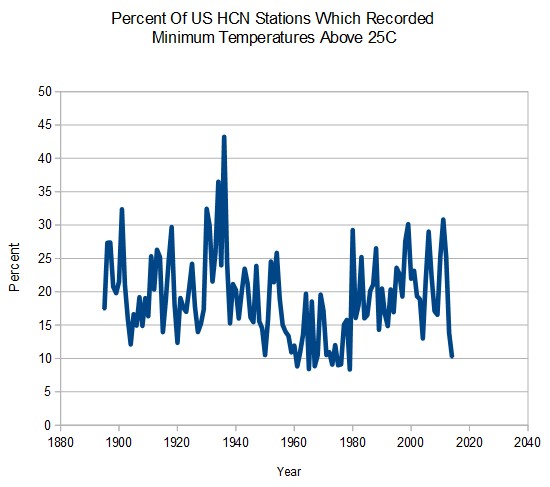
Smoking Gun Of Massive Climate Fraud At NCDC And The EPA

The EPA has this graph on their website, based on the NCDC Climate Extremes Index


It shows that the area of the US with hot daily summer temperatures is at record levels.

The graph is completely fraudulent. In fact it is inverted. Prior to 1960, the area of the US which reached 100 degrees during summer was quite a bit higher, and in 1936 seventy-five percent of stations reached 100 degrees. The percentage of the US reaching 100 degrees every year is much lower now, with 2014 close to a record low.

The EPA graph shows 2012 as the hottest, when in fact it wasn’t even in the top ten. They show 1936 at 50%, when in fact it was 75%.


Next is the minimum temperature graph – again in sharp disagreement with the EPA graph.


This metric is not affected by TOBS or homogenization. Apparently the good people at NCDC are simply fabricating numbers, because I used their thermometer data in this analysis.

SOURCE


Fossil-Fueled Fiction

By weather forecaster Joe Bastardi

It’s been a heck of a week for hysteria in the so-called Climate War. Apparently, with all the other things going on in the world, the hysteria has to be whipped up so people actually pay attention to this trumped-up agenda.

Look at this, an inconvenient truth if hysteria is your agenda: “World Disasters Report for 2013 – lowest number of catastrophies and deaths in 10 years.”

That’s right. All this screaming and yelling about how bad it is, and we find that we are at a decade low in terms of catastrophes and deaths. Wait a minute – isn’t this extreme of non-extremes an extreme in itself? This lack of disasters is a disaster since it’s a sign there has to be more disasters. After all, how can there be any less? Don’t be surprised if that argument shows up. After all, only in the world of the AGW alarmists can a record-breaking amount of ice in the Southern Hemisphere and the third highest snow total for September in the Northern Hemisphere be a sign it’s getting warmer. Apparently, humans are also changing the freeze process. Perhaps water now freezes at higher temperatures and that’s the reason increases in snow and ice are a sign it’s warmer? (Sarcasm.)

And then we get this from the founder of the “#ClimateSilence” and “#DontFundEvil” campaigns, Brad Johnson, who calls himself “Climatebrad”: “Dangerous, Fossil-Fueled Hurricane Gonzalo Barrels Toward Bermuda.”

Is that so? Gonzalo went through the area we said in April would be primed for the strongest storms. We predicted one or two major hurricanes.

Guess what? Gonzalo was the second major hurricane of the year.

Apparently, this “fossil fuel” didn’t work too well. It weakened from Category 4 to Category 2 as it reached Bermuda – quite a bit different from the non-fossil fuel Hazel in October 1954 which hit the North Carolina coast as a Category 4 and caused hurricane force winds all the way into Canada.

Moreover, the hurricane season this year has gone almost exactly as our non-fossil fuel-based forecast said it would when we put it out in April! Look at the tracks of the storms, where we had the two prime regions for storm. All of the hurricanes had hit maximum intensity in our two main areas. We had little activity in the deep tropics. Over 80% of the total ACE (Accumulated Cyclone Energy) index this year is in the two shaded areas. If there is any criticism, it’s that the area of highest threat should have been centered east about 300 miles. But without any of this fossil fuel nonsense, this forecast from April targeted the season we have had. We are within one now of the total number and all the hurricanes (Dolly was tropical storm) have gone through our areas. If we get a late season development later this week, it reaches the low end of the total number. The forecast had one or two major hurricanes, and we’ve had two form. As of Sunday PM, we are near 75% of total ACE.

Or how about this for a headline: “Some cities try to stem the fossil-fueled flood in South Florida.”

There's the strategy! Every event is fossil-fueled now. This example is from someone who could not possibly have had the life he has had, or could do what he does (this applies to all of us) without fossil fuels. Which is one of the things that bugs me so much about the whole AGW movement. Here we are, all nice and warm with our marvelous technology, and the same people and industries that help so much make it that way are now demonized and destroyed. I believe the word to describe someone that does that is “ingrate.”

Just a reminder folks: The true"hockey sticks" of fossil fuel, given the fact there are tree ring studies such as Liu’s from China, are not with temperatures, but with world wide GDP and life expectancy.


Temperatures from 400BC -- no hockeystick


Wealth from 1500 AD.  A REAL hockeystick


Another real hockestick

Though showing you only a couple of examples, it’s obvious the strategy of the AGW alarmists is to simply blame everything on fossil fuels. Even in the year of a lack of extreme events, they are trumpeting all weather events as evidence they are right. In a way, they are playing an “Everybody Gets a Trophy” card (no matter what we say, we are right, give me my trophy) and a victim card (the evil fossil fuel people are destroying us; never mind we are far better off than we would have been if what we are pushing was enacted from the get-go).

I guess then it’s okay for me to call what they do what it is: FOSSIL-FUELED PROPAGANDA.  Why not? They claim everything else is.

SOURCE


No apologies to Bob Carter?

When Carter first drew attention to the cessation of global warming after 1998, he was roundly abused, condemned and told he was wrong.  Now that even Warmists admit to what they call the "pause" in warming, is anybody apologizing to Carter and admitting that he was right after all?  Certainly no Warmists are

It was an Australian scientist, Bob Carter, who first drew attention to the flattening trend in an article in Britain’s The Telegraph in April 2006. Carter reviewed the official temperature records of the Climate Research Unit at the University of East Anglia for the years 1998 to 2005 and asked: “Does something not strike you as odd?”

Carter’s reward for identifying the lack of global warming was to have his professional reputation trashed. When Carter repeated his suggestion in the Australian press a year later, the CSIRO felt obliged to respond. Carter had presented “an unethical misrepresentation of the facts”, wrote Andrew Ash, acting director of the CSIRO’s Climate Adaptation Flagship. “All scientists welcome honest criticism since it helps to sharpen our analyses and improve our understanding, but scepticism based on half-truths and misrepresentation of facts is not helpful.”

ABC online’s The Drum refused to run his commentary. ABC Radio National’s science broadcaster Robyn Williams gave an open microphone to Grantham Research Institute on Climate Change communications director Bob Ward, who accused Carter of “desperately seeking bits of information to back up a ­theory”.

Political scientist Robert Manne said the likes of Carter, award-winning geologist Ian Plimer and former head of the National Climate Centre at the Bureau of Meteorology William Kininmonth “have to be resisted and indeed denounced” along with the “anti-political correctness and anti-collectivist ideologues, the right-wing media and the fossil fuel corporations”.

As recently as two years ago, former finance minister Nick Minchin was mocked on the ABC’s Q&A for suggesting that temperatures had plateaued. “There is a major problem with the warmist argument because we have had rising CO2 but we haven’t had the commensurate rise in temperature that the IPCC predicted,” he said.

“That’s just not true Nick,” responded Anna Rose, chairwoman of the Australian Youth Climate Coalition.

The University of NSW’s Matthew England joined in. “What Nick just said is actually not true. The IPCC projections of 1990 have borne out very accurately the projections now 22 years old.”

As it happens, it was true. The 1990 Intergovernmental Panel on Climate Change report predicted temperature rises of 0.3C each decade. In fact, according to the latest report global temperatures have risen only 0.14C per decade since 1978.

In September last year a draft version of the fifth assessment report of the IPCC’s working group 1 that assesses the physical science of climate finally acknowledged the gap between computer projections and observed surface temperatures between 1998 and 2012. The IPCC was not so bold as to admit that its previous reports were wrong. It did accept, however, that there had been a “global mean surface temperature trend hiatus”, which amounts to the same thing.

If science worked as purely as Francis Bacon suggested it should, by the application of induction and observation, climate science would have moved on by now. Experts, however, are only human. Too many professional reputations have been invested in a fixed idea for it to be simply abandoned.

The heating has not stopped, we are told, it has simply “paused”. The word bristles with presumption. Despite their appalling track record in the past 20 years, climate scientists still believe they can predict how temperatures will move in the future.

“The ocean is absorbing huge amounts of heat energy and then will toss it back on us further along,” Dr Karl told Delroy.

Nobody suggested that temperatures should rise in a straight line, he said. “It’s much more complicated than that … there are so many factors involved, El Nino, La Nina, Pacific Decadal Oscillation, etc, that suggests that you need a 17-year window to able to look past the noise.

“And here they are saying we’re looking at a nine-year window and it looks sort of not as uppity as before. Well that’s easy, it’s not a 17-year window.” Dr Karl Kruszelnicki is ignoring facts that even Warmists now admit -- the "pause" has gone on for 18 years]

SOURCE

***************************************

For more postings from me, see  DISSECTING LEFTISM, TONGUE-TIED, EDUCATION WATCH INTERNATIONAL, POLITICAL CORRECTNESS WATCH, FOOD & HEALTH SKEPTIC and AUSTRALIAN POLITICS. Home Pages are   here or   here or   here.  Email me (John Ray) here.  

Preserving the graphics:  Most graphics on this site are hotlinked from elsewhere.  But hotlinked graphics sometimes have only a short life -- as little as a week in some cases.  After that they no longer come up.  From January 2011 on, therefore, I have posted a monthly copy of everything on this blog to a separate site where I can host text and graphics together -- which should make the graphics available even if they are no longer coming up on this site.  See  here or here

*****************************************


Thursday, October 23, 2014


Do Italian chamois prove global warming?


In the Italian Alps there are records of the weight of animals shot by hunters -- and the carcasses of chamois goats are now quite a bit lighter than they used to be.  Why?

The Warmist researchers below discovered that betwen 1979 and 2010 temperatures in the study area rose substantially  -- by around 3 degrees.  And that is the first oddity.  Global temperatures over that time rose by only tenths of a degree.  So there were some LOCAL effects at work on temperatures in the area.  The results tell us nothing about GLOBAL warming.

But do they tell us anything about what might be if the whole world warmed by the same amount?

Probably not.  In best Warmist style they used models to analyse  their data,  thus introducing possibilities of arbitrariness.  And the result is that there is no clear test of whether temperature was the driver of the effects observed.  And there was another clear driver -- population density.  The population of animals in the study area rose during the time of the study. So if there are more goats competing for feed each goat is likely to be less well-fed.  And calorie deficiency is well know to shrink body mass.

So competent research would have used some type of regression analysis to remove the effect of density before temperature effects were looked for.  The authors did not do that.  They simply plugged in both density and temperature into their models -- leaving unanswered whether there was any statistically significant effect of temperature after the variations in density had been allowed for.  Very sloppy!


Goats are shrinking as a result of climate change, researchers have claimed.  They say Alpine goats now weigh about 25 per cent less than animals of the same age in the 1980s.  Researchers say it is a stark indication of how quickly climate change can affect animals.

They appear to be shrinking in size as they react to changes in climate, according to new research from Durham University.

The researchers studied the impacts of changes in temperature on the body size of Alpine Chamois, a species of mountain goat, over the past 30 years.  To their surprise, they discovered that young Chamois now weigh about 25 per cent less than animals of the same age in the 1980s.

In recent years, decreases in body size have been identified in a variety of animal species, and have frequently been linked to the changing climate.  However, the researchers say the decline in size of Chamois observed in this study is striking in its speed and magnitude.

The research, funded by the Natural Environment Research Council is published in the journal Frontiers in Zoology.

Lead author Dr Tom Mason, in the School of Biological and Biomedical Sciences, at Durham University, said: 'Body size declines attributed to climate change are widespread in the animal kingdom, with many fish, bird and mammal species getting smaller.

'However the decreases we observe here are astonishing. 'The impacts on Chamois weight could pose real problems for the survival of these populations.'

The team delved into long-term records of Chamois body weights provided by hunters in the Italian Alps.

They discovered that the declines were strongly linked to the warming climate in the study region, which became 3-4oC warmer during the 30 years of the study.

The team believes that higher temperatures are affecting how chamois behave.

'We know that Chamois cope with hot periods by resting more and spending less time searching for food, and this may be restricting their size more than the quality of the vegetation they eat,' said Co-author Dr Stephen Willis.

'If climate change results in similar behavioural and body mass changes in domestic livestock, this could have impacts on agricultural productivity in coming decades.'

SOURCE

Environmental change and long-term body mass declines in an alpine mammal

By Tom HE Mason et al.

Abstract

Introduction
Climate and environmental change have driven widespread changes in body size, particularly declines, across a range of taxonomic groups in recent decades. Size declines could substantially impact on the functioning of ecosystems. To date, most studies suggest that temporal trends in size have resulted indirectly from climate change modifying resource availability and quality, affecting the ability of individuals to acquire resources and grow.

Results
Here, we investigate striking long-term body mass declines in juvenile Alpine chamois (Rupicapra rupicapra), within three neighbouring populations in the Italian Alps. We find strong evidence that increasing population density and warming temperatures during spring and summer are linked to the mass declines. We find no evidence that the timing or productivity of resources have been altered during this period.

Conclusions
We conclude that it is unlikely that environmental change has driven body size change indirectly via effects on resource productivity or phenology [growth cycles]. Instead, we propose that environmental change has limited the ability of individuals to acquire resources. This could be due to increases in the intensity of competition and decreases in time spent foraging, owing to high temperatures. Our findings add weight to a growing body of evidence for long-term body size reductions and provide considerable insight into the potential drivers of such trends. Furthermore, we highlight the potential for appropriate management, for instance increases in harvest size, to counteract the impacts of climate change on body mass.

Frontiers in Zoology 2014, 11:69  doi:10.1186/s12983-014-0069-6


A New Documentary Profiles "Liars for Hire"

The story below -- based on a book by Naomi Oreskes --  calls distinguished climate scientist Fred Singer (a man who has made enormous contributions to atmospheric physics research) a liar and a snake-oil salesman.  It is as we constantly get from Warmists -- all abuse with not a single scientific datum mentioned.  Logicians refer to such discourse as the "argumentum ad hominem"  -- one of the classic informal fallacies of logic.  But who expects logic from Warmists?

So why the extreme abuse of a prominent and truth-telling scientist?  It is the old Leftist tactic of projection -- accusing others of what is true of yourself. As I have pointed out recently, it is Naomi Oreskes who is the fraud and a liar.  She published a claim that all the scientific journal abstracts she could find on global warming agreed with it.  Benny Peiser, however, tried to replicate her study but got radically different results.  Skepticas can PROVE who the fraud is

Fred Singer has been taking advice on whether he should sue over  the libels against him but there is no way he can match the deep pockets of the Greenies.  If Oreskes & Co.  appeal a verdict against them, the cost could run to well over a million and even if they lose the appeal Singer would still face a huge loss.  In America, unlike most other jurisdictions, costs are usually not awarded against the unsuccessful party.  Very few Americans can afford to contest a libel


The New York Film Festival, now in its fifty-second year, is unusual in that it combines big-money extravaganzas like Gone Girl and Birdman with small, worthy films whose publicity budgets would barely cover the cost of Ben Affleck’s body waxings. Given the presence of so much of the film world in one place, the festival allows these latter movies to vastly increase their ability to secure media attention without the tens of millions of dollars that the studios devote to their superheroes.

A new documentary shown twice at the festival, and scheduled to be released in March, got my attention. Merchants of Doubt is directed by Robert Kenner and based on the 2010 book by Naomi Oreskes and Erik Conway, two esteemed historians of science. The film, simultaneously entertaining, instructive and extremely important, traces the techniques through which profit-seeking corporations seek to undermine honest science in the public mind so that they might continue to make money poisoning our bodies and destroying our planet.

The argument can be condensed to one simple idea: the tactics perfected by the tobacco industry, which were designed to obfuscate the cancer-causing nature of its products back in the 1950s and ’60s, are now widespread throughout corporate America. When an internal Brown & Williamson memo declared decades ago, “Doubt is our product since it is the best means of competing with the ‘body of fact’ that exists in the mind of the general public,” it created the template for countless oil, coal, chemical, agricultural, tobacco and manufacturing companies, as well as the front groups they fund and, more than occasionally, invent. By paying off members of Congress and exploiting the structural vulnerabilities of “objective” journalism, these companies have been able to fool the public and enrich themselves through a kind of slow-motion “murder for hire” operation.

The book is a first-rate piece of journalistic investigation and scientific inquiry. But we live in a culture in which the influence of books pales in comparison with that of cinema (to say nothing of television or even video games). Naomi Oreskes, who appears extensively in the film, told me that, yes, “the technical content is greatly simplified…. In the book, we had extensive but (hopefully) clear explanations of the science, including how and when scientists had come to understand the threats represented by acid rain, ozone depletion, climate change, etc. The film, however, has greater emotional impact. It’s less intellectual, but more visceral.”

The pioneers in the field are not only the liars for hire employed by the tobacco industry for so many decades, but also Cold War scientists like Robert Jastrow, Fred Seitz and William Nierenberg, who initially founded the George C. Marshall Institute to promote Ronald Reagan’s Star Wars boondoggle and then switched gears to lie about climate change—a task in which they’ve been joined by scientist/snake-oil salesman Fred Singer, who also cares more about opposing all forms of corporate regulation than he does about truth.

But the star of this show is the astonishingly charming rogue Marc Morano, a frequent cable-television guest who admits, “I’m not a scientist, but I do play one on TV.” Morano, the founder of ClimateDepot.com, not only spouts his nefarious nonsense about science everywhere he goes but is also in the business of ensuring the mau-mauing of genuine scientific researchers who have felt a responsibility to go public with the dangers we face. “We went after James Hansen and Michael Oppenheimer and had a lot of fun with it…we mocked and ridiculed,” Morano brags. He has also published their private e-mails, both as a means of harassment and as a warning to other scientists who might be considering doing the same thing.

Where are the media in all of this? As Oreskes explains, “It was an explicit part of the strategy of merchandising doubt to use the media to create the impression of controversy. If the media are not pulled in, the strategy fails. So a large part of the story is industry courting and, where necessary, pressuring the media to give ‘equal time’ to its views. Interestingly, what we found was that overt pressure was fairly rare. The media didn’t need to be pressured.”

SOURCE


Some wisdom from 1884


This New York Herald article of Friday, February 1, 1884 says that  climate change is not involved in the California drought of that era.  It points out the cyclicity of droughts in California.  So the present California drought has to be just part of a natural cycle too  -- particularly as there has been no global warming for the last 18 years


Climate change now 'irreversible' - claim

One wonders what drives the guy to make these unfounded prophecies. The only evidence he offers is the old theory that rising CO2 levels will have catastrophic effects -- despite the fact that markedly rising CO2 levels have had NO effect for the last 18 years.  He does say that CO2 for some reason takes 40 years to have an effect but that is a strange claim -- well outside the usual Warmist models.  It is however a safe claim: He may well not live long enough to see his theory disconfirmed.

He also thinks chemtrails are “geoengineering” the planet and that 9/11 was a controlled demolition.  He also lives in a straw house in the middle of the woods surrounded by animals.  A paranoid schzophrenic would be my guess


The climate change message is just depressing, no matter what way you look at it.  Best case scenario, we all have to change our lives dramatically, just to keep us vaguely on the right track.  Worst case scenario - were all doomed.

Unsurprisingly, that's a hard message for scientists to get us all to listen to, which might be why Professor emeritus Guy McPherson is a teacher of natural resources, ecology and evolutionary biology, but is also a grief counsellor on the side.

Prof McPherson taught and conducted research at the University of Arizona for 20 years before leaving the university in 2009.

He will be speaking about climate change in guest lectures in New Zealand from October 22 to November 1.

You can catch Prof McPherson at an event co-organised by AUT's School of Social Sciences and Public Policy and the Pacific Media Centre in Auckland on October 22 at 5.30pm.

Tonight on the Paul Henry Show, he explains that due to the arrogance of humans, the damage done is too far along and now irreversible.

Now, the only way to help planet Earth is to "terminate industrial civilisation".

SOURCE


Shale Boom Helping American Consumers as Never Before

Oil traders might see the 27 percent slide in global prices as a bear market. For U.S. consumers, it's more like an early holiday gift.

The drop in crude has pulled retail gasoline down more than 50 cents a gallon from the year's high in April. That means annual savings of $500 for the average U.S. household, which consumes about 1,000 gallons of fuel a year, according to data from the Federal Highway Administration and Energy Information Administration.

"That's like somebody putting dollars right in your pocket," David Hackett, the president of Stillwater Associates, an energy consultant in Irvine, California, said by phone on Oct. 14. "That sounds like Christmas presents, going out to dinner, being able to do something."

Gasoline's slide represents the biggest benefit that U.S. consumers have seen to date from a record boom in domestic oil production, a surge that's contributing to a global crude glut and helping reduce international prices. U.S. gasoline is being exported at record levels for this time of year.

More from Bloomberg.com: Monaco Murders Reveal Six Hidden Real Estate Billionaires

The average retail price fell 1.9 cents to $3.144 a gallon, Heathrow, Florida-based motoring group AAA said on its website. That's down from this year's peak of $3.696 in April and the lowest since February 2011. Futures have decreased 84 cents on the New York Mercantile Exchange over the same period, signaling there may be further declines at the pump.

Following Crude

Gasoline is following the larger drop in the oil market. Brent crude, the global benchmark, closed at $86.16 a barrel today on the London-based ICE Futures Europe exchange after slipping yesterday to $82.60, the lowest level since November 2010. U.S. benchmark West Texas Intermediate settled at $82.75 today on the New York Mercantile Exchange, after trading below $80 yesterday for the first time since 2012.

Prices are falling with U.S. oil output at the highest level since 1985 and the Organization of Petroleum Exporting Countries producing the most in more than a year. At the same time, the Paris-based International Energy Agency lowered its estimate for global demand growth for this year and next in an Oct. 14 report.

Americans are spending about $230 million a day less on gasoline than they were on July 4, based on prices and consumption, said Michael Green, a Washington-based spokesman for AAA, the country's biggest motoring group.

‘Free Money'

Most consumers are paying $5 to $15 less to fill their tanks than they were around the Fourth of July, according to Green. "This is free money that people can use for savings or other spending in time for holiday shopping," he said by e-mail on Oct. 15.

On top of sliding energy prices, food costs fell 0.7 percent in September, driven lower by eggs, baked goods and meat, IHS Inc., an Englewood, Colorado-based consultant, said in research note on Oct. 15. Combined, the drops stand to improve the holiday season both under the Christmas tree and on the dinner table, said Michael Montgomery, a U.S. economist at IHS.

"The two most observed prices by consumers are food and energy and they play the largest role in forming consumer opinions about inflation, providing a little more room for luxuries rather than facing a squeeze from necessities," he said in the report.

Retail sales over this holiday season, from November through December, are expected to be up 4.2 percent from last year, according to IHS. That excludes motor vehicles, gasoline and food purchases.

Holiday Season

"This holiday season -- with just about six weeks until Black Friday -- is expected to glitter in comparison to the last two years," Chris G. Christopher Jr., director of IHS's U.S. consumer economics group, said in a report on Oct. 15. "The recent news on the consumer front has been relatively favorable, especially as pump prices are falling."

Black Friday, the day after the U.S. Thanksgiving holiday, marks the start of the holiday shopping season. It falls on Nov. 28 this year.

Americans' expectations for the economy in October climbed to the highest level in almost two years. A measure tracking the economic outlook increased to 51 this month, the strongest since November 2012, from 41.5 in September, data from the Bloomberg Consumer Comfort Index showed yesterday.

Retail Sales

Retail sales slid 0.3 percent in September, following a 0.6 percent gain in August that was the biggest in four months, Commerce Department figures show.

"Reconciling consumer confidence with consumer spending continues to be a challenge," said Jack Kleinhenz, the chief economist at the National Retail Federation in Washington, who described last month's retail sales as "surprisingly weak."

While spending on gasoline accounts for less than 5 percent of the average person's disposable income, it has an "undue influence on consumer confidence" because of the way the fuel is sold and paid for, Christopher said Oct. 15 by phone from Lexington, Massachusetts.

"When you go over to that pump, and you squeeze that liquid into your car, you're seeing the amount going higher and higher, and that's an unusual way of consuming something," Christopher said. "It's the way we purchase it. It's immediate. Gasoline is different from almost any other consumer item."

SOURCE


Big dam building program in Australia

The Greenies will be livid

PLANS  for the biggest dam-building and irrigation program in decades will be unveiled today in a major policy blueprint for the ­future of the nation’s agricultural sector that identifies 27 water projects for potential commonwealth investment.

The agricultural competitiveness green paper will outline a ­nation-building agenda that contemplates dam expansions, infrastructure development and greater access to ports.

Agriculture Minister Barnaby Joyce will declare the government is moving to reinvigorate the dam-building agenda, arguing that it must recapture the vision and purpose of the post-war Snowy Mountains Scheme.

“Water is wealth and stored water is a bank,’’ Mr Joyce will say. “Sometimes the biggest impediment to our nation returning to the vision and purpose that built the Snowy Mountains Scheme is ourselves ably assisted by the ­caveats of sacred invertebrates, amphibians and molluscs.

“Chaffey Dam (in NSW) was almost stopped by the booroolong frog, Nathan Dam (in Queensland) was stopped by the boggo­moss snail, yet Lake Argyle (in Western Australia) created two RAMSAR wetlands that would prevent us getting rid of that dam, not that we want to.’’

The last major greenfields dam completed in Australia was the Wyarolong Dam in southeast Queensland, finished in 2011.

The pace of dam development has slowed significantly across the ­nation since the 1980s amid increasing opposition from envir­onmentalists to new projects.

The green paper identifies six irrigation projects in Tasmania and Victoria that could be considered for federal government ­investment within a year.

Five of these are Tasmanian ­irrigation projects — Southern Highlands, Scottsdale, Circular Head, Swan Valley and North Esk — and the sixth is the southern pipeline project in the Macalister irrigation district in Victoria’s Gippsland.

Four projects — the Emu Swamp dam on the Severn River near Stanthorpe in Queensland, an expansion of the Nathan Dam on the Dawson River in Queensland, the Wellington Dam ­Revival Project in Western Australia and the Lindenow Valley Water Security Project on the Mitchell River in Victoria — are identified as potential candidates for federal funding, pending further investigation.

Another 17 projects are flagged as likely to be suitable for further consideration for assistance to ­accelerate feasibility studies, cost-benefit analysis or design.

These include the water infrastructure components of stage three of the Ord irrigation scheme in Western Australia and the Northern Territory.

Four projects in NSW have been identified, including an ­enlargement of the Lostock Dam in NSW’s Hunter Valley, Apsley Dam at Walcha, the Mole River Dam in northern NSW and ­Needles Gap on the central ­tablelands.

A string of major water projects have been identified in north Queensland: the Burdekin Falls Dam expansion; the Fitzroy Agricultural Corridor; the Mitchell River system; Nullinga Dam near Cairns; and Urannah Dam near Collinsville.

Further study is slated for a north Queensland irrigated agriculture strategy around the Flinders and Gilbert river catchments. In South Australia, upgrades to dams in the Clare Valley and the use of waste water in the northern Adelaide plains are under consideration.

While emphasising not every project will get federal funding or go ahead, Mr Joyce says the government’s dams program has ­already started. “In the last month we have started the construction of the Chaffey Dam upgrade (in NSW) and allocated $15.9 million for the continuation of the piping and capping of the Great Artesian bores,” he says.

Mr Joyce will say the nation must drive down transport costs to make the rural sector more ­effective and leverage the mining sector’s common interest in requiring water and the movement of bulk commodities. He will highlight the government’s $300m to start the inland rail line between Melbourne and Brisbane and say he hopes it is later ­extended to Gladstone.

“We must work with the mining industry to see the transport capital and water capital built that is in both our interests as bulk commodity producers and users,’’ he will tell the National Farmers Federation congress in Canberra today.

The green paper will argue that improving access to reliable water supplies and better managing existing water resources is ­essential for the continued growth of the agricultural sector.

Water resources in northern Australia are less developed than in the south, meaning opportunities exist for strategic developments to support the development of water-dependent industries. About 65 per cent of Australia’s run-off occurs in far north Australia and coastal Queensland, and only 6.8 per cent in the Murray-Darling Basin.

Declaring farming and “primary and overwhelming ownership” of farms by Australians to be a national good, Mr Joyce will argue that if the nation wants to increase its agricultural output, it must motivate and send the right signals to make people want to do that.

This will involve cheaper and more effective ways of getting products to market.

The paper will argue that while a market solution is preferable, monopolies and oligopolies must be closely monitored and a fair return to the landholder is essential to the future of the industry.

The paper will back the controversial “effects test’’ supported by the chairman of the government’s competition review, Ian Harper.

Mr Harper, in his interim ­review, backed an effects test that would prohibit business and trading conduct that would have the effect of substantially lessening competition.

The 27 water projects listed in the green paper were identified after Mr Joyce chaired a ministerial working group to identity how investment in water infrastructure, such as dams and groundwater storage, could be ­accelerated and to identify priorities for investment. Tony Abbott put dam building on the national agenda prior to the last election, at the height of the Queensland floods in 2011.

The green paper will argue that government involvement in water infrastructure development should be directed to activities that are in the national interest, deliver net economic and social benefits, and broader public benefits. But given the states and territories have primary responsibility for water resources, strong state government support for a project is also a prerequisite.

SOURCE

***************************************
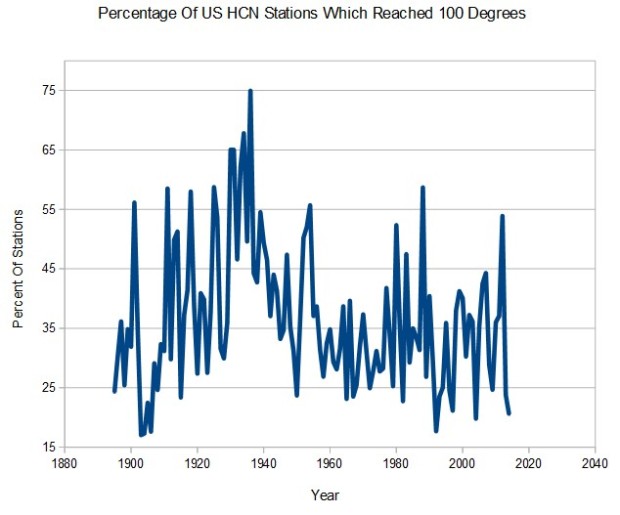
For more postings from me, see  DISSECTING LEFTISM, TONGUE-TIED, EDUCATION WATCH INTERNATIONAL, POLITICAL CORRECTNESS WATCH, FOOD & HEALTH SKEPTIC and AUSTRALIAN POLITICS. Home Pages are   here or   here or   here.  Email me (John Ray) here.  

Preserving the graphics:  Most graphics on this site are hotlinked from elsewhere.  But hotlinked graphics sometimes have only a short life -- as little as a week in some cases.  After that they no longer come up.  From January 2011 on, therefore, I have posted a monthly copy of everything on this blog to a separate site where I can host text and graphics together -- which should make the graphics available even if they are no longer coming up on this site.  See  here or here

*****************************************