Thursday, January 11, 2018


Warning: wild lands of Scotland ‘irrevocably damaged’ by push for wind power 

The retiring head of the body representing Scotland’s climbers and hillwalkers has condemned as “unsustainable” the growth of wind farms on wild land across the country.

David Gibson is to step down as chief executive officer of Mountaineering Scotland in March, after 11 years leading the group of 14,000 members.

He said that thought Mountaineering Scotland had won several battles against intrusive wind farms it had also lost others and some areas of the Highlands were now “irrevocably damaged”.

“The vast majority of the public have never been near the mountains so they have no real idea of the damage that wind farms can do the the landscape,” said Mr Gibson.

“It is not sustainable for the First minister or [national tourism body] VisitScotland to trumpet Scotland as the best country in the world to visit while these large wind farms are being built on such a scale.

“And there are two dozen more in the pipeline of concern because of their size and positioning.

“There have already been too many windfarms constructed – or will be built – that have irrevocably damaged the landscape, or will do when they are constructed.”

Mr Gibson singled out the Creag Riabhach Wind Farm to be developed on a site on the Altnaharra Estate in Sutherland, and the Stronelairg wind in the Monadhliath mountains to the east of Fort Augustus, as examples of schemes that would “wreck the landscape”.

Danish billionaire Anders Povlsen had sought a judicial review through his company Wildland into the decision to allow the 22-turbine Creag Riabhach wind farm to be developed, but lost at the Court of Session in Edinburgh during the summer.

Creag Riabhach was the first such project to have been approved in a designated wild land area since the ministers adopted a revised planning framework in 2014.

The rules were devised to protect the country’s most rugged and beautiful landscapes, but campaigners have said they fall short.

“It has been very challenging taking on Scottish Government policy and big business like SSE when we only have a £500,000 budget for the entire organisation,” added Mr Gibson.

“It has all been done on a shoestring. The mountains have changed considerably over the last 20 years – then there were no wind farms on them.

“The Government has never sat down and consulted on spatial planning policy for wind farms.

“I think they have now come some way in regards to National Scenic Areas to protect them against wind farms. I would like to see that extended to wild land.”

Mr Gibson, 65 added that he planned to spend his retirement exploring more of Scotland’s hills and Mountaineering Scotland is in much better shape than when he joined it.

He added they had won some battles and attempted to “protect mountaineers’ rights to enjoy their sport – particularly at times when some people have been calling for them to be closed after certain tragedies”.

A government spokesman said wind power and other renewables were already playing a crucial role in meeting Scotland’s move towards a low-carbon future.

He added: “However, we also have clear policies to ensure developments only go ahead in the right places and Scottish planning policy now provides additional protection for our National Parks and National Scenic Areas and the impacts on wild land are now formally considered as a material factor in determining planning decisions, where relevant.”

SOURCE


Repairing the Damage to Children Caused by Climate Alarmists: A letter from Ross McKitrick

It seems the high school students mentioned here om January 1st  sent their 5 questions to other distinguished climate authorities, not least to Ross McKitrick and to Richard Lindzen.  Both have made their replies public.  Here is the one from McKitrick:

'In late 2017 I was contacted by a group of students at a high school in Europe asking if I would answer some questions on climate change for a project they were working on. Here are the questions they asked, and the answers I gave them.

1. What is behind global warming? Over the last 150 years there have been influences due to strengthening solar output, land-use changes, increased greenhouse gases and natural variability, among other things. The dominant school of thought in climatology is that rising greenhouse gas levels explain most of the overall warming trend since the 1950s. There are good reasons to support this, although the climate system is too complex to assume the matter is settled. The mechanisms by which the sun affects the climate are not well understood, nor are the mechanisms behind clouds, ocean-atmosphere interactions and other basic processes. The relative lack of warming in the tropical troposphere and over the South Pole are not easily explained under the theory that greenhouse gas levels dominate the climate system.

2. What can we do to prevent global warming? If it is a natural process, nothing. If it is mainly due to rising greenhouse gas levels we need to ask instead whether we would want to prevent it. It would require complete cessation of fossil fuel use, which would cause intolerable economic and social costs and would only yield small changes in the time path of global warming for the next century or more. Even large-scale emission reductions (such as under the Paris and Kyoto treaties) would only cause a small slowdown in the accumulation of CO2 in the atmosphere by 2100, so any benefits from such policies are likewise tiny, yet the costs would be enormous. The small warming that took place since the early 20th century was largely beneficial, and the astonishing social and economic benefits associated with cheap fossil energy far outweighed any problems it might have created. It is likely that this will be true over the next century as well.

3. If we don't do anything about it, how does it affect us and our descendants? Humans flourish in every climate on earth from the tropics to the polar regions. We are very adaptable. The only issue is whether changes take place so quickly that we cannot adapt, but history shows this to be a rare situation. Climate processes are slow, and if the climate models are correct, the changes are gradual and predictable. People can adapt to warming conditions more easily than to cooling conditions. The IPCC predicted that over the next hundred years, changes in economies and technology will have a much larger effect on peoples' lives than changes in climate.

4. What will happen in the future, and what are the alternatives for us, if the Earth becomes unlivable? There is no chance that greenhouse gases will make the Earth unlivable. If an asteroid hits, or another ice age begins, or something like that, then we face catastrophe. But the question essentially asks, what happens if we all die? The answer is, we all die. 2

5. How can we save Earth if it isn't too late? To ask the question is to reveal that you greatly overestimate your size in relation to the Earth. We could not ruin the Earth even if we tried, nor could we save it if it faced ruin. Our planet is a remarkably adaptable and robust home. We don't live in a giant china shop where everything is fragile and breakable, it's more like a playground where everything is made to withstand considerable wear and tear. Over the Earth's history the amount of CO2 in the air has typically been 2-10 times higher than at present yet the plants, animals and oceans flourished. Much of the past half million years have been ice age conditions which wiped out life on the northern continents, yet it always came back as soon as the ice retreated. If you take the view that the ordinary human pursuit of prosperity and happiness will somehow destroy the planet you will end up adopting an anti-human outlook. This is both a scientific and an ethical error. Set your sights on a more modest scale, by trying to be a good citizen and be helpful to the people around you, and you will make much better decisions than if you are thinking in terms of faraway abstract categories like saving the Earth.

Good luck with your studies.'

SOURCE


Global Cooling Expected For 2018 …Warming Projection May Be One Of The Great Scientific Blunders Of Modern Times

Global warming scientists continue struggling to find an explanation for the nearly 2 decades long global warming pause that has taken hold of the planet since the late 1990s.

The most recent temperature spike was due to the natural El Nino event at the equatorial Pacific, and that has disappeared over the last months. Alarmists claim that the global temperature is still 0.5°C above normal, yet it’s been so for the past 20 years!

Cooling signs abound

The search to explain the unexpected lack of warming is about to get a little tougher as 2018 is poised to see a further cooling across the globe. Signs of this cool-off are showing up in Greenland, the Arctic, Antarctica, Greenland and all across the northern hemisphere. A huge swath of North America has started 2018 with record cold.

La Nina to persist until spring

Another major reason cooler global surface temperatures are expected in 2018 is the now strengthening La Nina event taking place as equatorial Pacific surface temperatures have plummeted by 1-2°C since June of this year. This means that global cooling lies ahead for the planet in the months ahead. The latest forecast sees La Nina conditions extending into next spring:

There is a lag of about 6 months between the ocean surface temperature and satellite global lower troposphere temperatures. That means the la Nina low forecast for January, 2018, will start showing up in the temperatures by late spring (NH).

Cooling Pacific and Indian Ocean far more signficant

Alarmists also like hollering about the current unusual warmth at the poles. But veteran meteorologist Joe Bastardi tweets here that the “warmth” at the poles is not what we need to be looking at, writing that “far more significant” is the cooler area from the Indian ocean through Africa, the Atlantic, South America and the Pacific.

Cooling where it’s warm and humid a bigger deal in future global temp considerations.”

In a nutshell, a cool square kilometer over the equatorial Pacific far outweighs a warm square kilometer over the North Pole. All that red coloring scientists like to use to make the poles look hot is mostly hype.

Solar activity near 200-year low

In the current solar cycle 24 sunspot activity is now at the lowest level in almost 200 years. In the early 1800s the Earth found itself in the grips of the Dalton Minimum, a cold period with similarly low solar activity:

The accumulated sunspot anomaly from the mean of the previous 23 cycles – 107 months into the cycle.

A number of distinguished scientists and dozens of scientific publications warn that the planet may in fact be entering a period of global cooling. There were 7 such papers in 2017 alone.

One of the great scientific blunders of modern times

The upcoming solar cycle 25 also is expected to be a weak one, which bodes ill for the planet for the next 10 to 15 years. The current solar cycle 24 is the third weakest since the systematic observation of solar cycle activity began in 1755. Only solar cycles no. 5 and 6 (1798 – 1823 during the Dalton Minimum) were weaker.

As the above chart shows, weak solar cycles are linked to cool periods and come in bunches, alternating with the warm solar cycle bunches. It’s little wonder that the last 100 years have seen a warming, as cycles 17-23 were all above normal. If the pattern holds, cycle 26, and possibly even cycle 27, will also be below normal, which points to a cooling 21st century.

Ironically policymakers, in typical inept fashion, may be erroneously preparing societies for the completely wrong scenario and thus be unwittingly committing one of the great scientific blunders of modern times.

SOURCE


GREENIE ROUNDUP FROM AUSTRALIA

South Australia planning to build the world’s largest thermal solar plant

Will someone save South Australians from their crazy Green/Left government?  They have got a big battery that peters out in only a matter of minutes and windmills that fall over in South Australian wind and now they are going to get something that other people have been trying to make work for many years.  Solar thermal just does not work as advertised.  They sometimes even use more energy than they produce and require huge subsidies to keep working.  The Ivanpah plant in California and the Abengoa experiment in Spain are cases in point

Following the success of the world’s largest battery, South Australia is aiming to build the world’s largest thermal solar plant.

SolarReserve’s $650 million, 150 megawatt Aurora solar thermal plant has received state development approval.

Construction of the facility will begin this year.

South Australian acting energy minister Chris Picton called the project a welcome development for the state.

"It's fantastic that SolarReserve has received development approval to move forward with this world-leading project that will deliver clean, dispatchable renewable energy to supply our electrified rail, hospitals and schools," Mr Picton said

“South Australia is fast becoming a global centre for the development of renewable energy with storage, with a range of other projects set to come online over the next few years.”
Advertisement

Commenting on the latest approvals, SolarReserve chief executive Kevin Smith said it is a major milestone.

“It is a significant step in the development of the Aurora solar thermal power station, which will bring clean power generation technology to South Australia,” Mr Smith said.

The Clean Energy Council executive general manager Natalie Collard told Fairfax Media, "the price that the government will pay for power is remarkably low, considering solar thermal is a very young technology in Australia.

"The state has taken a series of positive steps towards greater energy independence which are really starting to pay off. And it has already met its target of 50 per cent renewable energy almost a decade early," she said.

“South Australia is providing the rest of the country a glimpse of a renewable energy future. Our electricity system is rapidly moving towards one which will be smarter and cleaner, with a range of technologies providing high-tech, reliable, lower-cost power."

The power plant will be able to generate 500-gigawatt hours of energy annually, providing power to around 90,000 homes, with eight hours of full load storage.

Once constructed, the facility will be the world’s largest single-tower solar thermal power plant.

It works by using multiple heliostats - which are in essence turning mirrors - to focus solar energy onto a single central tower.

This tower uses molten salt technology to store this heat, which it can later use to create steam to turn a turbine and generate electricity when needed.

The plant will displace the equivalent of 200,000 tonnes of CO2 annually.

Australia has two other large-scale solar thermal plants, a 44-megawatt plant at Kogan Creek in Queensland, and a small 9.3-megawatt facility built to support AGL’s Liddell coal-fired power plant in NSW, although neither is a single-tower style of thermal solar plant.

South Australia drew international focus late last year when, in a partnership with Tesla, it installed the world's largest single battery unit, capable of powering 30,000 homes.

The new plant will be located 30 kilometres north of Port Augusta, in South Australia.

SOURCE


Global cooling:  It's official!

The oceans are gradually losing the heat they accumulated in the years of El Nino

THERE’S no doubt last year was hot but eyebrows have been raised following a dump of climate data. Globally the world actually cooled slightly.

According to the Bureau of Meteorology’s (BoM) 2017 annual climate statement, released on Wednesday, the world got slightly cooler last year compared to 2016.

But put away dreams of skiing down the Blue Mountains or snow gently falling in Brisbane’s CBD — 2016 was the hottest year globally on record, temperatures are still well above average and 2017 will go down as Australia’s third warmest year in history.

Climate researchers have said Australia remains “vulnerable” to the effects of climate change and only “political inertia” was preventing concrete steps being taken to tackle the issue head-on.

The BoM’s Head of Climate Monitoring, Dr Karl Braganza, said the national mean temperature in 2107 was 0.95C warmer than average.

“Despite the lack of an El Nino — which is normally associated with our hottest years — 2017 was still characterised by very warm temperatures,” he said.

SOURCE


Erratic weather: with both record highs and lows

Not much of a story in that for Warmists

The drop-dead bats of Sydney’s summer shocker have joined the frozen lizards of Florida as proof positive the weather gods have gone crazy.

With Donald Trump calling for a bit more global warming, Australia can only dream of getting a dose of America’s current Arctic chill.

It’s a steep learning curve. Climate change can now make things hotter and colder simultaneously, with the strangest of natural results.

As temperatures plunge in the US, frozen sharks have washed ashore after drowning because water had frozen in their gills. In the usually balmy, tropical southern panhandle of Florida, iguanas have fallen out of palm trees frozen solid. The reptiles were still capable of being thawed if placed into the sun.

In Australia, it has been a similar story but opposite.

As temperatures soared to an eight-decade high of 47.3C in western Sydney this week hundreds of bats fell out of trees dead in Campbelltown, literally cooked alive. News of the brain-fried flying foxes travelled around the world.


Australian fruit bats at home

Heat-affected bats fell out of the trees in Sydney in 1790 also.  Yes. 1790, not 1970.  Australia has always had episodes of extreme heat in summer

Given such shocking extremes it can be difficult to maintain perspective.

But even the Bureau of Meteorology’s head of climate monitoring, Karl Braganza, admitted yesterday it was not unusual for Australia to have the hottest city temperature in the world at this time of year, as it did this week.

The coincidence of the northern hemisphere winter with summer across the equator will see to that.

But BoM says its homogenised national temperatures are continuing to creep ahead, confirming concerns about a gradually warming world.

At the end of the day, however, weather is still the weather and climate, climate.

Current extreme events are not unprecedented and the fashion for “attribution science” to decide if they are more or less likely to occur does not change that.

Natural variation is still not fully understood. Unless you are prepared, as London columnist Matt Ridley controversially has been, to take the really, really long view.

Ridley concedes the world is slowly slipping back into a proper ice age after 10,000 years of balmy warmth.

But he says where interglacials start abruptly with sudden and rapid warming they end gradually with many thousands of years of slow and erratic cooling.

In geological terms it’s a sure bet another ice age is on its way.

When it does come, maybe in many thousands of years’ time, some things will remain the same.

It’s just the bats, the sharks and humans who really will have reason to complain about the weather.

SOURCE


Australian East Coast Narrowly Avoids a Widespread Blackout – Thanks to Coal

The spare coal capacity which saved the day during the heatwave will soon no longer be available.

Energy giant AGL plans to shutter its NSW based Liddell coal plant by 2022. They have so far refused federal government entreaties to keep the plant open. AGL plans to divert future investment towards government subsidised renewable projects.

WHY wouldn’t AGL shut down Liddell coal-fired power when global warming theory obsessed politicians are shelling out billions upon billions of taxpayers money to fund the unreliable energy, corporate rent-seeking, subsidy-sucking renewables scam.

I do hope “save the planet” greens and climate freaks suffer their fair share of zero electricity in high-demand times. Or, maybe it will take one of their relatives or loved ones to die of heatstroke or freezing cold for them to quit the collective climate change hysteria that is hurting the poor and destroying economies.

***************************************

For more postings from me, see  DISSECTING LEFTISM, TONGUE-TIED, EDUCATION WATCH INTERNATIONAL, POLITICAL CORRECTNESS WATCH, FOOD & HEALTH SKEPTIC and AUSTRALIAN POLITICS. Home Pages are   here or   here.  Email me (John Ray) here.  

Preserving the graphics:  Most graphics on this site are hotlinked from elsewhere.  But hotlinked graphics sometimes have only a short life -- as little as a week in some cases.  After that they no longer come up.  From January 2011 on, therefore, I have posted a monthly copy of everything on this blog to a separate site where I can host text and graphics together -- which should make the graphics available even if they are no longer coming up on this site.  See  here or here

*****************************************


Wednesday, January 10, 2018


The Bottom of the Ocean Is Sinking

The work noted below got its results by comparing an approximation to an estimate so is doubly guesswork. And since the decline found consisted of only eight hundredths of one inch we must allow for it being no more than an error of measurement

So I don't think I really have to mention it but the article is a crock in other ways too.  Where are the "melting ice sheets and glaciers" that they refer to?  96% of the earth's glacial ice is in Antarctica and that is  GAINING mass overall, not melting.

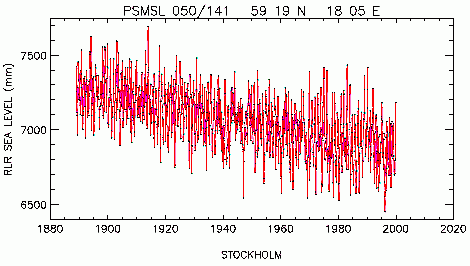
And if the earth's oceans are "swelling", we should be seeing big sea level rises.  But in lots of places worldwide sea levels are FALLING (e.g. here). It is only very dubious "corrections" for isostatic movements in Northern Europe that turn the falls into apparent rises

And that the isostatic adjustments are a crock is shown by the fact that there are substantial sea level falls even in isostatically stable parts of the world

Below is the raw sea level record from Stockholm, Sweden, showing a steady fall.  No wonder they called on isostatic assumptions to "correct" it!


The ice age ended long ago.  Assuming isostatic rebound from it still in the 21st century is totally implausible.

The whole article simply depends on conventional assumptions which are not supported by the evidence


The bottom of the ocean is more of a "sunken place" than it used to be.

In recent decades, melting ice sheets and glaciers driven by climate change are swelling Earth's oceans. And along with all that water comes an unexpected consequence — the weight of the additional liquid is pressing down on the seafloor, causing it to sink.

Consequently, measurements and predictions of sea-level rise may have been incorrect since 1993, underestimating the growing volume of water in the oceans due to the receding bottom, according to a new study.

Scientists have long known that Earth's crust, or outer layer, is elastic: Earlier research revealed how Earth's surface warps in response to tidal movements that redistribute masses of water; and 2017's Hurricane Harvey dumped so much water on Texas that the ground dropped 0.8 inches (2 centimeters), the Atlantic reported.

In the new investigation, researchers looked at more long-term impacts to the seafloor. They evaluated how much the shape of the ocean bottom may have changed between 1993 and 2014, taking into account the amount of water added to the ocean from liquid formerly locked up on land as ice. Previous research into seafloor stretching had omitted that extra water, the scientists wrote in the study.

To do that, they reviewed approximations of mass loss on land, as ice melted and drained into the oceans, and compared that to estimates of sea volume changes. They found that around the world for two decades, ocean basins deformed an average of 0.004 inches (0.1 millimeter) per year, with a total deformation of 0.08 inches (2 mm).

However, there were distinct regional patterns to the seafloor's bending and stretching, and the amount of sag in certain parts of the ocean bottom could be significantly higher — as much as 0.04 inches (1 mm) per year in the Arctic Ocean, for a total of 0.8 inches (20 mm), the study authors reported.

As a result, satellite assessments of sea-level change — which don't account for a sinking ocean bottom — could be underestimating the amount that seas are rising by 8 percent, according to the study.

The accuracy of future sea-level estimates could be notably improved if the sinking of the ocean floor were incorporated into the calculations, "either based on modeled estimates of ocean mass change, as was done in this study, or using more direct observations," the scientists concluded.

SOURCE


Pope Francis: Global Warming Is ‘Consequence of Human Activity’

He's just a typical "liberation" priest from South America.  When he steps outside religion to involve himself in secular issues he has neither authority nor expertise and creates disrespect for the church.  After pedophile priests, does the church really need a Leftist Pope?

Pope Francis took a strong stand on anthropogenic climate change Monday, telling a gathering of diplomats in the Vatican that global warming is a result of human action.

We must not “downplay the importance of our own responsibility in interaction with nature,” Francis told the Diplomatic Corps accredited to the Holy See. “Climate changes, with the global rise in temperatures and their devastating effects, are also a consequence of human activity.”

In his statement, Pope Francis went beyond earlier declarations that seemed to exclude the Church taking a formal stand on questions of climate science.

In his 2015 teaching letter on the environment, Laudato Si, the Pope explicitly declared that “the Church does not presume to settle scientific questions or to replace politics.”

In the same text, Francis said that he was encouraging debate rather than trying to impose his own understanding of environmental concerns.

“On many concrete questions,” he wrote, “the Church has no reason to offer a definitive opinion; she knows that honest debate must be encouraged among experts, while respecting divergent views.”

Francis also said it is necessary to create “a social debate” in which of those involved in any way can explain their problems and “have access to adequate and reliable information in order to make decisions for the common good,” something rarely seen in contemporary discussions of climate change that tend to exclude climate change skeptics.

Nonetheless, with the passage of time, Pope Francis has seemed to take an ever more decided stance behind the notion of manmade global warming, while sending signals that there was not much room for debate on the issue.

In November 2016, the Pope called climate change skeptics to an “ecological conversion,” while denouncing what he believed to be a “weak reaction” from governments to the climate crisis. He also criticized “the ease with which well-founded scientific opinion about the state of our planet is disregarded.”

On that occasion, the Pope also said that politicians had been “distracted” in implementing important measures to curb carbon emissions and blamed the sluggish adoption of COP21 protocols on “an economy which seek profit above all else.”

“Never before has there been such a clear need for science to be at the service of a new global ecological equilibrium,” Francis told his audience, while painting a picture of a world on the verge of “ecological collapse” and a “consequent increase of poverty and social exclusion.”

In his address to diplomats Monday, Francis continued along a similar vein, stressing the duty to leave “a more beautiful and livable world” to future generations and “to work, in the light of the commitments agreed upon in Paris in 2015, for the reduction of gas emissions that harm the atmosphere and human health.”

SOURCE


Exxon Prepares To Sue California Cities, Says They Contradict Themselves On Climate Change

ExxonMobil is apparently planning to sue the California cities and counties that have sued it over climate change, alleging they must be lying in their lawsuits or misleading potential investors in bond offerings. (AP Photo/Matthew Brown)

Some government officials in California are hypocrites pushing a political agenda that involves using private lawyers to sue and demonize ExxonMobil, the company is now arguing in a Texas state court.

On Jan. 8, Exxon took the first step towards suing those who orchestrated climate change lawsuits in California by asking the Tarrant County District Court to allow it to question an assortment of government officials and a Hagens Berman lawyer. The company says those local officials are talking out of both sides of their mouths - blaming Exxon for an impending flooding disaster while not disclosing that alleged threat to possible investors in their bond offerings.

In 2017, the counties of Marin, Santa Cruz and San Mateo and the cities of San Francisco, Oakland, Santa Cruz and Imperial Beach filed suit against dozens of energy companies, including Exxon and 17 other Texas-based businesses, over climate change. The company has previously been targeted by the attorneys general of Massachusetts and New York.

“It is reasonable to infer that the municipalities brought these lawsuits not because of a bona fide belief in any tortious conduct by the defendants or actual damage to their jurisdictions, but instead to coerce ExxonMobil and others operating in the Texas energy sector to adopt policies aligned with those favored by local politicians in California,” attorneys for the company wrote.

In doing so, they must have lied to potential investors in their respective bond offerings, the company claims.

Statements made to potential investors contradict allegations made by the municipalities when they sued the energy industry, the filing says. For example:

-San Mateo County’s complaint says it is “particularly vulnerable to sea level rise” and that there is a 93% chance the county experiences a “devastating” flood before 2050. However, bond offerings in 2014 and 2016 noted that the county “is unable to predict whether sea-level rise or other impacts of climate change or flooding from a major storm will occur";

More HERE


It’s All Over: German Parties Agree To Scrap Legally Binding 2020 Climate Target

Germany’s would-be coalition partners have agreed to drop an ambitious plan to lower carbon dioxide emissions by 40 percent from 1990 levels by 2020, two sources told Reuters on Monday — a potential embarrassment for Chancellor Angela Merkel.

Negotiators for her conservative bloc and the centre-left Social Democrats (SPD) told Reuters the parties had agreed in exploratory talks on forming a government that the targeted cut in emissions could no longer be achieved by 2020.

Instead, they would aim to hit the 40 percent target in the early 2020s, the sources said, adding that both parties are still sticking to their goal of achieving a 55 percent cut in emissions by 2030.

The deal would represent something of a u-turn by Merkel, who has long presented herself as an advocate for climate protection policies on the international stage.

SOURCE


Australia's Green Party: A rabble without a cause

The Greens have been heavily infiltrated by old Trots.  Both Rhiannon and Bandt are former members of Trotskyite organizations. Trots are the heavy haters among Leftists

The similarity between the words “progress” and “progressive” is one of the great curiosities of modern politics. Could perchance the two be related?

The meaning of the noun progress is clear enough, having served as a statement of political intent since the dawn of democracy. Progressive, on the other hand, is an adjective struggling to give coherence to a succession of exotic causes, many of which are likely to send us backwards.

Which leads us to the Greens, a party easily bored by the prosaic challenges of government — balancing budgets, defending borders, efficient service delivery, that sort of thing. How will the party fill its working day, now the battle of the rainbow has been won?

No amount of pink champagne could hide the Greens’ disappointment when the changes to the Marriage Act were agreed. It must have hurt like Hades to see a Liberal prime minister lapping up the applause. Even worse, with such a potent issue now off the agenda, the Greens are beginning to look like a rabble without a cause. In the fickle world of progressive politics, that is the quickest way to irrelevance.

Adam Bandt was less than exuberant when the Marriage Act amendments were passed. It wasn’t victory, he told parliament, merely “a watershed moment”. It was “not the end and not the beginning” since equality “will continue to elude us well after this bill is enshrined in law”.

What on earth could he mean? We were led to believe that the right to be joined in secular matrimony was la cause du siecle, the fulfilment of the promise of liberte, egalite et fraternite, not to mention sorority, and that once the legislation was passed we would ­finally be able to hold up our heads as members of a civilised nation.

But no, says Bandt, it is just “a step on a long, winding path towards justice”.

“We must remember that we are only dismantling one part of a system that bombards LGBTIQ people from every angle with a message that they are different,” he said.

A long, winding path towards justice is an essential element of the progressive narrative. Another is the dark past and bloody struggle, and Bandt made sure there was one of those as well.

“We must remember that every step towards equality for LGBTIQ Australians has been paid for with pain and sometimes blood — the blood of queer Australians and their allies who took to the streets to stand up for their rights, only to be batted down by batons and fists,” said Bandt, reaching for the cliche bowl. Australian lesbians and gays had faced “hundreds of years of persecution”; had been “callously murdered for daring to be who they are”; “innocent blood was spilt”; it was “an unspeakable tragedy”; the horrors of which “many of us can only imagine”.

A postal plebiscite, scrupulously conducted by the Australian Bureau of Statistics and bloodless as far as we can tell, seems a tame ending to such an epic struggle. It is little wonder Bandt felt obliged to denounce this dastardly democratic act. It was a “final humiliation ... a cruel twist”. How so? Because “the fundamental rights of a minority were decided by the very majority that oppressed them for so long”.

It seems unlikely that sex will return to being simply an activity rather than a political cause. The Greens have invested too much in these boutique human rights to give it away, even if their search for aggrieved minorities is yielding ­diminishing returns.

The Greens’ next big cause is not immediately clear. The Labor Party has stolen their pitch on ­climate change, and it seems only a matter of time before the federal ALP turns its back on coal altogether. Labor is well on its way to embracing Palestine. The Greens lost the moral high ground on asylum-seekers eight years ago, when the toll of drownings became too big too ignore.

The struggle to carve out a constituency in a crowded market for minor parties is a challenge for Green parties across the democratic world. In Germany, the Greens finished in sixth place in last September’s federal election as they struggled to hold their own against Die Linke, a left-wing populist party. Green parties are struggling for members in Britain and France too. In Australia, Richard Di Natale’s strategy of leaning towards the mainstream is in trouble. The Greens failed to maintain double-digit support for much of last year.

A convincing by-election victory in the Victorian state seat of Northcote late last year and the strong possibility that the Greens could win the federal Victorian seat of Batman in the event of a by-election show the party’s resilience, but highlight its dilemma.

It can clearly hold its own in demographically exceptional enclaves where university lecturers outnumber plumbers, but if its support nationally is to rise beyond 10 per cent it needs wider appeal.

The party’s internal tensions are strongest in NSW, where the Left Renewal faction is in open revolt against the federal leadership.

“Talk about misreading the portents of our times,” Hall Greenland wrote recently on his blog Watermelon Papers. “Social democracy everywhere shifts to the left and the Australian Greens parliamentary leadership decides to go in the opposite direction.”

Greenland says Labor has stolen the march on ­renewable energy and urges the party to keep the ecological ­“crisis” at the centre of its agenda. His vision for the future for the party is two-speed: an “activist extra-parliamentarianism” — an ugly word for an ugly concept — while using parliament for “carrying popular causes”.

In the absence of any other ­viable radical progressive minor party, the Greens clearly cannot be written off. The apparent drought of moral crusades should not fool us into thinking that progressive politics is likely to become any less fruitier.

After all, there is one thing we know for certain: when the next batty progressive cause arrives, it will catch the centre-right by complete surprise. It will make the mistake of assuming that the cause will collapse under the weight of its own craziness, failing once again to recognise that the unopposed absurdity of today becomes the conventional wisdom of ­tomorrow.

SOURCE

***************************************

For more postings from me, see  DISSECTING LEFTISM, TONGUE-TIED, EDUCATION WATCH INTERNATIONAL, POLITICAL CORRECTNESS WATCH, FOOD & HEALTH SKEPTIC and AUSTRALIAN POLITICS. Home Pages are   here or   here.  Email me (John Ray) here.  

Preserving the graphics:  Most graphics on this site are hotlinked from elsewhere.  But hotlinked graphics sometimes have only a short life -- as little as a week in some cases.  After that they no longer come up.  From January 2011 on, therefore, I have posted a monthly copy of everything on this blog to a separate site where I can host text and graphics together -- which should make the graphics available even if they are no longer coming up on this site.  See  here or here

*****************************************


Tuesday, January 09, 2018


UK to end 140 years of coal power by 2025

This is amusing. The article below skates over what they use to replace coal when the sun isn't shining (normal in Britain) and the wind isn't blowing.  They use gas mostly but also have a great fleet of diesel generators and also burn wood.  And both those latter emit MORE CO2 than coal. Another example of the Green/Left being borderline insane

Britain will end its use of coal in power plants by 2025 after more than 140 years burning the fossil fuel.

The Government confirmed that its 2015 pledge to phase out coal-fired power within a decade would move ahead under a new rule that limits the ‘carbon-intensity’ of power plants.

The limit will allow thermal power plants that use lower-carbon gas to act as back-up generation, but coal plants will be forced to close unless they are fitted with carbon capture technology.

Coal-fired power has dwindled in recent years due to the rising tax on carbon emissions to curb greenhouse gases and the boom in renewable energy.

In 2017 coal-fired power made up just 2pc of the UK’s electricity mix, down from 9pc in 2016 and 22pc in 2015. Meanwhile, low-carbon options such as renewable energy and nuclear power make up more than half of the electricity system.

Last year was also the first time Britain used no coal-fired power at all over a 24-hour period, according to National Grid data.

In order to meet the UK’s legally binding climate change targets Government has set an emission limit of up to 450 grammes of CO2 for each kilowatt hour of electricity produced to squeeze out the remaining coal plants.

However, experts have warned that despite the 2025 cut-off Britain’s six remaining coal plants could still enjoy an 11th-hour revival by scooping up contracts to generate power during the winter.

Hannah Martin, from Greenpeace UK, warned that the carbon-heavy fossil fuel should be replaced with clean technologies “well before the 2025 deadline” if the UK hopes to remain a global leader in tackling climate change.

Sam Bright, an energy lawyer at ClientEarth, said Government’s efforts should go well beyond coal plants and include polluting gas-fired power plants too.

“The Government has kept to its commitment to phase out unabated coal generation by 2025, but we aren't convinced that this alone merits its claims to global leadership. Not only are other countries imposing more ambitious sunset dates, we are concerned that the door is left wide open for investments in new, long-term gas capacity, locking us into another generation of fossil fuel power,” he said.

“We need to see the clearest possible messages from Government on what the clean energy future will look like - beyond coal has to mean beyond gas too,” he added.

SOURCE


Histrionics are what the Green/Left do,/b>

The effusions below are about Britain's National Health Service but are just as absurd as the various Greenie panics


The biofuel crony capitalist revolving door

Ex-Grassley aide will now help Big Corn and Big Biodiesel retain their mandates and subsidies

Paul Driessen

Yet another congressional aide is about to pass through Washington’s infamous revolving door to a lucrative private sector position. Kurt Kovarik, legislative director for Senator Chuck Grassley (R-Iowa), will become vice president of federal affairs for the National Biodiesel Board.

To grow and prosper, this industry relies on subsidies and mandates that require steadily increasing volumes of diesel fuel from crops and other sources. As the NBB said in a press release, Kovarik’s “decades of experience in the Senate will serve us well, as we navigate federal policy issues that most affect our industry.” His work on energy and tax legislation, familiarity with the key players in Washington and knowledge of biofuels “are all reasons we are so happy to have him on our team.”

Translated into common English, Kovarik will help keep mandates in place and revenues flowing into biodiesel coffers – even as justifications for its special treatment become less persuasive, claims about its supposed benefits are found wanting, and harmful effects on taxpayers and consumers become obvious.

Indeed, like corn ethanol, biodiesel is just one more federal program that has become a perpetual fixture, all but immune from any revisions or reductions. That’s because powerful special interests band together to block any such attempts – and make major campaign contributions to friendly legislators.

Meanwhile, consumer interests adversely affected by the rules are too diverse, poorly organized and ill-funded to mount an effective campaign against the “renewable fuels” industry.

Thus, when the Environmental Protection Agency recently proposed a minuscule reduction in the total volume of corn ethanol required for blending into gasoline, the biodiesel lobby rose up united in righteous indignation against the idea – even though biodiesel was not being affected.

The legislatively created industries always take Ben Franklin’s warning to heart: “We must indeed all hang together,” Franklin said just before signing the Declaration of Independence in 1776, “or most assuredly we shall all hang separately.”

Billions of dollars are at stake for biofuel industries, and they will not fail to aid one another. Nor will they deviate from the narrative that plant-based fuels will somehow save Earth and humanity from the alleged ravages of planet-warming fossil fuels, even as developing nations burn more oil, natural gas and coal every year – and the Northern Hemisphere suffers through another nasty, frigid winter.

Biofuels from corn, oil palm, soybean or algae require vast expanses of land – dozens or hundreds of times more land than is needed to produce equivalent amounts of energy from coal, oil or natural gas. That land once was or could now be wildlife habitat – and the direct and indirect effects on wildlife populations are often profound, especially when Indonesian and other forests are sacrificed on Gaia’s altar to establish oil palm plantations for illusory “sustainable, renewable” energy.

The same widespread land and wildlife impacts result from erecting wind turbine and solar panel facilities – to generate expensive, unreliable, weather-dependent electricity … and build (coal or gas-fueled) backup generators, to provide electricity the 75% of the time when there is insufficient sun or wind.

Biofuels also require prodigious volumes of water, and in most cases huge amounts of fertilizers, pesticides and fossil fuel energy. And when biofuels are burned in vehicles or fuel cells for electricity generation, they emit enormous quantities of carbon dioxide (CO2). In fact, across their full planting, harvesting, conversion and use cycle, biofuels emit just as much carbon dioxide as fossil fuels.

All that extra CO2 is good for forest, grassland, crop and other plants – and recent studies confirm that CO2 is greening our planet, by helping plants grow faster and better. That this CO2 is also causing “dangerous manmade climate change” is increasingly in doubt, despite what climate doomsayers continue to claim). The assertion that crop-based biofuels are “sustainable” is not supported by evidence.

In reality – as scientist, engineer, former MIT professor and energy analyst Peter Huber observes in his book, Hard Green: Saving the environment from the environmentalists: A conservative manifesto – the best, greenest, most ecologically sound, most sustainable fuels are those that get the most energy per pound of material that must be mined, trucked, pumped, pipelined and burned.

Supposedly “renewable” energy sources do not pass this simple test. But in liberal policy, media and regulatory circles, they are routinely exempt from the criticism, calumny and punishment so regularly meted out to fossil fuels and companies that produce them.

For poor developing countries, renewable-only energy policies demanded or imposed by World Bank, EU, environmentalist and other interests perpetuate poverty, joblessness, disease and malnutrition, ensuring nasty, brutish and short lives. Such policies are immoral, genocidal, and properly detested by nations determined to bring health and prosperity to their people.

Thanks to fracking and modern exploration and production technologies, the world still has decades or even centuries of natural gas, oil and coal. For a world that still depends on these fuels for 85% of its total energy, that is good news. It’s even better news for the future, when humanity will still need fossil fuels for over 75% of a 28% larger total energy supply in 2040, according to the Energy Information Agency.

Fossil fuels (as well as nuclear and hydroelectric power) should be embraced, not excoriated, and used with pride until energy sources just as reliable and affordable are discovered someday in the future.

It likewise makes little sense to promote biodiesel and corn ethanol while also advocating electric cars. That approach not only increases the demand for reliable, affordable electricity generation – an increasingly impossible dream if we are supposed to rely more and more on wind and solar electricity.

It exacerbates problems resulting from mandates that require blending ever more ethanol into decreasing supplies of gasoline for fewer internal combustion engines: eg, having so much ethanol in gasoline for those engines that gaskets are damaged and warrantees are voided, and fraud problems associated with RINs (Renewable Identification Numbers) used to ensure compliance with renewable fuel standards.

Plant-based fuels that enrich regional biofuel interests increasingly cause multiple other problems for refiners that provide nearly 90% of vehicle fuels: gasoline and conventional diesel. Under pressure from Big Biofuel and corn-state senators, EPA raised its 2018 biofuel requirement to 19.3 billion gallons, a huge increase from its 16.3 billion gallon mandate in 2014. That means smaller, independent refiners will be unable to blend enough ethanol into their gasoline to meet the mandate – and will have to buy RINs, at inflated and unpredictable prices, to comply artificially with the impossible blending requirement.

As the Wall Street Journal notes, Dallas-based HollyFrontier Corp. must spend over $300 million per year on RINs, forcing it freeze hiring, defer capital expenditures and investment, penalize its blue-collar workers, and transfer massive wealth from refiners to ethanol producers, who still demand more.

The absurd situation caused Senator Ted Cruz (R-TX) to copy corn-state senators on hostage taking. (They held up EPA nominees until the agency caved in on ethanol.) Mr. Cruz is preventing action on the Agriculture Department nominee who would control a lot of biofuel money, until a compromise can be worked out between biofuel and conventional petroleum fuels. He secured a meeting but so far no deal.

Under fascist-style socialism, the government doesn’t own companies outright; it merely decrees how they must operate, what they must produce, who pays and who benefits. That’s where U.S. biofuel policies have taken America’s energy sector. It’s time to reform these policies – to reflect today’s economic, climate, oil depletion and oil import realities – and set a time certain for ethanol and biofuel mandates to expire. Let real free enterprise operate, instead of crony-corporatist government decrees.

Via email


Trump proposes massive expansion of oil drilling

The Trump administration wants to open up nearly all the country’s offshore areas for oil drilling, leasing areas off places like Florida and California for the first time in decades, and reversing an Obama-era policy.

Secretary of the Interior Ryan Zinke announced that his department is planning the largest number of oil-lease sales in US history starting next year. It would open up 90 per cent of offshore land for drilling as part of a five-year plan. It reverses an Obama-era plan that would have kept only 6 per cent of the same acres available for drilling.

“We’re going to become the strongest energy superpower,” Mr Zinke said in a call with reporters. “We certainly have the assets to do that.”

Oil-industry groups and their supporters who want more access to domestic oil lands are cheering the move.

“Expanding access to additional offshore reserves allows the United States to better understand where production potential exists and where capital should be invested,” Dan Naatz, senior vice president of government relations and political affairs at the independent Petroleum Association of America said in a statement.

“Although this is just the first step in a long process, today’s proposal is exactly the signal industry needs to drive this work forward.”

But the proposal is already meeting broad opposition including from some Republicans. Florida Governor Rick Scott said ahead of Interior’s announcement that he opposes opening drilling off of Florida, and he has support from environmental groups and the tourism industry.

“It’s absolutely radical,” said Diane Hoskins, climate and energy campaign director at Oceana, an environmental group focusing on the world’s oceans and an opponent of expanded coastal drilling. “Expanding offshore drilling threatens the livelihood and the coastal economies that rely on a healthy ocean.”

Mr Zinke pledged to work with states and other stakeholders, emphasising in his announcement that the plan isn’t final. The department is planning public meetings around the country starting in less than two weeks, with the intent of taking public comments and finalising new rules by the autumn of 2019. The plan would be in effect for five years, into 2024.

The effort to open up more drilling areas comes in part from President Donald Trump’s order in the (northern) spring to overhaul rules and encourage more domestic energy production. While oil and fuel prices, and exploration have fallen dramatically from a few years ago, the administration’s philosophy is to lower costs for domestic drillers to help them compete against global rivals.

SOURCE


Piers Akerman: Australia’s energy security is the greatest threat to our survival

THE greatest threat to our ­security is not Islamic State, it’s not African gangs, it’s not even the drug-addled Islamist idiots targeting pedestrians.

No, the clear and present danger to the nation comes from the failure to ensure our own energy security.

Australia is the ninth-­largest energy producer in the world with massive renewable and non-renewable energy ­resources yet it can’t guarantee energy supply to its industries and domestic users.

This is a failure of policy at both state and federal levels caused by supine subservience to the faddish global warmers.

Forget renewables and batteries, like South Australia, which relies on huge diesel back-up or the pie-in-the-sky pumped hydro that requires more power than it produces to keep its reserves ready.

We just aren’t tapping our reliable coal or uranium ­reserves as we should be.

That’s why we must rely on imported fuel to exist as a nation and why we are hostage to others.

Not only are we heavily dependent on imported refined petroleum products and crude oil to meet day-to-day demands, we rely on foreign ships to deliver this economy-sustaining energy and we aren’t meeting our international obligation to hold a 90-day supply in reserve.

We are the only nation that doesn’t meet this International Energy Agency reserve threshold and we hold less than half the required fuel volumes.

We invest around $30 billion a year in defence but that’s meaningless if we can’t provide necessary energy security.

A recent study estimated that the less than 45-day ­reserve of fuel would mean that food supply transport would run for about nine days, pharmaceutical supplies would be hit in three and the military might have fuel for 17.

One of the legends of the Australian maritime industry, Captain Harry Mansson, pointed out even the name Australian National Line — ANL — has been sold to French interests and is headquartered in Marseilles.

Captain Mansson has suggested that Australia move ­towards becoming independent of foreign transporters by purchasing four second-hand Very Large Crude Carriers of about 300,000 DWT each, about five years old and with European-standard accommodation for our Australian crews, with the promised union acceptances before anything is finalised.

He said such ships average about 15 years of unrestricted trade, so the five-year age would give us 10 years with the four ships alone. Allowing one month for a round trip they would make 48 trips annually between them, carrying some 14 million tonnes of fuel, which is about 41 per cent of the total.

Unfortunately, his attempts to communicate with the government have been frustrated whereas Opposition leader Bill Shorten has opened a dialogue.

This is interesting but don’t expect too much from Shorten who is reliant for survival on the votes of the militant Maritime Union of Australia, whose totally unrealistic demands on wages and conditions for its members were instrumental in killing Australian commercial shipping.

Captain Mansson said that as we are an island nation it is critical that Australia has its own flagged fleet in times of crisis, on which we can rely to handle our crucial imports.

Notwithstanding the history of the bloody-minded maritime unions, Shorten is determined to make political capital with his calls for a new Australian shipping industry.

“It was for these economic, national security and environmental reasons that the former federal Labor government was so determined to rebuild Australia’s shipping industry following years of neglect,” he told Mansson.

“For Australian shipping companies the package included a zero tax rate, more generous accelerated depreciation arrangements, rollover relief for selected capital assets, new tax incentives to employ Australian seafarers and an exemption from the Royalty Withholding Tax for ‘bareboat’ leased vessels.

“To further strengthen the local industry, an International Shipping Register was created, allowing operators of Australian-flagged vessels to employ mixed Australian and foreign crews on internationally agreed rates and conditions.

“These measures were based on the extensive reform programs that had already been implemented by other maritime nations including the United Kingdom, Japan, China and Denmark.

“Importantly, Labor’s changes did not preclude the use of foreign vessels. They simply required firms needing to move freight between Australian ports to first seek out an Australian operator. When none were available, foreign vessels could be used so long as they paid Australian-level wages on domestic sectors.

“However, for Labor’s suite of reforms to work, they needed time. Unfortunately, even before they took effect the ­Coalition sought to undermine them. Their attacks were calculated to create uncertainty and doubt in the minds of those considering investing in the Australian industry as to the durability of the regulatory changes and the new tax ­incentives.

All of us want to ­reduce the cost of doing business in Australia — but not at any cost. Particularly if that cost is the destruction of a strategically significant industry and the loss of a highly skilled workforce — and that’s precisely what the Coalition’s 2015 legislation would have done. The legislation put ideology ahead of the national interest.”

National interest was never foremost in the minds of those running the union movement however, as the sabotage of war matériel and undermining of the war effort during WWII demonstrated.

Unless we act to provide ­security for fuel we will be ­unable to access the resources the health industry relies on; food production and distribution would halt, few businesses could operate.

Personal and public transport wouldn’t function, defence force operations would be severely restricted. Our society would be paralysed.

We cannot afford to be held hostage by the union movement as we have been in the past or by foreign interests.

The Coalition must demonstrate leadership now and present a realistic strategy for energy independence.

SOURCE

***************************************

For more postings from me, see  DISSECTING LEFTISM, TONGUE-TIED, EDUCATION WATCH INTERNATIONAL, POLITICAL CORRECTNESS WATCH, FOOD & HEALTH SKEPTIC and AUSTRALIAN POLITICS. Home Pages are   here or   here.  Email me (John Ray) here.  

Preserving the graphics:  Most graphics on this site are hotlinked from elsewhere.  But hotlinked graphics sometimes have only a short life -- as little as a week in some cases.  After that they no longer come up.  From January 2011 on, therefore, I have posted a monthly copy of everything on this blog to a separate site where I can host text and graphics together -- which should make the graphics available even if they are no longer coming up on this site.  See  here or here

*****************************************


Monday, January 08, 2018


Men Resist Green Behavior as Unmanly

Probably because it is.  It is emotional rather than logical.

Feminists routinely claim that the environment is a feminist issue.  There's a whole Wikipedia article on it.  So for the authors below to have shown anything new, they would have to have established that there was no prior polarization between the sexes on environmental issues.  They did not do that, probably because they could not.

So their research was just more of the superficial and biased rubbish that we routinely get from Leftist psychologists.  I have commented on a lot of it over the years.

And I am amused that the article appeared in the "Unscientific American" -- as conservatives often call it.  How appropriate!


A surprising reason for resistance to environmental goods and habits

Women have long surpassed men in the arena of environmental action; across age groups and countries, females tend to live a more eco-friendly lifestyle. Compared to men, women litter less, recycle more, and leave a smaller carbon footprint. Some researchers have suggested that personality differences, such as women’s prioritization of altruism, may help to explain this gender gap in green behavior.

Our own research suggests an additional possibility: men may shun eco-friendly behavior because of what it conveys about their masculinity. It’s not that men don’t care about the environment. But they also tend to want to feel macho, and they worry that eco-friendly behaviors might brand them as feminine.

The research, conducted with three other colleagues, consisted of seven experiments involving more than 2,000 American and Chinese participants. We showed that there is a psychological link between eco-friendliness and perceptions of femininity. Due to this “green-feminine stereotype,” both men and women judged eco-friendly products, behaviors, and consumers as more feminine than their non-green counterparts.  In one experiment, participants of both sexes described an individual who brought a reusable canvas bag to the grocery store as more feminine than someone who used a plastic bag—regardless of whether the shopper was a male or female.  In another experiment, participants perceived themselves to be more feminine after recalling a time when they did something good versus bad for the environment.

Men may eschew green products and behaviors to avoid feeling feminine.  In one study, we threatened the masculinity of male participants by showing them a pink gift card with a floral design and asking them to imagine using the card to purchase three products (lamp, backpack, and batteries).  Compared to men shown a standard gift card, threatened men were more likely to choose the non-green rather than green version of each item.  The idea that emasculated men try to reassert their masculinity through non-environmentally-friendly choices suggests that in addition to littering, wasting water, or using too much electricity, one could harm the environment merely by making men feel feminine.

Ironically, although men are often considered to be less sensitive than women, they seem to be particularly sensitive when it comes to perceptions of their gender identity. In fact, a previous study suggests that men find it to be more difficult than women to choose between masculine and feminine versions of everyday food and household items and will usually change their preferences to be more manly when allowed time to think about their decisions. Something as simple as holding a purse, ordering a colorful drink, or talking in a high voice can lead to social harm, so men tend to keep a sharp eye out for any of these potential snares.

So what can pro-environmental marketers do to buffer against the threat posed to men by the green-feminine stereotype? First, eco-friendly marketing messages and materials can be designed to affirm men’s masculinity and give them the confidence to overcome their fear of being judged as feminine when engaging in green behaviors.  For example, in one experiment, men who received feedback affirming their masculinity were more interested in purchasing an eco-friendly version of a cleaning product. Men who feel secure in their manhood are more comfortable going green.

Second, green products and organizations can be marketed as more “Men”-vironmentally-friendly, with more masculine fonts, colors, words, and images used in the branding. To illustrate, men in one experiment were more likely to donate to a green non-profit with a masculine logo (black and dark blue colors featuring a howling wolf, with the name “Wilderness Rangers” in a bold font) than one with a traditional logo (green and light tan colors featuring a tree, with the name “Friends of Nature” in a frilly font).  And in a field study conducted at a BMW dealership in China, male customers were more interested in a hybrid vehicle after viewing a print ad featuring a masculine term in the model’s description than when viewing the traditional print ad.

Together, these findings highlight how the green-feminine stereotype inhibits men from taking eco-friendly actions, and suggest that masculine affirmation and masculine branding may be effective in narrowing the gender gap in environmentalism. Make the man feel manly, and he’s more likely to go green.

SOURCE


Trump’s EPA Has Cleaned Up Seven Of The Most Toxic Sites In The US

The Environmental Protection Agency (EPA) partly or completely cleaned seven of the most toxic land sites, called Superfund sites, in the U.S. in 2017, according to the EPA.

Of the seven sites designated for cleanup, three were completely cleansed, while four others still require some work. The cleanup effort is a significant improvement over the year prior when the EPA completely cleaned one Superfund site and parts of another.

“We have made it a priority to get these sites cleaned up faster and in the right way,” EPA Administrator Scott Pruitt said in a statement. “By creating a streamlined task force and making major remedy decisions that hold potentially responsible parties accountable for cleanup, the Superfund program is carrying out the agency’s mission of protecting human health and the environment more every day.”

The gains Pruitt’s EPA made are part of a list of 21 contaminated sites that need “immediate and intense attention” out of more than 1,300 Superfund sites nationwide.

Pruitt has been criticized recently for rolling back environmental regulations and reducing his agency’s scope and reach. Undoing rules put in place by the Obama administration, Pruitt has reduced regulatory burdens on industries and put the environment and public health at risk, The Washington Post reports.

Pruitt says he is allowing more of a local voice when it comes to development and taking a stewardship-focused, rather than preventative, view of the relationship between the environment and industry.

“The last administration talked about putting up fences. [They said,] ‘Let’s not develop, we’re not going to use the natural resources to feed the world and power the world.’ I think that’s wrong,” Pruitt told WaPo. “I think our focus should be on using our natural resources — with environmental stewardship in mind. … We can be about jobs and growth and be good stewards of our environment. The last several years we’ve been told we can’t do both.”

SOURCE


Washington Post Pollutes Scott Pruitt's EPA

According to the newspaper, the EPA is "one of Trump's most powerful tools." Actually, it was Obama's.

EPA Administrator Scott Pruitt is without a doubt one of the most all-around hated members of President Donald Trump’s team. The reason? Under Pruitt’s predecessor, Gina McCarthy, environmental protection was merely a misnomer. The overarching goal was to circumvent Congress by legislating essentially from Barack Obama’s desk. For the Left, this was a desirable exploitation of power that helped fulfill an agenda. Therefore, Pruitt’s federalist-inspired ideology and leadership came under immense scrutiny, which began before he even took the reins.

Now, after a year’s worth of regulatory rollbacks, a Washington Post article laments on “How Scott Pruitt turned the EPA into one of Trump’s most powerful tools.” The title alone is laughable and entirely backwards, as implies that it is Pruitt, not McCarthy, who turned the agency into a power-hungry leviathan. The story itself explains that Pruitt did nothing of the sort.

The Post reports, “In legal maneuvers and executive actions, in public speeches and closed-door meetings with industry groups, [Pruitt] has moved to shrink the agency’s reach, alter its focus, and pause or reverse numerous environmental rules. The effect has been to steer the EPA in the direction sought by those being regulated.” Amazingly, the Post goes on to make a baffling comparison between Pruitt and McCarthy: “The two share something in common: a willingness to use the agency’s broad executive authority to act unilaterally.”

We can’t recall the Post ever making such a big deal out of McCarthy’s abuse of power. In other words, what the media believes wasn’t a problem under McCarthy is today exceedingly dangerous. After all, as the Post writes, “Pruitt has begun to dismantle former president Barack Obama’s environmental legacy, halting the agency’s efforts to combat climate change and to shift the nation away from its reliance on fossil fuels.” Besides, how can anyone possibly draw comparisons between a person who oversteps her role with unconstitutional rules and another who wants things done in a legal manner?

The fact of the matter is, the EPA was one of Barack Obama’s most powerful weapons in his quest to fundamentally transform America. If the Post’s lousy headline is meant to suggest that Pruitt is one of Trump’s most effective team members in returning toward limited government, then yes. But if it’s implying Pruitt is as power-hungry and corrupt as Obama and his EPA administrator, then absolutely not. The EPA needs to be brought back to an equilibrium, which is what Pruitt is doing. And kudos to him for doing so amidst the unfair treatment and the dirt being thrown at him.

SOURCE


The ozone layer is HEALING: Hole over Antarctica is closing thanks to a worldwide ban on the damaging chemicals, NASA confirms

They've said that before but then along came 2015 with the hole bigger than ever.  It just fluctuates naturally, that's all


A hole in the ozone layer that appeared above Antarctica in the 1980s has shrunk thanks to a worldwide ban on damaging chemicals, Nasa has confirmed.

Research found that levels of ozone-damaging chlorine are rapidly declining in the planet's atmosphere, a direct indicator that Earth's protective layer is on the mend.

Last year, satellite images seemed to show that the ozone hole had begun to close up, with some scientists suggesting it could fully recover by 2060.

Until now it was not clear if this was the result of the Montreal protocol, a 1989 initiative to phase out ozone-depleting chemicals called chloro-flurocarbons (CFCs).

During the 1980s researchers spotted a hole forming in the protective layer, which many blamed on global usage of chemicals called chloro-flurocarbons (CFCs).

CFC's were widely used in aerosols, fridges, air conditioning and packing materials until they were phased out as part of the Montreal protocol in 1989.

They are broken down by the Sun's ultraviolet radiation when they rise into the stratosphere, releasing chlorine atoms that destroy ozone molecules.

The new study satellite readings of the chemical composition of atmosphere to find that the hole in the ozone layer is decreasing in size thanks to a drop in CFC levels.

'All of this is evidence that the Montreal Protocol is working - the chlorine is decreasing in the Antarctic stratosphere, and the ozone destruction is decreasing along with it,' the researchers, led by Dr Susan Strahan of Nasa's Goddard Space Flight Centre in Greenbelt, Maryland, wrote.

Earth's ozone layer acts like a sunscreen, shielding the planet from potentially harmful UV radiation that can cause skin cancer, cataracts, and damage wildlife.

Ozone depletion occurs in cold temperatures, meaning it varies with the weather year-on-year, making changes over time difficult to study.

Previous research has used statistical analyses of changes in the ozone hole's size to argue that ozone depletion is decreasing.

But the new study used Aura readings of the chemical composition of the hole, finding that the hole is decreasing in size thanks to a drop in atmospheric CFC levels.

Ozone-damaging chlorine concentrations over the Antarctic are declining at a rate of 25 parts-per-trillion each year, equivalent to 0.8 per cent, the study found.

This resulted in a 20 per cent drop in ozone destruction since the Montreal protocol came into effect.

'CFCs have lifetimes from 50 to 100 years, so they linger in the atmosphere for a very long time,' said study coauthor Dr Anne Douglass.

'As far as the ozone hole being gone, we're looking at 2060 or 2080. And even then there might still be a small hole.'

SOURCE


EPA approves $900m rare earths mine in Central Australia despite radioactive risk

A proposed $900 million rare earths mine in Central Australia has been recommended for approval by the Northern Territory Environment Protection Authority (EPA), after an assessment process lasting more than two years.

Arafura Resources' Nolans Project at Aileron, 135 kilometres north-west of Alice Springs, would mine rare earth materials such as neodymium and praseodymium, used to manufacture strong magnets for wind turbines and electric vehicles.

The EPA identified several long-term environmental risks and impacts with the project, but found they could be managed.

"There will have to be a high level of operational management control for this project over a couple of generations, and there'll have to be a high level of regulatory scrutiny, there's no two ways about that," EPA chairman Paul Vogel said.

The primary risks include the permanent storage of naturally occurring radioactive material onsite and the use of significant groundwater resources over the 35 to 55-year lifespan of the project.

Mr Vogel said he understood public concern about such issues, and the effectiveness of the EPA to effectively monitor them, but said the authority was better placed to provide sufficient oversight.

"That's something that we've drawn attention to with government already, saying that we need to be adequately resourced ... to ensure that these facilities are adequately regulated over time," he said.

It is estimated the project will use 2.7 gigalitres of groundwater a year, and the EPA has recommended aquifer levels and water usage be monitored in real-time with data made available to the public.

"This includes using very conservative triggers for both water quality and quantity and condition of vegetation that are embedded in adaptive management plans, so that we don't reach a point where you've got some irreversible change to the environment," Mr Vogel said.

Radioactive material to be stored in dams
The EPA also recommended best-practice mine closure and progressive rehabilitation practices be adhered to, but noted that uncertainty remains around the significant environmental impacts over the life of the project.

Arafura Resources Sustainability manager Brian Fowler said the low level radioactive material produced in the processing of rare earth material would be stored onsite in purpose-built dams.

"We're very confident those dams will secure those radioactive elements now and into the future," he said.

"They will not be a threat to the environment and they won't provide a threat to public health, and quite frankly, they are relatively stable in a normal environmental setting."

Mr Fowler said the approval of the EPA was a significant milestone for the project, which began 10 years ago.

"What it'll enable us to do now is to go forward and do our detailed mine planning which will then lead us to financial investment decision in the late part of this year with a view to then starting construction, assuming we can attract the required financing, in 2019," he said.

The company said the project would create an investment of about $900 million in Central Australia, as well as 250 to 300 permanent jobs.

Mr Fowler said the company intended to target local people for employment where possible, with the view to creating intergenerational change in the community.

"We understand that there'll be significant challenges in doing that, but when you've got a mine life that contemplates 35 to 55 years, it gives you the opportunity to do lots of planning and work with stakeholders to ensure those benefits are realised," he said.

SOURCE

***************************************

For more postings from me, see  DISSECTING LEFTISM, TONGUE-TIED, EDUCATION WATCH INTERNATIONAL, POLITICAL CORRECTNESS WATCH, FOOD & HEALTH SKEPTIC and AUSTRALIAN POLITICS. Home Pages are   here or   here.  Email me (John Ray) here.  

Preserving the graphics:  Most graphics on this site are hotlinked from elsewhere.  But hotlinked graphics sometimes have only a short life -- as little as a week in some cases.  After that they no longer come up.  From January 2011 on, therefore, I have posted a monthly copy of everything on this blog to a separate site where I can host text and graphics together -- which should make the graphics available even if they are no longer coming up on this site.  See  here or here

*****************************************


Sunday, January 07, 2018


Michael Mann says bitter cold is consistent with global warming

It probably is and the reasoning he gives in the article excerpted below is plausible.  The professional Warmists at NOAA, however, predicted a WARM winter:  Another failure of their theory and its appurtenant models.

Mann is however not abashed by yet another failed prediction. He "explains" it.  His explanation is however what in science is known as an "ad hoc" explanation and just about any data can be explained "ad hoc".  In plain language it is known as "being wise after the event".

In science, however, the need for an a hoc explanation is seen as damaging to the theory and requiring revision of the theory. And it normally takes only a few failures of theory predictions  for the theory to be discarded altogether.  With global warming, however, NOTHING is ever taken as damaging to the theory. And in the philosophy of science an unfalsifiable theory is regarded as not being an empirical statement.  It can only be a statement of faith.


The US East Coast is experiencing an “old-fashioned” winter, with plenty of cold weather and some heavy snowfall in certain places. Listening to climate contrarians like President Donald Trump, you might think this constitutes the death knell for concern over human-caused climate change.

Yet, what we were witnessing play out is in fact very much consistent with our expectations of the response of weather dynamics to human-caused climate change.

Dr. Michael Mann on Extreme Weather: “We Predicted This Long Ago”

Let’s start with the record five-plus feet of snowfall accumulation in Erie, Pennsylvania, in late December. Does this disprove global warming? “Exactly the opposite,” explains my colleague, Dr. Katharine Hayhoe of Texas Tech University.

Global warming is leading to later freeze-up of the Great Lakes and warmer lake temperatures. It is the collision of cold Arctic air with relatively warm unfrozen lake water in early winter that causes lake effect snows in the first place. The warmer those lake temperatures, the more moisture in the air, and the greater potential for lake effect snows. Not surprisingly, we see a long-term increase in lake effect snowfalls as temperatures have warmed during the last century

 SOURCE


More evidence that Michael Mann is not a scientist

He ignores the facts below (known from over five years ago) in his pontifications -- even those facts are central to the "hockeystick" claim he is best known for

As many readers are probably aware, there has been an important new posting at Climate Audit about the Yamal affair. This posting is an attempt to set out the whole story of Yamal. It reworks an article I did in 2009 and incorporates new developments since that time.

The story of Michael Mann's Hockey Stick reconstruction, its statistical bias and the influence of the bristlecone pines is well known. Steve McIntyre's research into the other reconstructions of the temperatures of the last millennium has received less publicity, however.

The bristlecone pines that created the shape of the Hockey Stick graph are used in nearly every millennial temperature reconstruction around today, but there are also a handful of other tree ring series that are nearly as common and just as influential on the results. Back at the start of McIntyre's research into the area of paleoclimate, one of the most significant of these was called Polar Urals, a chronology first published by Keith Briffa of the Climate Research Unit (CRU) at the University of East Anglia. At the time, it was used in pretty much every temperature reconstruction around. In his paper, Briffa made the startling claim that the coldest year of the millennium was AD 1032, a statement that, if true, would have completely overturned the idea of the Medieval Warm Period.  It is not hard to see why paleoclimatologists found the series so alluring.

Some of McIntyre's research into Polar Urals deserves a story in its own right, but it is one that will have to wait for another day. We can pick up the narrative again in 2005, when McIntyre discovered that an update to the Polar Urals series had been collected in 1999. Through a contact he was able to obtain a copy of the revised series. Remarkably, in the update the eleventh century appeared to be much warmer than in the original - in fact it was higher even than the twentieth century. This must have been a severe blow to paleoclimatologists, a supposition that is borne out by what happened next, or rather what didn't: the update to the Polar Urals was not published, it was not archived and it was almost never seen again.

SOURCE


SCIENTISTS: Global Warming Is Not Causing Harsh Winter Weather

Record snowfall, a “bomb cyclone” and cold Arctic air have once again stirred up the debate over global warming’s impact on winter weather.

Some climate scientists are pointing the finger at manmade global warming as a culprit behind recent wintry weather, but there’s not a lot of evidence or agreement that global warming is currently driving extreme cold and snow.

Penn State University climate scientist Michael Mann authored a blog post for the Climate Reality Project, former Vice President Al Gore’s group, claiming what’s happening is “precisely the sort of extreme winter weather we expect because of climate change.” Mann’s argument is that we can expect more “bomb cyclones” and cold snaps as the planet warms.

But Mann, who often invokes the “consensus” on global warming, seems out of step with the evidence on this issue. Kevin Trenberth, a scientist with the National Center for Atmospheric Research, said “winter storms are a manifestation of winter, not climate change.”

“The Arctic is greatly affected by climate change and it has a feedback effect – but not in winter,” Trenberth told The Daily Caller News Foundation. “It is not a cause but a part of climate change.”

“Such claims make no sense and are inconsistent with observations and the best science,” University of Washington climatologist Cliff Mass said of claims made by Mann and others. “The frequency of cold waves have decreased during the past fifty years, not increased. That alone shows that such claims are baseless.”

“And on a personal note, it is very disappointing that members of my profession are making such obviously bogus claims,” Mass said. “It hurts the science, it hurts the credibility of climate scientists, and weakens our ability to be taken seriously by society.”

Colder Is Warmer

Every winter seems to reignite the global warming debate. Things got intense in 2014 when former White House science czar John Holdren put out a video where he claimed that year’s “polar vortex” was actually a sign of global warming.

Holdren’s video was largely based on research by Rutgers University scientist Jennifer Francis, which claims that warming in the Arctic is making the jet stream more wobbly, making cold snaps and nor’easter storms more frequent.

Holdren later admitted that his video was based on his “personal opinion” of the science, but the argument is still used every time cold Arctic air pours down through the lower 48 states.

SOURCE


Carbon Loophole: Why Is Wood Burning Counted as Green Energy?

A loophole in carbon-accounting rules is spurring a boom in burning wood pellets in European power plants. The result has been a surge in logging, particularly in the U.S. South, and new doubts about whether Europe can meet its commitments under the Paris accord.

It was once one of Europe’s largest coal-burning power stations. Now, after replacing coal in its boilers with wood pellets shipped from the U.S. South, the Drax Power Station in Britain claims to be the largest carbon-saving project in Europe. About 23 million tons of carbon dioxide goes up its stacks each year. But because new trees will be planted in the cut forests, the company says the Drax plant is carbon-neutral.

There is one problem. Ecologists say that the claims of carbon neutrality, which are accepted by the European Union and the British government, do not stand up to scrutiny. The forests of North Carolina, Louisiana, and Mississippi — as well as those in Europe — are being destroyed to sustain a European fantasy about renewable energy. And with many power plants in Europe and elsewhere starting to replace coal with wood, the question of who is right is becoming ever more important.

Since 2009, the 28 nations of the European Union have embarked on a dramatic switch to generating power from renewable energy. While most of the good-news headlines have been about the rise of wind and solar, much of the new “green” power has actually come from burning wood in converted coal power stations.

Wood burning is booming from Britain to Romania. Much of the timber is sourced locally, which is raising serious concerns among European environmentalists about whether every tree cut down for burning is truly replaced by a new one. But Drax’s giant wood-burning boilers are fueled almost entirely by 6.5 million tons of wood pellets shipped annually across the Atlantic.

In September, some 200 scientists wrote to the EU insisting that “bioenergy [from forest biomass] is not carbon-neutral” and calling for tighter rules to protect forests and their carbon. Yet just a month later, EU ministers rubber-stamped the existing carbon accounting rules, reaffirming that the burning of wood pellets is renewable energy.

Under the terms of both the UN Paris climate agreement and Europe’s internal rules, carbon losses from forests supplying power stations should be declared as changes to the carbon storage capacity of forest landscapes. But such changes are seldom reported in national inventories. And there is no system either within the EU or at the UN for reporting actual changes in carbon stocks on land, so the carbon is not accounted for at either end — when trees are cut, or when the wood is burned.

Wood burning is turning into a major loophole in controlling carbon emissions. The U.S. could be the next country to take advantage. A federal spending bill that passed the House of Representatives earlier this year directed the Environmental Protection Agency to establish policies “that reflect the carbon neutrality of biomass” and to “encourage private investment throughout the forest biomass supply chain,” paving the way for a boom in American pellet burning.

Logs await processing at a wood pellet plant in Bardejov, Slovakia. An estimated 10 million cubic meters of wood is logged each year from the country's forests.
Logs await processing at a wood pellet plant in Bardejov, Slovakia. An estimated 10 million cubic meters of wood is logged each year from the country's forests. FRED PEARCE/YALE E360

I have tracked these developments for the past two years; first traveling with Drax to see its U.S. pellet operation, and then investigating the criticisms leveled by European and U.S. forest campaigners. The debate is not clear-cut. Burning wood may be close to carbon neutral in some situations, such as where it is clear that cut trees are replaced with the same trees, one for one; but in others it can emit even more carbon than coal. The trouble is that regulators are ill-placed to tell the difference, which will only be clear decades after the presumed emissions have been tallied — or not — in national carbon inventories.

The one certainty is that if things do not go according to plan, Europe’s promises for meeting its Paris climate commitments will go up in smoke. And the U.S.’s own CO2 emissions could resume their upward path even quicker than President Donald Trump intends.

Europe’s forests have for centuries been cut for household fuel and, in the past century, for local heating plants. But what is happening now is on a very different scale. The change has been fueled by new technology that converts timber into wood pellets that have been heated to remove moisture and compressed, which makes long-distance transportation practical and economic.

Roughly half the cut wood in the EU is now being burned to generate electricity or for heating. And there is growing evidence that the logging is damaging forests and reducing their ability to store carbon.

One region at risk is the Carpathian Mountains, stretching from Austria to Romania. It contains the continent’s largest surviving old-growth forests outside Russia, which are home to up to half the continent’s brown bears, wolves, and lynx.

Widespread illegal logging has been reported in Romania, with the timber exported for burning in power stations in Austria and Germany.

In Romania, Greenpeace and the Environmental Investigation Agency (EIA) have reported widespread illegal logging, with much of the timber exported for burning in power stations in Austria and Germany. The EIA has accused Schweighofer, a company owned by one of Austria’s richest families, of processing illegally-harvested wood from Romania. Its investigator Susanne Breitkopf told me there is “a clear link between illegal logging in Romania and the EU wood pellet market.” The company says it “makes all possible efforts” to keep illegal timber out of its supply chain.

SOURCE


WINNING: Interior Department rescinds all Obama-era climate policies

So long. Farewell. Auf wiedersehen. Goodbye


Just before Christmas, the Interior Department quietly rescinded an array of policies designed to elevate climate change and conservation in decisions on managing public lands, waters and wildlife. Order 3360, signed by Deputy Secretary David Bernhardt, explains that the policies were rescinded because they were “potential burdens” to energy development.

The order echoes earlier mandates from President Donald Trump and Interior Secretary Ryan Zinke to Interior’s 70,000 employees: Prioritize energy development and de-emphasize climate change and conservation. The order is another in a long string of examples of science and conservation taking a backseat to industry’s wishes at the Interior Department under Zinke.

The sweeping order, which Bernhardt signed Dec. 22., affects a department that manages a fifth of the nation’s land, 19 percent of U.S. energy supplies and most of the water in the 12 Western states. It fulfills a high-profile executive order by Trump and a secretarial order from Zinke, both announced in March. Interior did not publicize the order but posted it on its website with other secretarial orders. The Interior Department refused to answer questions about order 3360 on Thursday. “Sorry, nobody is available for you,” Heather Swift, the department spokesperson, wrote in an email.

Environmental groups were surprised that the agency failed to tout the policy decisions. “We’ve been waiting for it. We thought they would do it with some sort of great pride,” said Nada Culver, who directs the Wilderness Society’s BLM action center.

The Bureau of Land Management last week did announce a related policy change that makes it easier for companies to develop oil and gas in core sage grouse habitats that were protected in 2015 as part of an unprecedented conservation initiative. The BLM replaced six instructional memoranda that direct field staff on how to manage 67 million acres of prime sage grouse habitat across 10 Western states. Among other things, the new instructions relieve BLM staff from the requirement that they prioritize drilling outside of prime sagebrush habitat areas.

David Hayes, President Barack Obama’s then-deputy secretary of Interior, said the policy rescissions were very significant because these policies guided the agency’s field staff in how to manage the nation’s vast resources at a time when climate change is already impacting public lands in many ways. “It would be irresponsible as land managers not to take into account these risks, such as drought, fire, invasive species, potential sea level rise, storm surge impacts, wildlife impacts — all of which already are being felt,” Hayes said.

In his March order, Zinke directed staff to scour their agencies to find policies that hamper energy development.

A report published by the Interior Department in October outlined dozens of policy changes in the works to remove barriers to energy development. The report says that even some of the nation’s most treasured areas — including national monuments, national conservation lands and wild and scenic rivers — won’t be spared from Trump administration efforts to promote energy development.

The new order, which was effective immediately and does not require congressional approval, stems from Zinke’s March directive. It did not specify how the rescinded policies hindered energy or what policies, if any, will take their place.

Among the policies erased by the December order was the climate change chapter of the Interior Department’s manual. This chapter stated that it was the department’s policy to “adapt to the challenges posed by climate change to its mission, programs, operations, and personnel. The Department will use the best available science to increase understanding of climate change impacts, inform decision-making, and coordinate an appropriate response to impacts on land, water, wildlife, cultural and tribal resources, and other assets.”

This 2012 policy required national parks and other public lands to consider climate change when developing resource management plans and when permitting various activities. It instructed them to consult the departments’ new Climate Science Centers and Landscape Conservation Cooperatives so they can be guided by the best science available. The policy responded to a 2009 executive order by Obama, which Trump rescinded in March.

Joel Clement, who was the Interior Departments top climate change official before he quit in October, was a main architect of the policy. He says it gave agencies the authority to plan for the myriad of challenges public lands face from climate change. Without the policy they no longer have clear authority. “All of these agencies will fail at their missions if they don’t plan for the impacts of climate change,” Clement said.

Another policy erased by Bernhardt’s order was a chapter added in 2015 that encouraged land managers to look beyond the small parcels of land impacted by a single project when considering mitigation. Instead, it asked them to see how mitigation efforts fit into the conservation goals for larger areas surrounding the projects. This applied to permitting various activities such as mining, drilling for oil or building a solar power plant. The BLM, National Park Service or Fish and Wildlife Service would require the company to first avoid and minimize any impacts to natural resources. If impacts were unavoidable, a company would have to “compensate” by designing a mitigation project that would have to reflect broader conservation goals. For instance, if they had to fill in a wetland or build a road through sagebrush habitat, they’d have to invest in restoration projects that replaced the habitat lost.

Hayes said traditionally land managers only looked at the areas impacted by the project or perhaps inside the borders of their own park or refuge. But because climate change is impacting resources across large regions, it became important to start managing across jurisdictional boundaries. The department set up 8 regional Climate Science Centers and 22 Landscape Conservation Cooperatives to help land managers study how the broad impacts of climate change should impact their work. (The Trump administration has proposed slashing funding the Climate Science Centers and eliminating the Landscape Conservation Cooperatives, but so far Congress has continued to fund both.)

The new order also rescinded BLM’s 2016 mitigation manual and mitigation handbook. These policies guidelines built on the principles of the Interior Department’s mitigation policy and were much more detailed and specific to the kinds of projects BLM authorizes. The handbook both describes how to assess the impacts projects will have on natural resources and outlines how to devise mitigation projects to offset those impacts. BLM is the agency that manages the nation’s energy resources on public lands, including those overseen by the Forest Service.

The agencies are still legally required under the National Environmental Policy Act to mitigate the harmful effects of development and consider climate change. Now they’ve been told not to let climate change considerations or mitigation burden energy development. And they have no guidebook to help them navigate these competing mandates. That confusion could leave the door open for a lot of lawsuits. “That takes you down a very dangerous road for other resources and uses of public lands,” Culver said. “I think it’s going to make the situation worse both for the resources on the ground and for whatever projects they approve.”

SOURCE

***************************************

For more postings from me, see  DISSECTING LEFTISM, TONGUE-TIED, EDUCATION WATCH INTERNATIONAL, POLITICAL CORRECTNESS WATCH, FOOD & HEALTH SKEPTIC and AUSTRALIAN POLITICS. Home Pages are   here or   here.  Email me (John Ray) here.  

Preserving the graphics:  Most graphics on this site are hotlinked from elsewhere.  But hotlinked graphics sometimes have only a short life -- as little as a week in some cases.  After that they no longer come up.  From January 2011 on, therefore, I have posted a monthly copy of everything on this blog to a separate site where I can host text and graphics together -- which should make the graphics available even if they are no longer coming up on this site.  See  here or here

*****************************************