Thursday, June 14, 2012

Corrupt Elites Discredit Science

The article below is very cautious -- not mentioning Climategate and its subsequent whitewashes, for instance -- but still makes a good point

Reports that the public is losing “faith in science” have caused a lot of chin stroking, head wagging and even some and finger pointing among the intelligentsia — especially since the studies point to a particularly sharp decline among conservatives.

Via Meadia isn’t so sure all this is on the right; the last time we looked, environmentalists around the world were denouncing decades of careful scientific research on the safety of genetically modified organisms, with dire economic consequences for African development. We’ve also noticed a distinct lack of faith in arithmetic by blue politicians who think that promising large pensions to union workers while failing to set money aside to pay those promises is a course of action that can somehow end well.

There is no sport intellectual elites enjoy more than recounting and bewailing the follies and errors of the Great Unwashed out there in flyover land, so in the academy and elsewhere the story of declining confidence in science is seen as reflecting a declining confidence in reason itself — and evidence of the rising tide of stupidity against which we enlightened few must ceaselessly battle.

But are things really so simple? Some of the skepticism is skepticism of journalism rather than skepticism of science proper, and it is heartily deserved. The legacy media loves to report sensational conclusions based on tentative research, and is usually much less careful than scientists about qualifying and conditioning its reports. Every rat that lives another week is reported as a breakthrough and a possible cancer cure; I have lost track of how many news reports I have seen over the years promising cures for everything from obesity to Alzheimer’s.

And there is also the problem of hactivism: people so devoted to some great cause (often environmental) that they twist, distort and overstate scientific conclusions to score points. One can never forget in this context the ineffable Rajendra Pachauri, head of the UN’s climate panel, who notoriously scorned opponents as “voodoo scientists” because they refused to swallow his bogus claims about Himalayan glacier shrinkage. There are a lot of people out there who aren’t skeptical about science per se, but are increasingly skeptical about the abuse of science at the hands of pamphleteers and cause junkies.

But unfortunately, something more is at work. Back in May 2011, Harvard University was rocked by the scandal of Professor Marc Hauser. A decorated senior scientist consistently voted one of the most popular professors by students, Hauser was the director of the university’s Mind, Brain and Behavior program and a trailblazer in the field of evolutionary psychology. He was also a fraud who falsified data in his experiments and was ultimately outed by his own graduate students. When the truth came out, he was barred from teaching and resigned from Harvard in disgrace.

Hauser’s case was far from an isolated incident. Seven months later, the New York Times reported on the corruption of noted Netherlands psychologist Diederik Stapel, who managed to mislead the top scientific journals and bamboozle the best science reporters (including those at the Times) with article after article of fraudulent findings:
A well-known psychologist in the Netherlands whose work has been published widely in professional journals falsified data and made up entire experiments, an investigating committee has found…

The psychologist, Diederik Stapel, of Tilburg University, committed academic fraud in “several dozen” published papers, many accepted in respected journals and reported in the news media, according to a report released on Monday by the three Dutch institutions where he has worked: the University of Groningen, the University of Amsterdam, and Tilburg…

More than a dozen doctoral theses that he oversaw are also questionable, the investigators concluded, after interviewing former students, co-authors and colleagues. Dr. Stapel has published about 150 papers, many of which … seem devised to make a splash in the media.

The Times contextualized this incident in a broader, disturbing context:
The scandal, involving about a decade of work, is the latest in a string of embarrassments in a field that critics and statisticians say badly needs to overhaul how it treats research results. In recent years, psychologists have reported a raft of findings on race biases, brain imaging and even extrasensory perception that have not stood up to scrutiny. Outright fraud may be rare, these experts say, but they contend that Dr. Stapel took advantage of a system that allows researchers to operate in near secrecy and massage data to find what they want to find, without much fear of being challenged.

“The big problem is that the culture is such that researchers spin their work in a way that tells a prettier story than what they really found,” said Jonathan Schooler, a psychologist at the University of California, Santa Barbara. “It’s almost like everyone is on steroids, and to compete you have to take steroids as well.”

Corrupt, incompetent scientists? Lax research standards? Systemically flawed peer review processes? These problems, alas, are anything but rare. Stories like Stapel’s, plus reports on the findings of the evidence-based medicine movement about the unreliability of much medical science, and studies like Leslie John’s in Psychological Science (which revealed that the vast majority of psychologists engaged in questionable research practices and that one in ten falsified data)–not to mention the various alarmist exaggerations of some climate researchers–demonstrate that in many cases scientists have no one but themselves to blame for the loss of public faith in their work. Through laziness, politicization of findings, and outright falsification, the practitioners of some of our most important sciences have discredited their disciplines. Every Stapel and Hauser strengthens the voices of science skeptics — and rightly so.

Oh, and there’s another little problem: economics. Of all the social sciences, economics enjoys the most prestige in the academy and in the broader world outside. Yet ever since 2008 there has been a marked drop-off in the public’s confidence that the discipline of economics is producing useful findings. At any given moment qualified, credentialed and well known economists can be found supporting almost any policy option you can think of: is skepticism about the large claims economists make for their discipline really the mark of an unevolved mind?

This is a sad state of affairs. The questions being asked in the so-called soft sciences go to the heart of who we are as human beings–how we make moral decisions, what subconscious biases underlie our conscious actions, and how our mental landscape affects the way we perceive the world around us. These are crucial questions that science should investigate. But when scientific data becomes putty in the hands of unscrupulous researchers seeking not enlightenment but personal or political advancement, its entire foundation and rationale is undermined. And that too often is where we find ourselves today.

Serious soul-searching and house-cleaning must take place if the academy is to rehabilitate its reputation. Standards must be tightened, publication of experimental data must be made mandatory and peer review in the soft sciences must mean something. We hope that the documented loss of public trust in science serves as the much-needed wake-up call for reform, because until our elites acknowledge that they have a problem, there can be no solution. That acknowledgement begins with the acceptance of a truth as simple as it is deeply disquieting:

Marc Hauser wasn’t some kind of one in a million exception. He just got caught.

SOURCE


Warming causes cold! You can't lose when you are a Warmist

Charles Greene of Cornell has concluded that:
"Greene’s paper describes a key determinant of the Northern Hemisphere’s winter weather: the Arctic Oscillation. When that is in its positive phase, a strong set of winds called the Polar Vortex forms. These winds help trap Arctic air masses at the pole, keeping the cold out of the mid-latitudes. This also allows the jet stream to take a more direct route around the globe, moderating the weather.

But over the last few years, the Oscillation has been strongly negative; in fact, in 2010, we saw a record for the most strongly negative period we’d ever recorded. During this phase, the winds of the Polar Vortex weaken, allowing the cold Arctic air to intrude or mix into the air at lower latitudes. As a result of this, Greene told Ars two things happen to the jet stream: it gets substantially weaker, and it tends to meander widely from north to south as it traverses the globe. This can lead to the severe chills the US and Europe have experienced over the past several winters, but the meandering jet stream can also draw warmer southern air north, as happened in the US this spring.

I would go further. These cold outbreaks “use up” the cold pool, allowing the atmosphere to recover from the winter more rapidly. So an extraordinarily warm spring somewhere in the middle latitudes is doubly likely.

SOURCE


A Warmist fesses up

A few weeks back, I wrote up a story that purported to unveil a conspiracy between nationwide Tea Party groups and clean energy foes to coordinate a grassroots opposition to wind power projects across the country. The newspaper had gotten access to a confidential document that appeared to outline a PR strategy for coordinating opposition to clean energy projects. This document had supposedly been presented at a meeting in D.C. attended by representatives of various conservative groups. And it did indeed seem to offer a roadmap for how best to get folks to rally against wind power.

But here's the thing. John Droz Jr., who organized the meeting, contacted me shortly after I published my piece. The document in question was never discussed at the meeting, he said, and nor has it been since. And it wasn't written by him, as had been alleged. It was written by Rich Porter, a member of Wind Watch, a group that opposes wind turbines. It was submitted for consideration, but wasn't ever tackled.

"I had planned that it would be one of many items we would talk about, but (as fate would have it) we ran out of time and never discussed this document. It stands now as it did initially: the opinions of one person," Droz wrote.

Now, we emailed back and forth a number of times, and Droz ardently responded to my many questions. I think it fair that he tell his side of the story. So, I'm going to reprint his rebuttal to my (and the Guardian's) earlier post on the topic, where he says I printed numerous mistakes.

"As I just wrote, the conspiracy story is 100% false," he writes. He goes on to list the other other fallacies he says that I printed in my post:
a) That this was an attack on Obama's energy policy. Fact: Obama and his energy policy were never mentioned.

b) "A network of ultra-conservative groups is ramping up an offensive". Fact: we were individual citizens. No groups were invited or participated.

c) "The strategy proposal was prepared by a fellow of the American Tradition Institute (ATI)". Fact: the document was prepared by another US citizen, not me.

d) "The proposal was discussed at a meeting". Fact: the document was not discussed at the meeting.

e) "These documents show for the first time that local NIMBY anti-wind groups are co-ordinating and working with national fossil-fuel funded advocacy groups..." Fact: 100% false.

f) "Their main priority was co-ordinating PR strategy. "Our No 1 reason for getting together was to talk about whether there was agreement with a common message."" Fact: the Guardian writer contradicted herself here. The second sentence is accurate, yet it conflicts with what she wrote in the first one. "PR strategy" is methodology. That is a completely different matter from "message". Our primary objective was to assure that we were on the same page about the message, not PR.

g) "But conservative activists describe the ramp-up as critical to the effort to defeat Obama in the elections." Fact: False for us. We are an apolitical collection of citizens.

h) "More than 30 local wind farm opponents, all selected by Droz, came to Washington at his invitation." Fact: There were 20 attendees.

i) "Participants included members of conservative groups such as Committee for a Constructive Tomorrow " Fact: There were also participants that belonged to many other groups, like Audubon. How come Audubon wasn't listed as part of this fabricated conspiracy?

j) "Since the meeting, participants have pooled efforts to make phone calls and send email to members of Congress." Fact: False. We have made no phone calls or emails since the meeting.

Meanwhile, he says, there was no fossil fuel funding for the meeting—it was convened by him, and he says that he's never once received money from the fossil fuel industry. "In the 30+ years I have worked on environmental and energy matters, I have not received compensation from anyone, anywhere," he writes.

Now, it's clear that the meeting was indeed convened to discuss if and how to promote a common message opposing wind power. In my eyes, my initial post wasn't completely wrong—these are indeed individuals, who belong to various groups, who have a common interest in opposing wind power projects. They were discussing strategy. And I think it's fair to report on such meetings taking place—just like it's fair to report on strategy meetings at Netroots Nation or other progressive gatherings. But I regret the conspiratorial angle, and for unduly assigning so much meaning to one strategy document without considering its background.

I may disagree with Droz on numerable counts, but, especially with climate and energy issues, it's important to confer with those we disagree—there's much to be learned. I've spilled tons of negative ink about efforts to roll back environmental protections, to kill the climate bill, about the Tea Party and other groups that oppose clean energy-friendly policies. And I've never gotten such an in-depth response, or engaged in such a spirited back and forth like this.

The bottom line is this: Droz opposes clean energy (which he repeatedly says is nothing more than "a marketing term") because he believes it "has no scientific basis," not because he's paid to. He's passionate about the issue. The debate, in other words, is more complicated than we'd sometimes like to let on.

More HERE


Some of the Warmists' favourite places: Iran, North Korea, Sudan

The U.N. is funneling millions of dollars worth of tradable carbon credits to corrupt nations worldwide, including Iran, North Korea, Sudan, and Uzbekistan in an attempt to encourage clean energy projects in the developing world.

The U.N. Clean Development Mechanism (CDM) is defined in Article 12 of the Kyoto Protocol. Western European countries fund energy projects in the developing world in order to obtain Certified Emission Reduction credits (CERs), tradable credits that enable Europeans to count foreign emission reductions towards their own domestic emission reduction targets.

“The CDM started from a page and a half in the Kyoto Protocol,” said David Abbass, a spokesperson for the U.N. Framework Convention on Climate Change. “In the beginning they thought there would be maybe 600 projects, but now there are over 4,000 projects.”

Iran, Uzbekistan, Sudan, and North Korea are among the more than 70 countries currently hosting CDM projects.

Iran, with 16 separate CDM projects, brings in around 4.8 million CERs, worth about $26 million, every year, despite numerous U.N. sanctions against the Islamic Republic.

Uzbekistan, dominated for the last two decades by the autocratic Islam Karimov, hosts 20 different CDM projects, with a combined annual value of over 7.5 million CERs, or roughly $40 million.

Sudan, whose president Omar Hassan al-Bashir came to power via military coup over 20 years ago and is wanted by the International Criminal Court on charges of genocide, crimes against humanity, and war crimes in Darfur, is on the receiving end of two different CDM projects, with a combined annual value of over 180,000 CERs, or almost $1 million.

North Korea is hosting seven hydroelectric dams, which may generate over $1 million in CERs annually.

North Korea, Sudan, and Uzbekistan are among the 10 most corrupt nations worldwide, according to Transparency International’s 2011 Corruption Perceptions Index.

It is unsurprising that North Korea is using U.N. money to develop its own infrastructure, said Claudia Rosett, journalist-in-residence at the Foundation for Defense of Democracies.

“One of the first questions with any U.N. program is, ‘Who is overseeing this?’” said Rosett. “Very often no one is.”

The worldwide expansion of the CDM has been accompanied by “troubling stories in various countries,” said Abbass. “When you have over 4,000 projects, you’ll have some projects in areas in dispute.” “We learn by doing,” he said. “We’re fixing as we go.”

CDM support is open to any country with the appropriate bureaucratic machinery in place. Abbass maintained that the CDM is not concerned with human rights issues and that the Kyoto Protocol merely set up the system—individual projects “come from interest in the private sector.”

The program was born of European self-righteousness, said Chris Horner, a senior fellow at the Competitive Enterprise Institute. European governments have staked their reputations on environmental issues, but cannot meet emission reduction targets on their own, he said.

Europeans therefore “buy phony reductions” through the CDM, said Horner.

“Europeans basically say to the developing world, ‘I’ll pay you not to treat this byproduct as a waste product,’” said Horner, referring to numerous CDM projects that focus on reducing perceived waste in the developing world, from natural gas flaring to the release of methane from farm animals.

More than 83 percent of CDM projects are based in Asia, while Africa and the Caribbean account for a tiny fraction of CDM projects, according to U.N.F.C.C.C. data.

CDM projects are concentrated in Asia due to the disastrous environmental effects of communism and the bureaucratic savvy of China, experts say.

“Communism created the most intensely wasteful society the world has ever seen,” said Horner, explaining why former Soviet states in Central Asia such as Uzbekistan and Turkmenistan receive substantial support from the CDM.

The Chinese government, an aggressive host for CDM projects, has manipulated the system, going so far as to re-open defunct factories in order to get Europeans to pay them to close them again.

The Chinese are adept at twisting the “mandated inefficiency” of CDM projects to their own benefit, said Horner.

Haiti has set up the bureaucratic mechanisms required to host CDM projects, but is currently sponsoring zero projects.

Dorine Jean-Paul, an energy specialist at Haiti’s Ministry of Environment, decried a lack of support from the U.N.

“I believe the U.N. is not helping the countries that need it the most,” said Jean-Paul. “Besides some training sessions that are organized with the U.N. support in the [Latin American and Caribbean] region, we don’t get assistance or funds for a specific and national identified need.”

Abbass acknowledged that CDM projects are concentrated in Asia, and said the under-representation of Africa and the Caribbean might be addressed at the upcoming Rio +20 conference.

But he also noted that any substantial changes to the CDM could be a long time coming.

SOURCE


The Feds Retaliate Against Advisory Board Warning About Renewables Endangering the Electric Grid

Imagine if some obscure trading desk within J.P. Morgan had tried to warn Jamie Dimon about corporate malfeasance—or perhaps a risky investment—and it turned out he tried to shut up the whistleblower. We'd never hear the end of it. Somehow the same norms don't apply in government, as shown by a federal energy regulator's reprisals against an independent advisory body.

The target is the North American Electric Reliability Corporation, or NERC, and its crime is scrutinizing the Obama Administration's anticarbon agenda. This highly respected nonprofit has monitored the power system since the 1960s and establishes best practices to keep the lights on. In 2005, Congress gave NERC a formal role as adviser. But now it may be defrocked for questioning the "pace and aggressiveness" of the Environmental Protection Agency's regulatory wave in a 2010 report.

NERC's position is that the EPA goal of mothballing many or most coal-fired power plants could endanger the security of the electric-power grid, with possible blackouts and much higher energy costs. In a follow-up report last year it found that "Environmental regulations are shown to be the number one risk to reliability over the next one to five years."

Apparently that was too honest for Washington. Earlier this month the Federal Energy Regulatory Commission disclosed that it has spent months conducting a highly unusual audit of NERC. The commission oversees NERC under the 2005 law, so it has every right to check its practices. But this probe exceeded normal auditing standards and was a free-floating investigation into NERC's "economy and efficiency," whatever that means. It didn't find any rule-breaking.

Instead, the auditors question NERC's focus and statutory responsibilities, concluding that it "may have exceeded the functions" Congress intended for a reliability organization. Never mind that NERC has been doing the same job for decades and its integrity hasn't been questioned. The feds also complain about NERC's "periodic reliability assessments," otherwise considered the gold standard. They say this role "should be revisited."

In other words, the energy G-men think NERC should help protect reliability without studying the actual threats to reliability. This may be intimidation to get NERC to tone down its candor, or it could be a prelude to decertifying NERC to silence a troublesome critic. NERC tried to compromise on some of the audit's proposals while protecting its core duties, but the feds are now litigating to impose them.

The back story is that Federal Energy Regulatory Commission Chairman Jon Wellinghoff is an EPA wingman and President Obama ally. He has told the trade press that he has "some real, real, real serious issues with respect to the functioning of NERC," without details, and he launched the audit on his own personal authority as boss. It's especially notable that Commissioner Cheryl LaFleur—an Obama appointee—attacked the move as "inconsistent with Commission regulations" and said it should have been put to a vote.

Bureaucratic infighting is an eternal reality of government, but Congress should ask Mr. Wellinghoff what he has to fear from honest counsel.

SOURCE


Inhofe alleges propaganda tactics in ‘Big Green Environmental Handbook’

Nothing is off limits when it comes to the Environmental Protection Agency’s “war on coal,” including activists’ use of children as props to reach their ends, according to Oklahoma Republican Sen. James Inhofe.

During a Tuesday afternoon floor speech urging members to pass his resolution of disapproval to stop the EPA from implementing its Utility MACT standards — designed to reduce emissions of mercury and other hazardous air pollutants (HAPs), which Republicans argue will result in increased energy costs and coal plant closures — Inhofe highlighted recent guidance from the US Climate Action Network detailing to activists how to best pull at America’s heart-strings and demonize coal during public hearings.

According to the document, opponents of coal are encouraged activists to bring young children to at least two public hearings in Washington, D.C. and Chicago as visual props for testimony.

“Holding your baby with you at the podium, or pushing them in strollers, baby car seats, baby-bjorns. Older children also welcome,” the directive, titled “US EPA Carbon Pollution Standard Public Hearings How To Prepare My Testimony” explained. Among other desired props are, “asthma inhalers, medicine bottles, healthcare bills, and medication for air-toxics related illnesses.”

Based on the Sierra Club’s own recount and pictures of the event, participants followed the document’s advice.

“While activists rallied outside, hundreds of people packed the rooms in Chicago’s Metcalfe Federal Building and EPA Headquarters in Washington, including moms with small children, sportsmen in camouflage, and activists with signs and banners,” the May 24th Sierra Club post reads.

Inhofe argued that it is tactics like this which show the anti-coal advocates cannot argue on the merits.
Ads by Google

“EPA and their Big Green allies can’t tell the public the truth that they are crucifying oil and gas companies or that their efforts to kill coal will be ‘painful every step of the way.’ So they have been deceiving the public with talking points from their playbook,” he said referring to the document — alleging that Democratic members likely got the memo as well.

“My good friend, Senator Boxer, must have gotten this memo, as it is not unusual to see her on the Senate floor with a visual of a little child holding an asthma inhaler,” he said. “And Senator Boxer isn’t alone – we’ve seen these visuals from many of our friends on the other side of the aisle.”

Inhofe added that as his vote becomes more imminent there will be more images of suffering children.

“Get ready to see lots of pictures of babies and children wearing inhalers. But these are the same members who voted against my Clear Skies bill that would have given us a 70% percent reduction in [sulfur oxide], [nitrogen oxide] and mercury by 2018,” he said.

More HERE

***************************************

For more postings from me, see DISSECTING LEFTISM, TONGUE-TIED, EDUCATION WATCH INTERNATIONAL, POLITICAL CORRECTNESS WATCH, FOOD & HEALTH SKEPTIC, GUN WATCH, AUSTRALIAN POLITICS, IMMIGRATION WATCH INTERNATIONAL and EYE ON BRITAIN. My Home Pages are here or here or here. Email me (John Ray) here. For readers in China or for times when blogger.com is playing up, there are mirrors of this site here and here

*****************************************

Wednesday, June 13, 2012

Commonsense wisdom from African farmers

They know “sustainable development” really means sustained poverty and malnutrition

By Kelvin Kemm (Dr Kelvin Kemm is a nuclear physicist and business strategy consultant in Pretoria, South Africa)

If you want to learn what farmers think (and need), talk to African farmers – not to bureaucrats, environmental activists or politicos at the Rio+20 United Nations summit in Rio de Janeiro. You’ll get very different, far more honest and thoughtful perspectives.

The recent (May 24) Food, Agriculture and Natural Resources Policy Analysis Network conference in Pretoria, South Africa brought together delegates from agricultural communities in many African countries. FANRPAN’s primary objective is to improve food security in Africa, by ensuring that small-scale farmers can become more productive. Their obvious enthusiasm and commonsense views were heartening.

FANRPAN chair Sindiso Ngwenya of Zambia gave an incisive presentation, pointing out that agriculture is the key to reducing poverty and ensuring food security in Africa. “We call upon the world to assist us,” he said, “not by treating us as beggars, but by treating us as equals.”

Ngwenya criticised many First World attempts to use climate change, biodiversity and sustainable development arguments to prevent African agriculture from advancing. “If you are using implements that were there before Christ, how much chance do you have?” he wanted to know.

And why would anyone think these UN-EU-US issues are important to African farmers and families who are trying to feed their families and neighbors, and improve their living standards by exporting their products?

Africa does not need foreign aid in the form of handouts, Ngwenya emphasized. African farmers need modern technology and reliable, affordable electricity. They need the world to buy African produce. Instead, far too often, European and other First World countries impose rules or block African exports, using a multitude of excuses that can no longer be tolerated.

FANRPAN has decided to go “Africa-wide,” Ngwenya announced. Africa is huge –larger than the United States, China, India and Europe combined. And yet 60% of its arable land is not used at all. On the arable land that is used in most African countries, crop yields are typically a quarter of the norm in South Africa. What’s needed, he said, are modern farming methods, seeds, fertilizers and equipment –at the level of every individual farmer.

Referring to the 2011 COP-17 world environment congress in Durban, South Africa, Ngwenya pointed out that the FANRPAN slogan is “No agriculture, no deal.” However, agriculture, and particularly the advancement of rural African agriculture, was not included in past COP objectives. Many delegates criticised this, saying it reflected the First World’s hope that Africa and African agriculture will remain primitive and underdeveloped, so that rich countries can praise Africans for being “sustainable” and protecting the planet.

Africans are being told by First World activists, politicians and pressure groups to “stay in tune with nature,” delegates noted – when this attitude really reflects a well-fed First World’s maneuver to retard African agricultural improvements.

When it came to the eternal climate change saga, FRANRPAN delegates emphasized “climate-smart agriculture” and noted that Africa has always experienced dramatic weather and climate variations. What’s needed now, they stresse, is sensible, fact-based science, to predict and adapt to local and regional climate cycles and variations.

Equally impressive was learning that a group of small-scale farmers from Burkino Faso had paid their own way to attend a meeting in Windhoek, Namibia, nearly 3,000 miles (4,500 kilometers) away, to present a petition calling for the development of evidence-based policies, to replace what to now have been emotional, harmful and oppressive policies, rules and treaties.

The delegates said they were tired of the First World telling them what to do, based on First World interests and perceptions. They understand all too well that calls for “sustainable development,” “biodiversity” and climate change “prevention” really mean demands for policies and practices that ensure sustained poverty and malnutrition.

FRANRPAN CEO Dr. Lindiwe Sibanda emphasized that the real work is done on the ground, at the level of individual countries – and “policy comes from people.” Individual countries must come to their own conclusions about what works for them, and countries must align their policies to ensure food security for their people, she said. Modern methods and technologies are also required, to enhance intra-Africa food trade and enable countries to export what they are good at producing.

Her enthusiasm was praised by a farmer who spoke from the floor, with a strong French accent. “There’s a lack of resources for small farmers to come here,” he said, even for important meetings like this, but he was glad he had spent the time and money to be there. Certainly, those that did attend exhibited enough excitement and enthusiasm for the millions who could not join them.

Chairman Ngwenya wrapped up the proceedings by criticising the apparently intentional side-stepping of agricultural issues during COP-17. The First World must stop impeding African farmers and end “the paralysis by analysis,” he said. Absolutely right.

There is far too much First World smoke and mirrors, telling Africans they are saving the planet – when the real intention is to stop them from acquiring modern technology and electricity that would allow them to surge to middle class or even rich country status.

This FANRPAN conference serves notice to the United Nations Environment Programme, Rio+20 Sustainable Development Summit, Europe, United States and other obstructionists that Africa has caught on to what they are doing – and is no longer willing to play their game.

That’s good news for every African, Asian, Latin American and other poor family that wants to eat better, live better and have the freedom to pursue their dreams.

Received via email


It's raining, it's pouring, that'll be the global warming...

Background: Britain has just had what they call a "drought" (it still rains in British droughts) and the doomsters made the most of it. But in accord with the normal fluctuations of British weather Britain is now having huge downpours of rain, with resultant floods in some places

By Richard Littlejohn, commenting from England

Bill Giles, the nation’s favourite weatherman was in no doubt. Britain was burning up. Within 20 years, Dundee would soon be as balmy as Berkshire. France would be virtually uninhabitable, as the Dordogne turned into a desert.

So convinced was Bill by the imminent threat of global warming that he was ripping up his English country garden in Oxfordshire and planting olive trees instead. That was back in 1996.

To be fair to Bill, he wasn’t the only one suckered by the great global warming scam, although as a qualified meteorologist he should have known better. For the past 15 years we have been bombarded with ever more hysterical predictions about the momentous effect ‘man-made’ global warming would have on Britain.

There would be grapevines growing in the Pennines; the Midlands would resemble a Grapes of Wrath-style dustbowl; and in Torquay, giant wildebeest would sweep majestically across the veldt . . . 

Unfortunately for these alarmists, the weather has continued to have other ideas. If the warmists were right, the Queen’s Diamond Jubilee would have been blessed with continuous, scorching sunshine and half the country wouldn’t be under three feet of water right now.

Britain’s weather has always been unpredictable. You might have thought they’d have got the message when snow fell in October 2008 on the very day the ‘Climate Change’ Bill was being debated in the House of Commons.

But, then again, you might just as well try to convince an Islamist suicide bomber that if he’s expecting to be greeted in Paradise by 72 virgins, there’s an outside possibility he may be disappointed.

G.K. Chesterton wrote memorably that when people stop believing in God, they don’t believe in nothing, they believe in anything. Never has that been more true than in the case of those who worship at the altar of global warming. Even though temperatures peaked in 1998 and the world has been getting colder ever since, the warmists refuse to be deflected from their conviction that the planet is in meltdown.

When it became apparent that temperatures were actually falling, they simply changed the name of their religion from ‘global warming’ to ‘climate change’. The cooler weather was merely a ‘blip’, they declared. Keep planting the olive trees.

Those of us who had the audacity to pour scorn on their new orthodoxy were smeared as ‘deniers’ — no better than Nazi apologists who maintain the Holocaust never happened.

The virulence of their character assassination merely serves to underline the desperation of their dishonest cause. All evidence to the contrary is discarded. Try pointing out that we had ice fairs on the Thames hundreds of years ago and that Britain experienced a well-documented warm period in medieval times and you can expect a torrent of self-righteous abuse.

They’re not interested in history, they’re only interested in the here-and-now, which is why the warmists have no sense of perspective and will brook no argument.

Thus, the recent drought was proof positive that the world will soon run out of water. Yet the fact that it hasn’t stopped raining since is dismissed as statistically irrelevant.

There is, of course, no accounting for any kind of religious fanatic. They are immune to reason and consider any heretic who challenges their sacred tenets to be fundamentally evil.

The central conceit is that everything bad which happens in the world is man-made and only man can do something about it. They refuse to acknowledge that there are forces bigger than themselves at work.

This is abject nonsense. Whenever there has been a man-made disaster, nature has been quick to clean up.

After Saddam Hussein flooded the Persian Gulf with crude oil, we were told the pollution would last two million years. It was all gone in six months.

Similarly, when the BP pipeline burst in the Gulf of Mexico, it was billed as a catastrophe of biblical proportions which would wipe out an entire ecology. Two years later, tourists are back on the beaches and the seafood restaurants are doing a roaring trade.
Taking advantage: Businesses have spotted a lucrative opportunity to cash in on everything from useless War Of The Worlds wind turbines to state-subsidised solar panels

Taking advantage: Businesses have spotted a lucrative opportunity to cash in on everything from useless War Of The Worlds wind turbines to state-subsidised solar panels

If the great global warming lie was confined to the usual weird beards and dope-addled hippies left over from the Woodstock Generation, none of this would matter much. But ‘climate change’ has been appropriated by big business and big government for their own ends.

Politicians quickly seized on it as a way to expand their own empires, pass new laws and levy an exciting new range of fines and taxes. Here in Britain, Westminster remains in thrall to the green lobby, setting insane targets for carbon reduction, which will destroy what’s left of our manufacturing industry and lead to a serious energy shortage within a few years.

Despite the financial crisis and unsustainable levels of government spending and borrowing, the public sector continues to hire ‘climate change’ advisers and auditors on salaries of up to £65,000.

In the private sector, businesses have spotted a lucrative opportunity to cash in on everything from useless War Of The Worlds wind turbines to state-subsidised solar panels. They are cheered on by the BBC and the Met Office, which continues to get the weather forecast spectacularly wrong while concentrating on its new role combating ‘climate change’. Meanwhile, back on Planet Earth, it’s Flaming June in Britain and it’s still raining.

What, then, became of Bill Giles, one of the original prophets of global warming doom? If you watch daytime TV, you may have spotted Bill advertising a home equity release scheme on behalf of a finance company.

Is he planting olive trees in his garden in Oxfordshire? Er, no. He’s playing golf on a time-share complex somewhere hot.

On the firm’s website, Bill writes: ‘I was delighted when they invited me to appear in their new TV advert, particularly when they offered to fly me to Spain to avoid the cold, wet UK weather!’

Be fair, though, Bill has been proved right about one thing. Yesterday the weather in Dundee was exactly the same as the weather in Berkshire — a balmy 53f (12c) and raining.

SOURCE


Another Candidate For Clueless Journalist Of The Year

Steve Goddard is the nemesis of the "freak weather" alarmists. He specializes in history so can show that so-called "freak" weather was common in the past too. Just another small example below

Along comes Dennis Bromage with one of the stupidest Polar Bear stories ever.


A FAMILY of polar bears are left floating in still waters as rising temperatures continue to wreak havoc on their natural habitat.

The mother and her two six-month-old cubs were marooned 60 miles out to sea off the coast of Svalbard, Norway, in the Arctic Circle.

Rising temperatures caused by global warming has seen the polar bear’s natural habitat fall apart.

Photographer Dennis Bromage, 37, from Stockton-on-Tees said: “It’s tragic. The baffled bears just stared into the water as if to say, ’where did all the ice go?’

Looks bad, eh? The next picture shows that they are actually on about 50% concentration ice, ideal for hunting.


"global warming causes ice sheet to break up"

No Dennis, that is called summer, it happens every year. Then he goes on with this unbelievable tripe.
Dennis, who was only ten feet away from the bears on a boat, said: “Their main sources of food are out to sea. "Starving … break up of ice means family can’t reach food. “If forced ashore, they will starve for the summer because there is just nothing for them to eat."

Let’s get this straight. The bears are right where they need to be to get food, and that is bad. If they weren’t there, that would also be bad. No matter where they are, that is bad.

“The ice is breaking up earlier and earlier every year. But the bears will cling on to the ice for as long as they can.”

Complete BS. In 1922, the water around Svalbard never froze all winter, and there weren’t any seals for the bears to eat. There is more ice there now than there was 90 years ago.


Hudson Bay bears go 3-4 months every summer without ice, and their population is booming. It is time to stop lying about Polar Bears, who’s population is at record high numbers.

SOURCE (See the original for links)


All Pain and No Gain

The Illusory Benefits of the Utility MACT

Executive Summary

The U.S. Environmental Protection Agency’s (EPA)Utility MACT Rule establishes the first-ever maximum achievable control technology (MACT) standards for emissions of hazardous air pollutants (HAPs) fromcoal- and oil-fired power plants.

Mercury is the principal HAP targeted by the Rule. Unlike most air pollutants, mercury poses health risks not via inhalation but after being deposited in bodies of water. Microbes can transform some of the mercury into an organic form, methylmercury, which can accumulate in aquatic food chains.

The EPA contends that pregnant women in subsistence fishing households consume enough methylmercury in self-caught fish to impair fetal cognitive and neurological development. The MACT Rule supposedly reduces the risk to unborn children by lowering methylmercury concentrations in non-commercial fish. But the agency provides no empirical evidence that any American children are harmed by mercury emissions.

With an EPA-estimated annual compliance cost of $9.6 billion, the Utility MACT Rule is one of the most costly environmental regulations in the nation’s history.The EPA claims that the Rule will deliver up to $80 billion in annual net benefits, with no risk of significant adverse impacts on fuel choice, electric supply reliability, or employment. These claims are false.

SOURCE


Distinguished Israeli professor says global warming caused by sun, not man

Note that this is about Giora Shaviv, not Nir Shaviv. Shavivs seem to be a wise lot

After I wrote a commentary here on June 3, 2012 about global warming and climate change and what all this might mean for the future existence of Israel as a state in the arid Middle East, an Israeli scientist that I contacted told me that he thought I was barking up the wrong tree and was wrong about global warming. This led to what, for me, was a fascinating e-dialogue.

I met Professor Emeritus Giora Shaviv, the Swartzmann-Medvedi chair in Space Sciences at The Technion in Haifa after coming across a 2009 news article in the Jewish Chronicle in London headlined “Israeli scientist denies global warming.”

Although Dr Shaviv and I don’t see eye to eye on this, I wanted to find out more about his ideas and climate views, after reading this opening lines of the London story: “A leading Israeli scientist has renounced the concept of man-made global warming at a lecture given to the British Technion Society, just days before world leaders meet to discuss ways to halt it. Professor Giora Shaviv professor of physics at the Technion, claimed that the accepted level of carbon dioxide in the air is wildly exaggerated.”

”Dr Shaviv said that though for years the Intergovernmental Panel on Climate Change (IPCC) has claimed that an increase in carbon dioxide has led to an increase in temperature, in fact, the reverse is correct. He argued that the movement of the sun affects temperature, which influences the levels of carbon dioxide, and that these levels have risen and fallen for centuries, even before mankind.”

Then came the clinker: “CO2 is not responsible for heating the earth, the cause is the activity of the sun which we cannot control,” Dr Shaviv said.

And one British defender of Dr Shaviv’s views was quoted as saying:”There is a hysteria and exaggeration of the issue with people worrying that the end is nigh. People need to calm down. The reality is we haven’t got a clear idea what the climate is doing.”

So, having read all this, I emailed Dr Shaviv in Israel and in Internet time, received a reply from him and we later exchanged a few more cordial and friendly messages back and forth. He knows that I feel that global warming maybe very well spell the end of the human species in the next 500 years, if we do not halt CO2 emissions worldwide. And I know that he disgress with me.

”Dear Danny,” Professor Shaviv wrote to me, when I asked him about global warming, “I did not deny the possibility of global warming in that 2009 article you read online. I argue that

a) If at all, it is not man made, b) It is due to solar activity, c) The effect is much smaller than claimed, and d) It is periodic and warming and cooling happened in the past before the industrial revolution and when there were no humans around.”

When I asked Dr Shaviv what his opinion of climate activist Al Gore, he told me: “Al Gore is an idiot who does not know what he is talking about. He shows two graphs and hides the third one. Moreover, there is evidence that temperature rise preceded the CO2 rise (long before the industrial revolution) so that the cause and effect that Al Gore claims is completely wrong.”

When I asked Dr Shaviv what he thought about my ideas on climate change, especially about the possibility that the very future of Isreal could be at stake within the next 500 years if climate change is not halted, he replied: “I see your points, Danny, and I remain calm. The sun will take care of it.”

What Dr Shaviv was getting at was this: He believes that the sun is most responsible for the flucuations on the Earth’s temperature over millions of years and that global warming is caused by the sun even now, and is not caused by humans or the industrial output of carbon dioxide emissions or cars or India’s and China’s coal burning factories. He believes the sun will take care of eveything and that Al Gore is very very wrong about almost everything.

SOURCE


Australia conservative leader vows to clear way for giant Olympic Dam mine

Greenies hate mines and this one mines the ultimate horror: URANIUM! The Green/Left government are down to about 23% in the polls so Australia should have a conservative government again in about a year's time

FEDERAL Opposition Leader Tony Abbott has committed to removing all obstacles to the Olympic Dam mine's expansion and making its success a priority of the Coalition if it wins government.

He also said that Prime Minister Julia Gillard must give BHP Billiton a written assurance that the Minerals Resource Rent Tax will never be imposed on copper, gold and uranium - which are central to the expanded mine's operations.

Speaking to The Advertiser before a two-day visit to South Australia from today, Mr Abbott, right, said yesterday the Government should simply "abolish the bloody thing" to ensure the project went ahead.

"No one could be more enthusiastic about the Olympic Dam expansion than I am," he said.

"I want to do everything I humanly can to help this expansion to go ahead by not having a carbon tax, not having a mining tax, and trying to ensure that we don't have bloated construction costs because of union militancy through the restoration of the Australian Building and Construction Commission.

"So there are three major incentives to go ahead that I could provide BHP were the Coalition in government."

Mr Abbott said the project was crucial to the SA economy, creating thousands of jobs and adding up to $7 billion a year in gross state product. It was "hanging in the balance", he warned. BHP Billiton was threatening to put the project on hold, citing the rising costs of doing business in Australia. While the resources giant will be one of the main contributors to Labor's multi-billion-dollar MRRT from next month, this will apply only to super profits made on coal and iron-ore mines.

Mr Abbott, however, says the company and its backers now increasingly are worried about sovereign risk - the future danger of profits being eroded by expanded taxes or more new taxes.

"No one thinks a re-elected Labor government will continue to restrict the mining tax to just those two minerals (coal and iron) and BHP now regards Australia as having serious sovereign risk issues, thanks to the Gillard Government," he said.

"The only way to persuade the mining industry the tax will not be extended to other minerals is to abolish the bloody thing and that's what we'll do."

Mr Abbott, who will visit resources industry businesses while in SA, said the Government should admit it now was putting up barriers to wealth generation.

BHP Billiton has revealed it is unlikely to go ahead with all of its major resources projects as it grapples with declining commodity prices, slowing growth in China and higher operating costs.

"If the Government were serious it would say, 'look, we got it wrong on the carbon tax, at the very least we'll bust it down to the European price rather than have it sitting there at $23 a tonne'," Mr Abbott said.

"They would also enter into a project agreement with BHP to explicitly exclude, for the life of the Olympic Dam expansion, any mining tax application to this project."

With just weeks before the carbon price and the MRRT take effect on July 1, Mr Abbott warned they might force the company's hand.

"Well, you'd have to say based on what (chief executive) Marius Kloppers and (chairman) Jac Nasser have said recently, that the project is hanging in the balance at the moment," he said.

Marius Kloppers recently said on Lateline that because of a whole range of factors including the carbon tax, Australia had moved from being a low-cost to a high-cost place to do business and Jac Nasser said "no" when asked if BHP was going to go ahead with the $80 billion worth of investment.

On the ABC's Q&A program on Monday, Ms Gillard compared Mr Abbott's unrelenting campaign against the carbon price with fears generated by the High Court's Mabo decision.

SOURCE

***************************************

For more postings from me, see DISSECTING LEFTISM, TONGUE-TIED, EDUCATION WATCH INTERNATIONAL, POLITICAL CORRECTNESS WATCH, FOOD & HEALTH SKEPTIC, GUN WATCH, AUSTRALIAN POLITICS, IMMIGRATION WATCH INTERNATIONAL and EYE ON BRITAIN. My Home Pages are here or here or here. Email me (John Ray) here. For readers in China or for times when blogger.com is playing up, there are mirrors of this site here and here

*****************************************

Tuesday, June 12, 2012

Ya gotta laugh!

Huge excitement over an apparent temperature rise of just one tenth of one degree Celsius! plus an argument from ignorance!

As the old saying goes, the absence of evidence is not evidence of absence. But they ignore that. Given their inability to "explain" a tiny fluctuation they say it MUST be due to human activity! They sure are exemplars of scientific rigor! They should go into epidemiology. Speculation passes for fact every day there

It's not research anyway. It's just modelling. Did they include a model where clouds had a cooling effect? I don't need to guess. For your delectation, I append the journal abstract


A US-led research group is claiming to have bolstered the argument that global warming is real, and humans are largely to blame. Scientists say this is the most comprehensive study to date on global ocean warming. The research has been published in the journal Nature Climate Change.

The team looked at rising ocean temperatures over the past 50 years, and a dozen models projecting climate change patterns.

Australian based co-author, Dr John Church from Australia's island state of Tasmania says there's no way all of the world's oceans could've warmed by one tenth of a degree Celsius without human impact. He says nature only accounts for 10 per cent of the increase. [How does he know?]

Dr Church says researchers from America, Australia, Japan and India examined a dozen different models used to project climate change, past studies have only looked at a couple at a time.

"And this has allowed the group to rule out that the changes are related to natural variability in the climate system," he said.

Leading climate change and oceanography expert, Professor Nathan Bindoff says scientists are now certain man-made greenhouse gases are the primary cause. "The evidence is unequivocal for global warming," he said.

He says the new research balances the man-made impacts of warming greenhouse gases and cooling pollution in the troposphere, against natural changes in the ocean's temperature and volcanic eruptions.

"This paper is important because for the first time we can actually say that we're virtually certain that the oceans have warmed, and that warming is caused not by natural processes but by rising greenhouse gases primarily," he said.

The research team says the ground-breaking study will help guide further climate change research and international policy development.

SOURCE
Human-induced global ocean warming on multidecadal timescales

By P. J. Gleckler et al.

Abstract

Large-scale increases in upper-ocean temperatures are evident in observational records. Several studies have used well-established detection and attribution methods to demonstrate that the observed basin-scale temperature changes are consistent with model responses to anthropogenic forcing and inconsistent with model-based estimates of natural variability. These studies relied on a single observational data set and employed results from only one or two models. Recent identification of systematic instrumental biases in expendable bathythermograph data has led to improved estimates of ocean temperature variability and trends and provide motivation to revisit earlier detection and attribution studies.

We examine the causes of ocean warming using these improved observational estimates, together with results from a large multimodel archive of externally forced and unforced simulations. The time evolution of upper ocean temperature changes in the newer observational estimates is similar to that of the multimodel average of simulations that include the effects of volcanic eruptions.

Our detection and attribution analysis systematically examines the sensitivity of results to a variety of model and data-processing choices. When global mean changes are included, we consistently obtain a positive identification (at the 1% significance level) of an anthropogenic fingerprint in observed upper-ocean temperature changes, thereby substantially strengthening existing detection and attribution evidence.

Nature Climate Change (2012) doi:10.1038/nclimate1553


The Overstatement Of Certainty about ocean heat content

In the discussion on the Levitus et al 2012 paper

Levitus, S., et al. (2012), World ocean heat content and thermosteric sea level change (0-2000), 1955-2010, Geophys. Res. Lett.,doi:10.1029/2012GL051106, in press

which I have posted on several times; e.g. see

Comment On Ocean Heat Content “World Ocean Heat Content And Thermosteric Sea Level Change (0-2000), 1955-2010″ By Levitus Et Al 2012

the level of uncertainty in the ocean data has not been emphasized. This post is to highlight this issue with respect to modeled uncertainty of ocean heat content changes.

As shown in the figure below from Levitus et al 2012, they claim that the uncertainty range of the observations (the vertical lines on the red line) narrows to very small levels in recent years.

However, with respect to the uncertainty of the multi-decadal global model predictions, when run in a hindcast mode, the paper

Sen Gupta et al, 2012: Climate Drift in the CMIP3 Models. Journal of Climate;doi: http://dx.doi.org/10.1175/JCLI-D-11-00312.1

provides valuable insight into this issue. I posted on this paper in

My Comments On A New Paper “Climate Drift In The CMIP3 Models” By Sen Gupta Et Al 2012

With respect to the ocean heat data specifically, Sen Gupta et al write that [highlight added]

Even in the absence of external forcing, climate models often exhibit long-term trends that cannot be attributed to natural variability. This so called ‘climate drift’ arises for various reasons including: perturbations to the climate system on coupling component models together and deficiencies in model physics and numerics…….To illustrate this we have focussed on simulated trends over the second half of the 20th century……Below depths of 1000 to 2000m, drift dominates over any forced trend in most regions. As such steric sea-level is strongly affected and for some models and regions the sea-level trend direction is reversed….”

Clearly, even if the observed uncertainty was as small as concluded by Levitus et al 2012 [which given the areal coverage they report at 2000m is unrealistically small] any attempt to use the multi-decadal climate model predictions to provide an explantion for this warming at depth (even if real) is not robust scientifically.

source of image


SOURCE


Windy British bishop defeated by public opposition

The Right Reverend Michael Langrish, the Bishop of Exeter, claimed his staff had been subjected to 'outright verbal abuse' over the plans to erect two turbines in three North Devon communities.

Campaigners claimed victory saying they were 'thrilled' at their 'David and Goliath victory' but were saddened that the debate had turned sour.

The proposal, which will now be dropped, was estimated to have generated a potential £50,000 a year.

The Diocese of Exeter was among the first in the country to trial the approach to improve its green credentials but the U-turn could now halt a wave of applications across the country.

A letter from the bishop was read out to congregations in Chittlehampton, Black Torrington and East Anstey in North Devon during services on Sunday.

He apologised that communities were not consulted earlier in the process but condemned what he claimed was 'hostility and aggression' disproportionate to the plans.

He said clergy and officers had been subjected to 'hostility', 'outright verbal abuse', and 'abusive and bullying tactics'.

The Bishop said: "I, and many of my colleagues, have received very unpleasant letters and those who have attended meetings in a genuine effort to explain the thinking behind our proposals have been shouted down and called liars."

But he said the diocese remained committed to reducing its carbon footprint whilst protecting rural Devon.

Peter Wood, chairman of East Anstey parish council, claimed a public meeting had been 'swamped' with 'pushy' turbine protesters from outside the parish.

"There was wrongdoing on both sides," he said. "The diocese did not consult properly but I'm saddened that we can't debate this sensibly, with reason and respect.

"I think people were rather intimidated to speak in favour of it."

Richard Hopton, who lives 180 metres from the proposed Chittlehampton turbine site, said: "I'm thrilled that the Church has seen the light and done the decent thing. "It's very sad that, according to the bishop, this has descended into abuse but I'm afraid it's an emotive issue and people get wound up."

The barrister and journalist said he had not been party to the abuse and had only heard 'robust' questioning at meetings. But he added: "This is a great moment - it's a David and Goliath victory. The Church is an enormous institution and it's a very large landowner - we have to fight. "This is a good day for Devon but it's a great day for the rest of the country too. Hopefully we have pulled a wedge out from under the bottom of the door."

SOURCE


Bank of Obama America Pledges $50 Billion to Combat Climate Change

Bank of America got a $45 billion bailout during the financial crisis. Think what Heartland could do with funding like that!

Bank of America Corp. (BAC) said it will contribute $50 billion over the next 10 years to address climate change, the latest company to boost its investments toward environmental goals.

The new set of goals will be effective on Jan. 1, following the anticipated completion of the bank's current 10-year pledge of $20 billion, which it said is four years ahead of schedule. "Environmental business delivers value to our clients, return for our shareholders, and helps strengthen the economy," said Chief Executive Brian Moynihan. "We met our prior goal in about half the time we set for ourselves, so more than doubling our target is ambitious but achievable."

The bank's new initiative includes lending, equipment finance, capital markets and advisory activity and carbon finance, as well as advice and investment help.

Bank of America will focus on promoting energy efficiency; renewable energy, including wind, solar and hydropower; lower-carbon transportation like electric and hybrid vehicles; and water and waste treatment and disposal initiatives.

The company said it will work with third parties to assess the impact of its commitment on reducing greenhouse gas emissions and reaching other environmental goals.

The company has spent $17.9 billion toward its initial pledge, including $8.4 billion for energy efficiency activities, including low-cost loans and grants for retrofitting low-income neighborhoods for energy efficiency. It spent $5 billon on renewable energy projects, including helping the San Jose Unified School District in California to run on solar energy. An additional $1 billion went to consumer financing of hybrid vehicles.

By 2015, the company said it hopes to reduce its energy consumption by 25% from 2004, as well as reducing its paper and water consumption, and disposing of electronic waste through certified vendors.

Shares were down 4 cents to $7.52 in recent trading. The stock is up 35% so far this year.

SOURCE


Even the Guardian admits it: Warmism MUST drive up energy bills

Red herring campaigns can't disguise that

The environment world has a new obsession: energy bills. It's manifesting itself everywhere. Greenpeace recently urged the prime minister to "take personal responsibility for protecting consumers from high energy prices" and delivered a giant energy bill to Centrica HQ. The shadow climate secretary has declared that we should frame global warming around "bills, not bears". A new climate change direct action group spent their first interview bemoaning the monopolistic powers of the Big Six. Progressive campaign group 38 Degrees have even set-up a collective buying scheme to help people get cheaper gas and electricity. And a coalition of environment groups are focusing their campaigning efforts on using carbon taxes to tackle fuel poverty, promising warmer homes and lower bills.

It's not hard to see where all this comes from. Green policies are under attack from the likes of the Daily Mail and George Osborne, so it's important to remind policymakers and the public that rising gas prices have largely driven recent hikes in bills. Equally, campaigning on cost helps emphasise that the environment movement is in tune with people's current economic concerns. Harnessing anti-corporate sentiment makes sense too – as does coming up with new ways to empower consumers through collective buying. And making sure people aren't shivering in their beds by insulating more homes is a no-brainer.

That all makes perfect sense, but there's something about the current focus on energy bills and energy company profits that makes me uncomfortable. My fear is that the Mail and Osborne have set the agenda and everyone else is dancing to their tune, inadvertently strengthening a very unhelpful paradigm: that energy should be cheap.

That could be risky, because while cutting carbon and avoiding climate change may make perfect economic sense in the long term, the awkward truth is that doing so will add to energy costs for a long time to come. Indeed, the single most important reason that we're not yet making much progress on solving climate change globally is surely that politicians everywhere are nervous of adding to energy costs in the coming years by constraining fossil fuel use. Every nation is agreed that we should limit temperature rise and that the long-term future should be powered by abundant and inexpensive renewables, nuclear or CCS. But that doesn't make it any easier or cheaper to leave the fossil fuels in the ground in the meantime – which is the only thing that matters to the climate.

In other words, to make any progress, we need to win the argument on a more fundamental level. We need to make people care sufficiently about climate change that they're prepared to pay more for energy in the short and medium term in order to avoid potentially catastrophic environmental, social and economic impacts in the long term.

If you're not convinced, just take a look at the recent analysis of energy bills by the Committee on Climate Change. Greens usually cite this document to show that wholesale gas prices are behind recent bill increases – and also that efficiency measures could limit future rises. Those are both crucial points. But the analysis also contains a less comfortable message: that over the next decade, renewable subsidies and carbon taxes will add far more to energy bills than rising gas prices are expected to. Indeed, if ambitious efficiency measures get implemented as we hope, then by 2020 clean-energy subsidies and carbon taxes will most likely account for more than a fifth of domestic electricity bills (less if gas prices rise faster than expected, but more if gas prices end up lower than expected due to large shale discoveries or other factors).

As long as people care about climate change – about bears as well as bills, if you will – then we should be able to stomach those costs. Surveys suggest that many people (including majorities in China and India as well as the US) would in principal be willing to pay more for energy if they felt it would really help tackle global warming. That said, no one wants their bills to soar, especially in an economic downturn.

So the environment movement needs to perform a difficult balancing act. On the one hand it must defend environmental policies economically and show that it cares about rising bills. On the other, it needs to avoid adding yet more weight to the cultural expectation for – and political prioritisation of – cheaper energy. If that expectation is too great, then green policies will come under increasing stress in the coming decade as their costs increase, and anything that boosts gas supplies in the meantime (such as the EU's plan to support gas as a low-carbon fuel) will be easier to justify politically.

Of course, whatever happens we're going to need much more effort to combat fuel poverty. For as long as vulnerable people are suffering in freezing homes, we're failing as a society. But solving that problem means targeted anti-poverty assistance – not lower bills for everyone, which would tend to incentivise more consumption across the board.

In the case of driving, everyone would take this as a given. We'd never tell David Cameron "to take personal responsibility for protecting drivers from high oil prices". Neither would we organise group-buying schemes for petrol and diesel, even though the average household spends as much on driving as it does on home energy and oil company profits are, as far as I can tell, higher than those of the utilities. Of course, petrol and home energy aren't equivalent for a whole number of reasons, but I still think there's something telling in the comparison.

Maybe I'm worrying about all this too much. Perhaps campaigners are right to be devoting so much of their attention to energy bills and utility profits. But I do feel there's a risk of making the argument purely economic – all bills and no bears – because by the terms of current economics, the greenest path will almost certainly not be the least expensive path. So let's be a bit careful which paradigm we're pushing: clean is more important than cheap.

SOURCE


Agenda 21: Alabama may have outfoxed it. Why you should care

“Agenda 21″ sounds like a daft-but-harmless-idea you can ignore. I found it hard to get enthused, but I was wrong, and no one sums this up better than James Delingpole in “Watermelons” (aka “Killing the Earth to Save it). To paraphrase James’s brilliant work (forgive me James) from page 190:

Some of you still aren’t convinced that you need to worry about Agenda 21 because you are thinking:

a) Agenda 21 sounds way too much like Area 51, (you know Aliens and the Roswell incident). Nut job stuff.

b) It was signed in 1992. If it was that bad, we’d have heard by now. Surely?

c) What sovereign nation would be so insane as to sign itself up for a binding treaty?

James explains that it’s real, it’s important (like an anti-magna-carta), and its’ a wolf in sheep’s clothing. Governments could sign up because it was “voluntary”, but then those voluntary rules are scrupulously and doggedly enforced by the “labyrinthine, democratically unaccountable behemoth that is the United Nations.”

Furthermore, he points out that it’s not like they’ve bothered to hide their aims — they want to control your resources, your money, your actions and every decision you want to make:

“Effective execution of Agenda 21 will require a profound reorientation of all human society, unlike anything the world has ever experienced a major shift in the priorities of both governments and individuals and an unprecedented redeployment of human and financial resources. This shift will demand that a concern for the environmental consequences of every human action be integrated into individual and collective decision-making at every level.” – excerpt from The UN, Agenda 21*

Agenda 21 is very much about property rights (ie. their right to your property). Justice Gilpin-Green quotes Agenda 21:

“Land…cannot be treated as an ordinary asset, controlled by individuals and subject to the pressures and inefficiencies of the market,” Agenda 21 says. “Private land ownership is also a principal instrument of accumulation and concentration of wealth and therefore contributes to social injustice; if unchecked, it may become a major obstacle in the planning and implementation of development schemes. The provision of decent dwellings and healthy conditions for the people can only be achieved if land is used in the interest of the society as a whole.”**

Agenda 21 is so non-threatening, voluntary, and out of date, that Alabama has just written legislation specifically designed to stop it. The legislation has passed. It protects property rights against anything linked to Agenda 21, and also stops the state sending or receiving money to Agenda 21 NGO’s or GONGO’s.

Who knew that Alabama needed legislation to stop private property from being confiscated without due process? (Who knew there are Democrats against Agenda 21?)

Agenda 21 also appears in other forms like, ICLEI, or the International Council for Local Environmental Initiatives. Gilpin-Green says “When countries like the United States fail to adopt the environmentalist agenda promoted by the United Nations, that organization manages to bypass them by providing various incentives to state, county, and municipal organizations.” Apparently some towns get funding from the UN and display their cheques proudly. How does that work — taxpayers pay money to a government, which gives it to a foreign unelected body, which then pays their local council in order to gain influence? So much for your votes. When the chain of voting-to-power becomes so long and distant, it’s a case of your money, used against you.

More HERE (See the original for links

***************************************

For more postings from me, see DISSECTING LEFTISM, TONGUE-TIED, EDUCATION WATCH INTERNATIONAL, POLITICAL CORRECTNESS WATCH, FOOD & HEALTH SKEPTIC, GUN WATCH, AUSTRALIAN POLITICS, IMMIGRATION WATCH INTERNATIONAL and EYE ON BRITAIN. My Home Pages are here or here or here. Email me (John Ray) here. For readers in China or for times when blogger.com is playing up, there are mirrors of this site here and here

*****************************************

Monday, June 11, 2012

Huge fraud in reporting the U.S. temperature record

Fanatics at work

Proponents of global warming alarmism place heavy reliance on the temperature record of the United States, probably the world’s best data set. They say that the record shows significant warming in the 20th century. Most global warming realists have accepted this claim, but have questioned whether this particular temperature trend–the Earth has been getting either warmer or cooler, sometimes on a far greater scale, for millions of years–has much to do with human activity.

What is less well known is that the alarmists do not rely on raw temperature data collected by American weather stations. Rather, the alarmists adjust the data before they publish it. This chart from NASA GISS, which you likely have seen before, purports to show the temperature anomaly as measured on land in the U.S. from 1880 to approximately the present:


But that graph, like virtually every discussion of American temperature trends that you have seen, uses “adjusted” temperature data, not what was actually reported from weather stations. This chart reflects raw data from the U. S. Historical Climatology Network, the same data that were the basis–pre-”adjustment”–for the chart above:


Michael Hammer, who created this chart from the raw data, writes:
Clearly the shape of this graph bears no similarity at all to the graph shown in Figure 4 [the first graph above]. The graph does not even remotely correlate to the shape of the CO2 versus time graph. The warming was greatest in the 1930’s before CO2 started to rise rapidly. The rate of rise in 1920, the early 1930’s and the early 1950’s is significantly greater than anything in the last 30 years. Despite the rapid rise in CO2 since 1960, the 1970’s to early 1980’s was the time of the global cooling scare and looking at the graph in Figure 5 one can see why (almost 2F cooling over 50 years).

It would appear that the temperature rise profile claimed by the adjusted data is largely if not entirely an artefact arising from the adjustments applied (as shown in Figure 3), not from the experimental data record. In fact, the raw data does not in any way support the AGW theory.

So, what exactly are the adjustments that are made to the raw data by NOAA before they are published? Historically, five adjustments have been made; the only one that tended to reduce temperatures apparently has been eliminated:
It is obvious that the only adjustment which reduces the reported warming is UHI which is a linear correction of 0.1F or about 0.06C per century, Figure 2. Note also that the latest indications are that even this minimal UHI adjustment has now been removed in the latest round of revisions to the historical record. To put this in perspective, in my previous article on this site I presented bureau of meteorology data which shows that the UHI impact for Melbourne Australia was 1.5C over the last 40 years equivalent to 3.75C per century and highly non linear.

Compare the treatment of UHI with the adjustments made for measuring stations that have moved out of the city centre, typically to the airport. These show lower temperatures at their new location and the later readings have been adjusted upwards so as to match the earlier readings. The airport readings are lower because the station has moved away from the city UHI. Raising the airport readings, while not adding downwards compensation for UHI, results in an overstatement of the amount of warming. This would seem to be clear evidence of bias. It would be more accurate to lower the earlier city readings to match the airport readings rather than vice versa.

This is really a scandal. Not only does NOAA not correct for the well-recognized urban heat island effect, as I think it obviously should, it goes out of its way to re-introduce the heat island effect where better data are available!

Anthony Watts reports the discovery of more corruption of the historical record by global warming alarmists. The National Climate Data Center has been altering historical records to make past temperatures cooler than were reported at the time. This is being done so as to create an artificial warming trend over the 20th century:
Jeff Masters and [Christopher C. Burt] recently received an interesting email from Ken Towe who has been researching the NCDC historical temperature database and came across what appeared to be some startling inconsistencies. Namely that the average state temperature records used in the current trends analysis by the NCDC (National Climate Data Center) do not reflect the actual published records of such as they appeared in the Monthly Weather Reviews and Climatological Data Summaries of years past. Here is why.

Here is a typical example of what Ken uncovered. Below is a copy of the national weather data summary for February 1934. If we look at, say Arizona, for the month we see that the state average temperature for that month was 52.0°F. [Ed.: This is the paper version that was published at the time.]

However, if we look at the current NCDC temperature analysis (which runs from 1895-present) we see that for Arizona in February 1934 they have a state average of 48.9°F, not the 52.0°F that was originally published.

So the actual temperatures reported in the 1930s are being reduced, to make it appear as though global warming has been going on since then. A reduction of more than three degrees Fahrenheit is, of course, huge.

These disclosures highlight a key fact with respect to global temperature data: the data sets are utterly lacking in integrity. Global warming alarmists confidently announce that worldwide temperatures have risen by, say .1 degree over a decade. It would be extraordinarily difficult to take measurements at many locations around the globe that would actually demonstrate that proposition. But the real situation is much worse: no one tells you what temperatures were actually measured at the world’s weather stations. Rather, they report claims of global warming based on “adjusted” temperature data–adjusted by alarmists, with the systematic purpose of manufacturing a rising temperature trend. If you subtract the “adjustments,” it may well be that there has been no net warming over the last 100 years at all.

I’ve said it before; here it is one more time: global warming hysteria is not science. It is an unholy combination of religion and politics.

SOURCE


Pesky recent trend

A Swedish blogger who loves looking at numbers every now and again looks at the rubbish put out by the U.S. climate establishment and shows that even after all their "adjustments" there are still some embarrassing figures there. Her latest finding FROM THE OFFICIAL FIGURES is that the U.S. temperature since the year 2000 has been COOLING. Some excerpts:

As a complement to my previous post May U.S. Temperature trend/decade: – 7.8 F COOLER in 100 years, I thought it also would be interesting to look at the recent 5 months (year to date, January-May) US temperature from a “historic” perspective since we now have a whole year of official data. To see how the decade trends have evolved during the last 112 years.

Especially to see how the decade trends have evolved during the last 42 years. The period that according to the Global Warming Hysterics and computer models they worship should show a steady and accelerated increase in temperature.

I don’t know about you, but I consider a 5 month, a year by year consecutive trend 112 years long to be a “quite good” indicator.

And as I always point out:

Remember, these are the official figures. With the poor placement of stations (91 % of the stations are CRN 3 to 5 = bad to very poor); where they have purposely taken away the urban heat island effect, use huge smoothing radius, the historical “adjustment and tweaking” to cool the past etc.

Not to mention the great slaughter of GHCN stations 1990-1993 – roughly 63 % of all stations were “dropped”. Oddly enough many of them in cold places – Hmmm? Now the number of GHCN stations is back at the same numbers as in 1890.

Also remember that the US stations are now nearly a third of the all GHCN world stations.

So here are the trends:

The trend for 1970 to 2012 is 0.62 F / Decade

The trend for 1980 to 2012 is 0.44 F / Decade

The trend for 1990 to 2012 is 0.12 F / Decade

The trend for 2000 to 2012 is - 0.26 F / Decade

And as I said in the beginning – always remember that these figures are based on the official data that has been tweaked, “adjusted” and manipulated to fit their agenda (cool the past, ignore UHI and land use change factors, huge smoothing radius – 1200km etc.).

Do you notice the “accelerated warming” trend from 1970-2012 to 2000-2012??

So the “warming trend” 2000-2012 is exactly - 0.26 F degrees COOLER a decade. That is a - 2.6 F COOLER in 100 years.

And this is also the decade that the Global Warming Hysterics have been screaming at the top of their lungs, trying to scare us to death, about the catastrophic treat that the “extreme increase” in temperature is to mankind and earth.

So to summarize this evidence of this “accelerated warming” trend:

The recent 5 months trend 1970-2012 is exactly 0.62 F degrees a decade.

The recent 5 months trend 1980-2012 is exactly 0.44 F degrees a decade.

The recent 5 months trend 1990-2012 is exactly 0.12 F degrees a decade.

The recent 5 months trend 2000-2012 is exactly - 0.26 F degrees a decade.

So, far from accelerating, the “warming” trend is really DECELERATING and has now in fact moved over into cooling

More HERE (See the original for links, graphics etc.)


The insanity and danger of people-haters on show

Princeton University professor Peter Singer, dubbed the "godfather" of animal rights, says Christianity is a "problem" for the animal rights movement.

Singer, author of the book "Animal Liberation" and a professor of bioethics at Princeton University's Center for Human Values, criticized American Christianity for its fundamentalist strain that takes the Bible too "literally" and promotes "speciesism." He defined speciesism as the belief that being a member of a certain species "makes you superior to any other being that is not a member of that species."

Baby Killing OK

In an address to the national Animal Rights 2002 conference in McLean, Va., on Saturday, Singer also reiterated his controversial position that a "severely disabled" infant may be killed up to 28 days after its birth if the parents deem the baby's life is not worth living.

"I think that mainstream Christianity has been a problem for the animal movement," Singer told about 100 people attending a workshop titled "When Is Killing OK? (Attacking animals? Unwanted dogs & cats? Unwanted or deformed fetuses?)"

He singled out the "more conservative mainstream fundamentalist views" that "want to make a huge gulf between humans and animals" as being the most harmful to the concept of "animal liberation."

Singer rejected what he termed "the standard view that most people hold," that "just being human makes life special." He told one questioner from the audience, "I hope that you don't think that just being a biological member of the species homo sapiens means that you do have a soul and being a member of some other species means they don't. I think that would trouble me.

"I am an atheist. I know that is an ugly word in America," he added.

Singer pointed out that the Judeo-Christian ethic teaches not only that humans have souls and animals don't, but that humans are made in the image of God and that God gave mankind dominion over the animals. "All three taken together do have a very negative influence on the way in which we think about animals," he said.

He explained that his mission is to challenge "this superiority of human beings," and he conceded that his ideas go very much against the grain in a country that mostly still believes in human superiority.

Infant's Right to Life?

Singer reiterated one of his most controversial positions regarding the right to kill a newborn infant within 28 days of birth if the infant is deemed "severely disabled."

"If you have a being that is not sentient, that is not even aware, then the killing of that being is not something that is wrong in and of itself," he stated.

"I think that a chimpanzee certainly has greater self-awareness than a newborn baby," he told CNSNews.com.

He explained that "there are some circumstances, for example, where the newborn baby is severely disabled and where the parents think that it's better that that child should not live, when killing the newborn baby is not at all wrong ... not like killing the chimpanzee would be. Maybe it's not wrong at all."

He said his original view, published in his book "Practical Ethics," that the parents should have 28 days to determine whether the infant should live has been modified somewhat since the book's release.

"So in that book, we suggested that 28 days is not a bad period of time to use because on the one hand, it gives you time to examine the infant to [see] what the nature of the disability is; gives time for the couple to recover from the shock of the birth to get well advised and informed from all sorts of groups, medical opinion and disability and to reach a decision.

"And also I think that it is clearly before the point at which the infant has those sorts of forward-looking preferences, that kind of self-awareness, that I talked about. But I now think, after a lot more discussion, that you can't really propose any particular cut-off date."

He now advocates that the life or death decision regarding the infant should be made "as soon as possible after birth" because the 28 day cut-off, based on an ancient Greek practice, is "too arbitrary."

He called his views on killing "non-speciest" and "logical" because they don't "depend on simply being a member of the species homo sapiens."

Protecting Insects

Singer was asked several questions about whether his concept of animal rights included the protection of insects, rodents or shellfish. "I think insects are, you are right, the toughest conflicts we generally face. I wouldn't kill a spider if I can avoid killing a spider, and I don't think I need to," he said.

What if termites were threatening his home? "With termites that are actually eating out the foundation of my home, and this happens, this is a more serious problem, and I think at that point, I would feel that I need to dwell somewhere, and if I can't drive them away in some way, I guess I would end up killing them," he conceded.

When asked by CNSNews.com why humans should not be able to eat animals when animals eat other animals, Singer said that humans have to be held to a different standard.

"Animals generally are not making moral choices. Animals are not the same as humans. They can't reflect on what they are doing and think about the alternatives. Humans can. So there is no reason for taking what they do as a sort of moral lesson for us to take. We're the ones who have to have the responsibility for making those choices," he said.

One woman at the workshop, who identified herself only as Angie, asked Singer if killing humans is acceptable to defend animals. "My name is Angie, and I am not going to kill anybody, but I have a question about self preservation, because I am thinking about doing a goose intervention where people are going to be coming to my neighborhood to kill geese. I am wondering, would it be my right to kill somebody that is harming, that is killing, 11,000 geese in New Jersey?"

Singer replied, "For starters, I think it would be a very bad thing to do to the movement." He later explained that he does not support violence to further the cause of animal rights, but he does support civil disobedience, such as "entering property, trespassing in order to obtain evidence."

Singer defended his previous writings that humans and nonhumans can have "mutually satisfying" sexual relationships as long as they are consensual. When asked by CNSNews.com how an animal can consent to sexual contact with a human, he replied, "Your dog can show you when he or she wants to go for a walk and equally for nonviolent sexual contact, your dog or whatever else it is can show you whether he or she wants to engage in a certain kind of contact."

'Hard for Someone Not to Agree'

The animal rights activists attending Saturday's conference had nothing but praise for Singer and his influence on the movement.

Singer, who was introduced as the "godfather" of animal rights, received three standing ovations during his keynote address Saturday night, attended by about 400 people. Conference participant Jennie Sunner called Singer "fundamental to the movement's inception and its movement forward."

"I am so relieved he exists ... he's so well-reasoned and well-thought-out, that it is hard for someone not to agree," she added.

"I think he's got a really important message and a really inspiring message," stated David Berg of Utah Animal Rights Coalition.

Jason Tracy of Ooh-Mah-Nee Farm Sanctuary called Singer "very, very important to our movement." He has "done a lot of great work," he said.

Those participating in the conference had a wide variety of animal issues on their agenda, from anti-fur campaigns to promoting veganism to lobbying against "factory farming."

T-shirts and bumper stickers seen at the conference included the following slogans: "Stop Hunting"; "Milk is Murder"; "Animal Liberation: Wire Cutters are a terrible thing to Waste" (with an image of a cut farm fence cut); "Beef, it's what is rotting in your colon"; and a T-shirt featuring a cow with the slogan "I died for your sins."

Barry Clausen, a critic of the Animal "rights" movement and author of the book "Burning Rage," has studied the animal rights movement for 12 years and believes that it is having an impact.

'3,000 Acts of Terrorism'

Clausen, whose book details the illegal activities of some members of the animal rights and environmental movements, believes the biggest threat the animal rights advocates pose is their ability to limit animal medical research.

"If we can't have animal research, we can't have solutions to medical problems. You just can't stop everything to save a chimpanzee," he told CNSNews.com.

Clausen cautions that some animal rights activists have been involved in acts of what he calls domestic terrorism. "Over the past 12 years, we have had over 3,000 acts of terrorism by environmental and animal rights extremists," he said.

Clausen does not pull any punches when it comes to his opinion of the animal rights activists. "I have not come across one of these people who I did not consider to be mentally ill," Clausen said.

But conference participant Sunner defended the animal activists.

"Being normal by nature means you will never do anything extraordinary, so everything revolutionary that is good has been preceded by that kind of ridicule and trivialization," she said.

SOURCE


'Prime suspect' in bee colony deaths is found - and it's not global warming after all

Parasitic mites have 'turbo-charged' the spread of a deadly virus that is killing honey bee colonies around the world. Bee populations have been falling rapidly in many countries, fuelled by a phenomenon known as colony collapse disorder.

Many suspects have been named for bee colony collapse, including popular pesticides.

Now University of Sheffield scientists studied the impact of a parasitic mite arriving in a fresh territory - Hawaii - and concluded that it is a prime suspect, since it spreads viruses while feeding on hemolymph, or bee's ‘blood’.

To clarify the link between mites and viruses, a team led by Stephen Martin of Britain's University of Sheffield studied the impact of Varroa in Hawaii, which the mites have only recently invaded.

They found the arrival of Varroa increased the prevalence of a single type of virus, deformed wing virus (DWV), in honey bees from around 10% to 100%. At the same time the amount of DWV virus in the bees' bodies rocketed by a millionfold and there was a huge reduction in virus diversity, with a single strain of DWV crowding out others.

‘It is that strain that is now dominant around the world and seems to be killing bees,’ Martin said in a telephone interview. ‘My money would be on this virus as being key.’

Other factors - including fungi, pesticides and decreased plant diversity - are thought to play a role in colony collapse, but Ian Jones of the University of Reading said the latest findings pointed to the virus and mite combination as being the main culprit.

‘This data provides clear evidence that, of all the suggested mechanisms of honey bee loss, virus infection brought in by mite infestation is a major player in the decline,’ he said.

Jones, who was not involved the research, said the findings reinforced the need for beekeepers to control Varroa infestation in colonies.

The threat to bee populations extends across much of Europe and the United States to Asia, South America and the Middle East, experts say. Bees are important pollinators of flowering plants, including many fruit and vegetable crops.

SOURCE


Ehrlich – Repeating The Same Crap Since Nixon Was President

Is Ehrlich the most misnamed scientist of all time? "Ehrlich" is German for "honest" or "honorable"

From The Australian Women’s Weekly Wednesday 28 July 1971:

Extinction warning: Dr. Paul Ehrlich says man is destroying the world. Too many people, and too much pollution. Scientist Dr. Paul Ehrlich warns: Do something about it, because man is on THE ROAD TO EXTINCTION.

SOMEONE once asked Dr. Paul Ehrlich if he wasn’t a bit of an alarmist. “I certainly am,” he replied. “After all, I’m alarmed.”


SOURCE (See the original for links)


Report Finds Heavy Foreign Mineral Dependance Is A National Security Threat

And Obama's EPA is making it worse

Paul Bedard at The Washington Examiner notes the release of an important study by the American Resources Policy Network that examines our lack of a national resource strategy and its implications for the defense and high tech industry. Bedard notes that far from addressing the problem, the Obama administration is exacerbating the problem by stifling new development or acting to resume cold war-era stockpiles as experts recommend.

A couple highlights from the report:

In all, the U.S. is dependent for at least 50% of its supply for 43 metals and minerals. To put it another way, if “foreign oil” appeared on the USGS dependency chart, it would appear in 44th place.

For critical metals and minerals related to defense the main supplier is China, accounting for over 40% of the minerals that we are 100% (or nearly 100%) reliant on imports for. Up and down the report China is the elephant in the room in terms of strategic minerals. There is one notable exception...

...Copper presents a notable exception to the “foreign dependency = risk for supply disruption” axiom. The United States is the world’s third largest Copper producer, yet a 2010 MIT study by Elisa Alonso notes that the risk of Copper disruption is significantly greater than for other major metals, and is at or near an historical high. The Office of the Secretary of Defense lists Copper as a metal that has, “[Already] caused some kind of weapon production delay for the DoD.” Copper is also the primary metal for other strategic and critical metals highlighted in this report. Significant amounts of Molybdenum, Rhenium (nearly 75% of world’s production), Tellurium and Selenium (95% of world’s production) come from Copper mining and refining. Copper shortages will trigger companion shortages in these metals as well. We highlight this to further demonstrate the shortsightedness of targeting metals based entirely on stand-alone percentages.

While things may sound dire - and they certainly could be - there's some good news... We have it in our power to solve these critical foreign dependencies if our government would make it a priority.

U.S. policy-makers routinely debate how best to encourage sustained economic growth, the next generation of technological progress, and the advanced weapons systems on which our national security depends. Each of these essential public policy goals presupposes reliable access to critical resources -- the metals and minerals assessed in this report – that constitute the raw material of modern development.

For our omnibus Risk Pyramid of 46 metals and minerals, known U.S. resources exist for 40. In other words, for 87% of the metals and minerals on our Risk Pyramid, domestic resources exist – the development of which could lessen our import dependency.

Of course with Obama's EPA leading the way, as we noted last month in the case of the Pebble Mine project in Alaska, the chances of developing domestic resources are nil...

SOURCE

***************************************
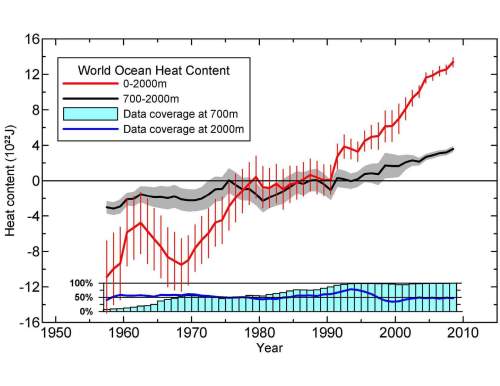
For more postings from me, see DISSECTING LEFTISM, TONGUE-TIED, EDUCATION WATCH INTERNATIONAL, POLITICAL CORRECTNESS WATCH, FOOD & HEALTH SKEPTIC, GUN WATCH, AUSTRALIAN POLITICS, IMMIGRATION WATCH INTERNATIONAL and EYE ON BRITAIN. My Home Pages are here or here or here. Email me (John Ray) here. For readers in China or for times when blogger.com is playing up, there are mirrors of this site here and here

*****************************************